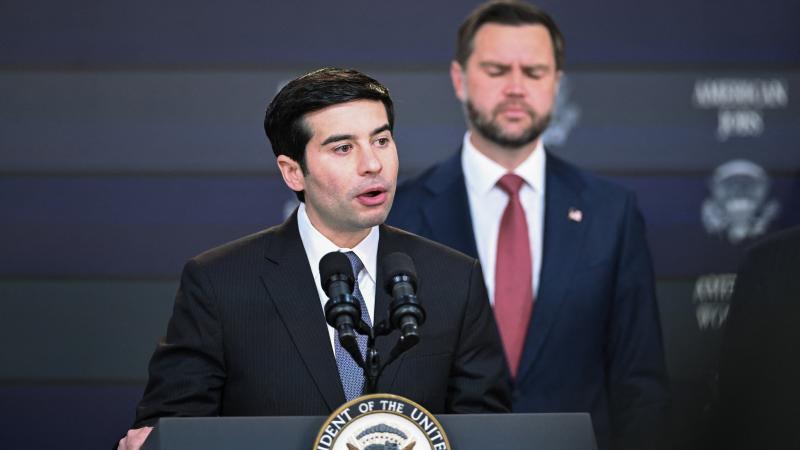
List of possible Trump SCOTUS nominees has some with no bench experience, not unusual for high court
Historically, more than one-third of Supreme Court justices had no prior judicial experience before joining the court.
President Donald Trump’s second term has produced no Supreme Court retirements, despite months of intense speculation.
That speculation reached a fever pitch on June 30, when NPR briefly published – then retracted within minutes– a report that Justice Samuel Alito was stepping down. The Supreme Court’s public information office denied the story, Alito has not announced any retirement plans, and multiple outlets reported in April that people close to him say he intends to serve into at least 2027, having already hired law clerks for the coming term.
Even so, attention has increasingly shifted from whether a vacancy will occur to who Trump would nominate if one does.
Unlike recent presidents, who have largely selected sitting federal appellate judges, many of the names now being discussed are elected officials, executive branch lawyers, and other prominent conservatives with little or no judicial experience.
The speculation has raised the possibility that Trump’s next Supreme Court nominee could depart from the modern practice of choosing sitting judges.
Alito, 76, and Justice Clarence Thomas, 78, who this spring became the second-longest-serving justice in Supreme Court history, continue to be the subject of recurring retirement rumors. In an April interview with Fox Business, Trump said he was “prepared” to fill as many as two or three Supreme Court vacancies “in theory.”
A Court With a History of Non-Judges
The modern Supreme Court is dominated by former federal appellate judges, but that has not always been the case.
Historically, more than one-third of Supreme Court justices had no prior judicial experience before joining the court. Among them were Chief Justice John Marshall, a former congressman and diplomat; California Gov. Earl Warren; Louis Brandeis, a renowned attorney and reformer; Robert Jackson, who served as U.S. attorney general; and William Rehnquist, who came to the court from the Justice Department before later becoming chief justice.
More recently, Elena Kagan was appointed directly from her position as U.S. solicitor general. Harriet Miers, White House counsel under President George W. Bush, was similarly nominated in 2005 without judicial experience, though she later withdrew amid bipartisan questions about her qualifications.
Several sitting judges are frequently mentioned by conservative legal observers, including Fifth Circuit Judges James Ho and Andrew Oldham, Sixth Circuit Judge Amul Thapar, and Ninth Circuit Judge Patrick Bumatay.
But the public discussion has also centered on nontraditional candidates.
Ted Cruz
Texas GOP Senator Cruz, a Harvard Law graduate who clerked for Chief Justice William Rehnquist, served as state solicitor general and argued nine cases before the Supreme Court – more than any Texas lawyer had at the time, including wins in Second Amendment and religious liberty cases.
Trump added Cruz to a public list of potential nominees in 2020, and as recently as this week has floated him again, telling reporters in the Oval Office that Cruz would be confirmed “100-0”– joking that Democrats would vote for him just to remove him from the Senate. Trump made a similar remark in January.
Cruz himself has downplayed interest twice before, in 2016 and 2020, saying serving on the court isn’t “the desire of my heart.” Supporters point to his litigation record and command of constitutional law; critics note his polarizing political profile, including his 2016 and 2024 presidential runs, as a likely flashpoint in any confirmation fight.
Senate Judiciary Committee Chairman Chuck Grassley recently told reporters that Cruz would be among his preferred candidates if a seat were to open.
Mike Lee
Utah GOP Sen. Mike Lee, another former law clerk with deep ties to the conservative legal movement, has also been publicly endorsed by Grassley. Before joining the Senate, Lee served as an assistant U.S. attorney and practiced constitutional law.
Supporters cite his long record of advocating originalism and limited government, as well as his familiarity with Senate confirmation politics. Critics note that, like Cruz, he has never served as a judge and would likely face scrutiny over his political record.
Ron DeSantis
Florida GOP Gov. Ron DeSantis has also been mentioned by some commentators as a potential nominee. A graduate of Yale and Harvard Law School, DeSantis served as a Navy judge advocate general officer before entering Congress and later becoming governor. Although he has no judicial experience, he has appointed dozens of judges to Florida’s state courts and has made legal and constitutional issues a central feature of his administration.
Supporters argue that his legal background and emphasis on constitutional issues could make him an unconventional but plausible nominee. Critics contend that his high-profile political battles over education, COVID-19 policies, and cultural issues would likely dominate any confirmation hearings.
John Sauer
Solicitor General John Sauer has also emerged as a frequently discussed possibility. Before becoming solicitor general, he served as Missouri solicitor general and built a substantial Supreme Court practice in both public service and private practice. He argued several significant constitutional cases before the Court and represented Trump in the successful presidential immunity case decided in 2024.
Unlike many of the other names being discussed, Sauer combines extensive Supreme Court advocacy with executive branch experience while remaining outside the judiciary. Supporters point to his appellate credentials and close familiarity with the Court, while critics could question whether his prominent role representing Trump would become a focal point during confirmation proceedings.
For now, this discussion is all speculation. There is no vacancy, and neither Alito nor Thomas has indicated any plan to step down.
But with the midterms approaching and both parties aware of how much a single seat can reshape the Court for a generation, the question of who might fill the next opening – and whether it might be someone who has never worn a judge’s robe—isn’t going away.



Top Stories

Trending
Just the News Spotlight
Just News, No Noise