Related Articles


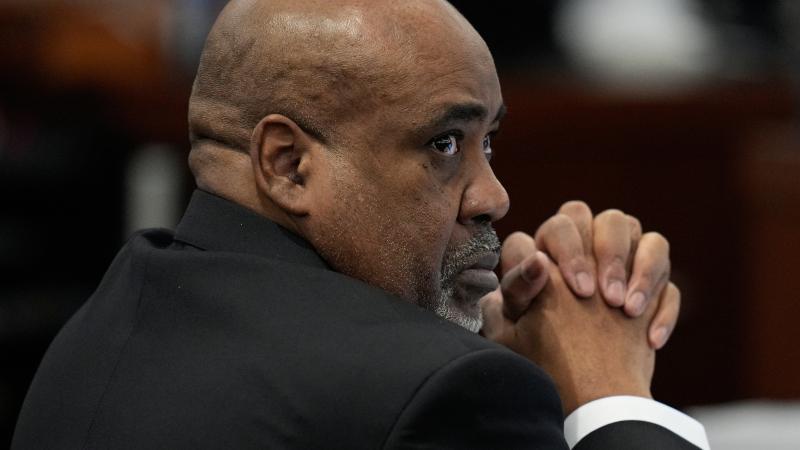

Both decisions were unanimous and addressed technical legal questions.
The Supreme Court on Thursday released two unanimous opinions, resolving a pair of technical disputes in securities enforcement and patent law without any major headline-grabbing rulings.
In Sripetch v. Securities and Exchange Commission, the court held that the SEC need not prove investors suffered pecuniary losses to obtain disgorgement in civil enforcement actions for securities fraud.
The case involved Ongkaruck Sripetch, who participated in multiple “pump-and-dump” schemes involving penny stocks. After Sripetch consented to judgment, the SEC sought more than $4.1 million in disgorgement. He argued, relying on the Court’s decision in Liu v. SEC, that disgorgement requires identification of investor losses to define “victims.” The Ninth Circuit rejected that argument, creating a circuit split that the Supreme Court now resolved.
Justice Neil Gorsuch wrote for a unanimous court (with a concurrence from Justice Clarence Thomas). The court also reaffirmed that disgorgement, rooted in traditional equitable principles, focuses on stripping wrongdoers of ill-gotten gains rather than compensating identifiable investor losses. The judgment of the Ninth Circuit was affirmed.
In the second case, Hikma Pharmaceuticals USA Inc. v. Amarin Pharma, Inc., the court unanimously reversed the Federal Circuit in a dispute over induced patent infringement involving a generic drug manufacturer.
Amarin holds patents covering a cardiovascular use of its drug Vascepa (icosapent ethyl). Hikma introduced a generic version using a “skinny label” that omitted the patented indication, limiting its labeling to an unpatented use for severe hypertriglyceridemia, as permitted under the Hatch-Waxman Act.
Amarin alleged that Hikma nonetheless induced infringement through its labeling, website, press releases, and other communications that allegedly encouraged doctors to prescribe the drug for the patented use.
Justice Ketanji Brown Jackson wrote for a unanimous Court, holding that Amarin failed to plausibly allege “active steps” by Hikma to induce infringement under 35 U.S.C. § 271(b). The Court found that statements consistent with lawful regulatory compliance or industry practice, as well as general or ambiguous communications, were insufficient at the pleading stage. The case was reversed and remanded.
Both decisions were unanimous and addressed technical legal questions. Observers noted the quiet day at the Court, with no blockbuster rulings on hot-button constitutional issues. Additional opinions are expected in the coming weeks.