Related Articles



French President Emmanuel Macron warned Beijing that France’s trade deficit with the country is “not sustainable.” Other nations are following Trump's cue in considering tariffs as an offsetting measure.
European countries are threatening tariffs on China over massive trade deficits, arguing Beijing is undercutting their economies and endangering vital industries, echoing the arguments made by President Donald Trump in the United States.
The latest warning, delivered in Beijing by French President Emmanuel Macron, came as China reported a world-record $1 trillion trade surplus with the rest of the world.
The Trump administration in the U.S. has repeatedly criticized China for flooding the world with industrial and consumer goods, produced in factories and by industries that see significant state benefits, including subsidies, possible currency manipulation, and relaxed labor standards, putting the rest of the world at a disadvantage.
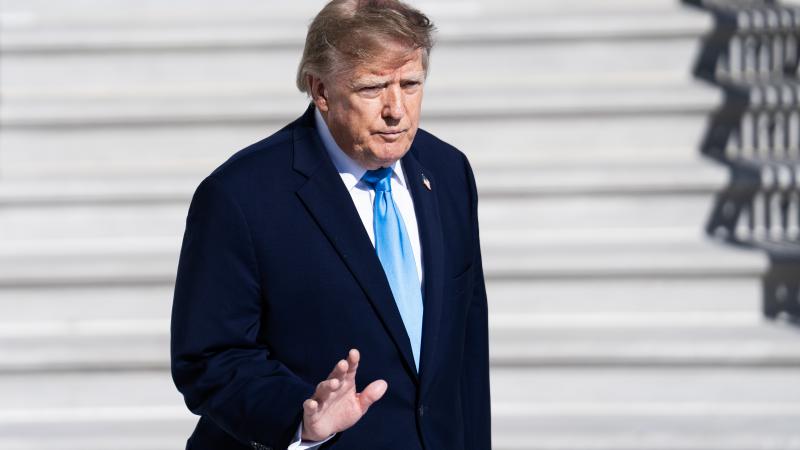
Tariffs have been a favorite tool of President Donald Trump to rebalance trade with the world, and especially China. Now, Europe—facing the same pressure from China—appears poised to follow.
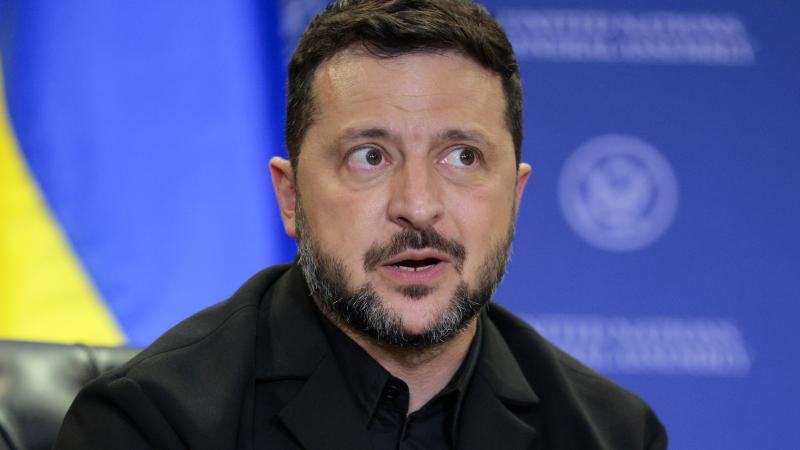
“I told them that if they do not react, we Europeans will be forced, in the next several months, to take strong measures and to de-cooperate, following the example of the United States – for instance, by imposing tariffs on Chinese products,” Macron told a French newspaper on Sunday after his return from a trip to China.
During his visit to the country, Macron said, “These imbalances that are accumulating today are not sustainable. They carry risks of a financial crisis. They jeopardise our ability to grow together.”
Macron traveled to meet Communist Party Chairman Xi Jinping amid a worsening trade deficit with Beijing. After the U.S. government imposed sweeping tariffs on Chinese goods earlier this year, Beijing has ramped up exports to other parts of the world, including Europe, in order to soak up the excess supplies.
Despite the substantial trade barriers erected by the United States, China’s total exports increased by 5.4%, while its imports slightly declined by 0.6% in the first 11 months of 2025, The Wall Street Journal reported. After declining access to American markets in the face of the high tariffs, China boosted exports to Africa (by 26%), Southeast Asia (by 14%) and Latin America (by 7.1%).
China’s global trade deficit has also expanded to a world-record high of just over $1 trillion, stressing the dominance of the country's export sectors from high-end electronics to textiles.
Macron says China was also “massively” redirecting goods to the European Union that were initially intended for export to the United States. "We are caught in the middle today," Macron reportedly told Les Echos.
The newfound willingness to impose tariffs on China did not evolve overnight. The European Union more broadly has increasingly recognized the threat from aspects of China’s economic model to domestic European industries, specifically in the high-technology sector.
For example, a coalition of some of the largest European economies, including France, Italy, and Poland, voted in the EU commission to impose tariffs on electric vehicles from China. The measure passed, but was opposed by the bloc’s largest economy, Germany.
Recently, the European Union also imposed 50% tariffs on the import of foreign steel beyond an established quota in a bid to protect the bloc’s domestic industries from foreign competition. China is the world’s largest producer, and consumer, of steel. Similarly, the United States has placed protectionist measures on steel imports to shield its own industry.
President Trump has long raised concerns about China’s persistent trade deficits with the United States. In his 2017 visit to Beijing, Trump said the trade relationship “has not been … over the last many, many years, a very fair one for us,” and called it “unsustainable.”
The European concerns about China’s export model echo conclusions from the U.S. Treasury Department earlier this year.
Trump first imposed tariffs on China in 2018 following sweeping government probes into the country’s alleged unfair trade practices. He cited the ballooning trade deficit, intellectual property theft, and forced technology transfers.
In his second term, the American president greatly escalated his tariff barrage against the Chinese. At one point, he had imposed broad duties on the Chinese economy totaling more than 100% of imported product value. Trump eventually negotiated a trade truce with Beijing which reduced those tariffs to around 50%, still a substantial barrier.
“China’s economy…is built on an unsustainable model that is not only harming China but also the entire world,” the Treasury Department concluded in a June 2025 report to Congress on the macroeconomic and foreign exchange policies of major U.S. trading partners.
“Given the unsustainable rise of China’s trade surplus, it is increasingly urgent that China recommit to macroeconomic rebalancing to boost household consumption and reduce the negative spillovers of China’s policies on its trading partners,” Treasury wrote.
“China must also address its non-market policies and practices, such as large-scale industrial subsidies, which exacerbate economic imbalances and have triggered overcapacity in certain sectors.”
Other countries beyond the United States and Europe have raised concerns about China’s growing export surplus and its effects on local economies. For example, Mexico’s President Claudia Sheinbaum linked the decline of her country’s textile industry to inexpensive Chinese imports. In March, the Council on Foreign Relations reported she said her administration would review Mexican tariffs on China over the issue.
Though the United States and Europe have been the most outspoken about their deficits with China, the majority of complaints filed against Beijing at the World Trade Organization came from so-called developing countries, Financial Times reported earlier this year.
For example, two of China’s largest trading partners, India and Brazil, opened investigations into alleged Chinese dumping of industrial goods, primarily steel products.