Trump and RFK bet on Ibogaine to save veterans in unlikely alliance with Mark Cuban
President Donald Trump is pushing his administration to trying something new: betting federal dollars that a banned psychoactive substance could help heal America's veterans. Stanford researchers found that it safely led to improvements in depression, anxiety and functioning among veterans with traumatic brain injuries.
Where past administrations saw a Schedule I drug as too risky to touch, President Donald Trump sees a possible lifeline for veterans. His administration is now putting federal money, a once-unthinkable partnership with Mark Cuban and data from a clinic in Mexico behind ibogaine, a psychedelic root bark Washington has kept on its most restricted drug list for more than half a century.
"Veterans kept their promise to this country. We must keep ours," Health and Human Services Secretary Robert F. Kennedy Jr. said in a statement earlier this month. "Veterans have told us ibogaine changed their lives. Their experiences demand serious scientific investigation. We will pursue the evidence, confront the risks and put affordability at the center of this work," he said.
Kennedy announced up to $4.9 million through the Advanced Research Projects Agency for Health (ARPA-H) to lay the groundwork for U.S. clinical trials of ibogaine. The drug is a psychedelic that remains a Schedule I substance under federal law. The money covers regulatory and manufacturing work: preparing an investigational new drug application, securing clinical-grade supply and building domestic production capacity.
The stakes are significant. The Department of Veterans Affairs estimates that roughly 7% of veterans will experience PTSD at some point in their lives, and a RAND Corporation analysis put the figure as high as 20%.
Trump: Veteran suicide "a national tragedy"
The awards follow through on Trump's April executive order. It directed the FDA to fast-track promising psychedelic therapies and to work with the Veterans Administration (VA) to expand clinical trial participation.
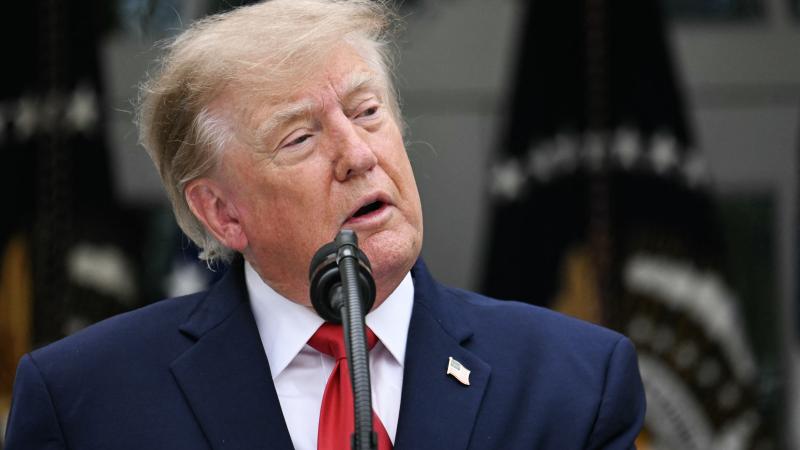
At the signing, Trump called veteran suicide "a national tragedy." He noted that 21 times more veterans have died by suicide than in combat since 9/11.
The order also steers at least $50 million to states building their own psychedelic programs, a model Texas pioneered. Veterans' groups welcomed the order. The Disabled American Veterans praised it for speeding research into therapies for the "invisible wounds of war."
The most surprising part of the plan may be who is leading it. Mark Cuban, who campaigned for Kamala Harris in 2024, runs the Cost Plus Drug Company, an online pharmacy, set up as a public benefit corporation, which sells medications at the cost of production plus a fixed markup to keep prices low and transparent. The company will head research teams developing a domestically made, single-molecule form of ibogaine.
If the drug clears the FDA, Kennedy said, it would be priced like generics, at the cost of production plus a fair margin.
A Texas-based company called Beond is also contributing. It runs a licensed facility in Mexico that has reportedly treated more than 3,000 patients, and it will share its clinical data with the research teams. Kennedy said that data could dramatically speed up the trial process.
Risks weighed and guardrails considered
Much of the excitement traces back to a small study published in Nature Medicine. It followed about two dozen special operations veterans who received a single ibogaine treatment. One month later, their PTSD symptoms had dropped 88%, depression 87% and anxiety 81%. Participants also showed gains in memory, concentration and impulse control.
Researchers caution that the early study was small and had no control group, which is exactly why the administration wants rigorous U.S. trials.
Unsupervised use of ibogaine carries real dangers. HHS itself acknowledges the drug can cause potentially life-threatening heart rhythm problems. Frederick Barrett, who directs the Center for Psychedelic and Consciousness Research at Johns Hopkins University, has said its known cardiotoxicity made it hard to study domestically, and that the executive order could open the door to objective research.
Kennedy was careful to note what the awards do not do. They fund no treatment, authorize no human trials and do not amount to FDA approval. Continued funding depends on hitting research milestones. Any future study would still need FDA authorization and independent ethics review.
No one can say yet if or when a U.S. treatment might be available. But for veterans who have crossed the border, previously their only means of obtaining the treatment, the question has shifted. It is no longer whether Washington is listening, but how quickly the science can catch up.
Amanda Head is White House Correspondent for Just the News. You can follow her here.
The Facts Inside Our Reporter's Notebook
Links
- psychedelic root bark
- Robert F. Kennedy Jr. said
- Schedule I substance
- 7% of veterans
- RAND Corporation analysis
- April executive order
- 21 times more
- $50 million
- Disabled American Veterans
- priced like generics
- Beond
- more than 3,000
- Nature Medicine
- Center for Psychedelic and Consciousness Research
- known cardiotoxicity
- fund no treatment
- here


Top Stories


Trending
Just News, No Noise