Trump’s lifeline to China would create a natural gas boon in US, crushing Iran’s energy revenue
For American exporters, the deal translates to market share. For China, it’s insurance against a broken Gulf. For Iran, it is a warning that both time and customers are running short.
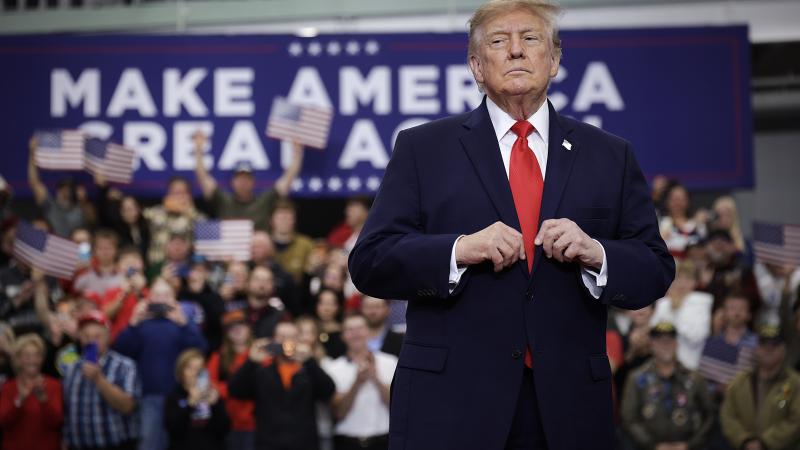
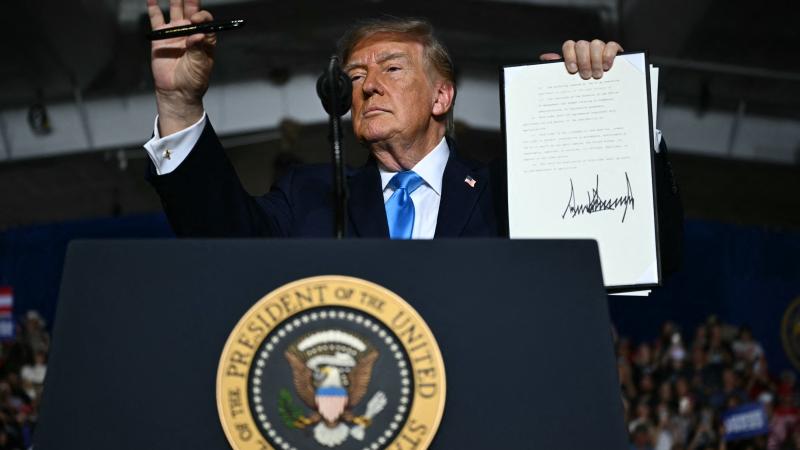
When President Donald Trump meets Xi Jinping in Washington this week, the headline number to watch is not another vague pledge to “buy more American goods.” It is a potential government-level deal to reopen U.S. liquefied natural gas (LNG) sales to China—on top of a commercial contract already signed last week—and the strategic meaning of that move in the conflict with Iran.
U.S. and Chinese officials have reportedly discussed reducing or eliminating Beijing’s 15% tariff on American LNG as part of a broader energy and agriculture package that could be announced around Thursday's summit.
Speculation that China might be getting a political green light
Sources, according to Reuters, described a possible framework in which each side would cut tariffs on about $30 billion of goods. Nothing is final. But the timing is not accidental. A commercial warm-up already happened: China Gas Holdings signed a 20-year deal with Venture Global for 500,000 tons a year starting in 2030, lifting that buyer’s long-term U.S. commitments with the Louisiana exporter to 2.5 million tons annually.
What remains is the larger prize—a political green light that would let existing Chinese contracts for U.S. gas actually land in China again. Bloomberg estimates those contracts already total about 14 million tons a year, worth roughly $6 billion at long-term prices. That trade froze after February 2025, when China answered new U.S. tariffs with a levy on American LNG. Direct shipments collapsed from 64 vessels in 2024 to effectively zero in 2025.
Chinese buyers kept lifting contracted cargoes but diverted them to Europe and other Asian markets rather than pay the duty. Restoring that flow would give Trump a multi-decade buyer commitment while U.S. export capacity is still expanding. It would give Xi a relatively cheap concession that also fills a hole in China’s energy security.
That hole is the point. China is not short of gas because American producers failed. It is short of reliable Gulf supply because the Iran war, sanctions, and the fight over the Strait of Hormuz have wrecked the system Beijing used to depend on.
Columbia University’s Center on Global Energy Policy noted that in 2025 China imported about one-third of its LNG from the Middle East, with Qatar alone supplying roughly 28 percent.
After U.S. and Israeli strikes on Iran in late February, Hormuz was effectively closed and Qatari shipments stopped. Reuters reported that Asia’s LNG imports then fell to a six-year low, while OilPrice.com said Iranian missiles later destroyed 17% of Qatar’s LNG export capacity. About 15% of China’s natural gas imports had been moving through Hormuz. When that corridor seized up, China had to either buy elsewhere or consume less.
In any event, Iran's exports are not enough to fuel China
Iran itself cannot close the gap. Years of U.S. sanctions blocked the financing, shipping, and liquefaction technology Tehran would need to become a major LNG exporter, even though it sits on some of the world’s largest gas reserves. What Iran can sell in volume is oil, and even that lifeline is fraying.
China has bought more than 80% of Iran’s seaborne crude, Kpler data cited by OilPrice and others show, but a U.S. naval blockade and tighter sanctions have slashed those barrels. Kpler is a for-profit aggregator and seller of trade data.
Reuters reported the Chinese intake of Iranian crude falling from about 1.4 million barrels a day last year toward half a million at times this summer. Sanctions did not just punish Tehran. They also made Iranian energy a less dependable option for Beijing.
For that reason, a Trump-Xi LNG deal would matter far beyond trade accounting. If China locks in more American gas, it becomes less exposed to a Gulf system Iran can choke and less interested in waiting for sanctioned Iranian petroleum that never arrives.
Officials have been careful to say the talks are unfinished
The commercial message to Tehran is blunt: China has a substitute. The political message is sharper: if Beijing starts treating U.S. LNG as a hedge against Iranian disruption, Iran loses leverage over its most important remaining customer. A regime that has used Hormuz and discounted energy sales as bargaining chips then has a weaker hand—and more reason to make a deal with Washington rather than assume China will absorb the cost indefinitely.
Officials have been careful to say the talks are unfinished. But the shape of a possible agreement is already visible: scrap or cut the Chinese LNG tariff, revive the $6 billion-a-year contract book, and let last week’s Venture Global sale become the start of a wider return to U.S. supply.
China's economy may be heading toward worst year since 1991
Despite the unfinished nature, China may be in need of an economic boost. A Washington Post report this week says China’s economy may be headed for its worst year since 1991. That refers to Beijing’s 2026 growth target of 4.5% to 5%, which Bloomberg called the least ambitious since 1991, and to second-quarter GDP of 4.3%, below target and the weakest in more than three years, Reuters reported.
Official growth was worse in the COVID years of 2020 and 2022, so a fairer line may be that it is the weakest non-COVID year since the early 1990s. Some independent estimates put true growth lower still, citing a property bust, weak consumption, and debt above 300% of GDP.
The Facts Inside Our Reporter's Notebook

Top Stories



Trending
Just the News Spotlight
Just News, No Noise