Years after Pulitzer prize, New York Times gets Russia collusion story wrong once again
The New York Times won Pulitzer Prizes for its coverage of President Donald Trump and Russia, yet it continues to get basic facts wrong.
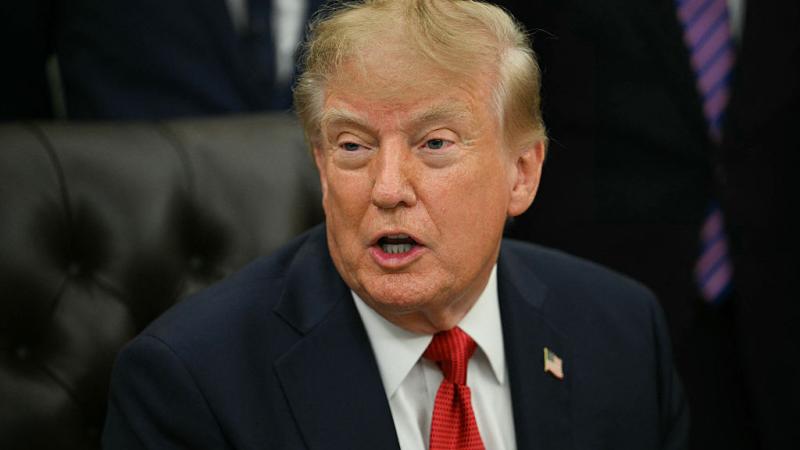
In an article published this week, The New York Times twice claimed President Donald Trump had no basis to claim the federal government under former President Barack Obama spied on him during the 2016 election or abused surveillance powers despite a large body of public evidence showing both things happened.
In the article about Trump’s statements on Section 702 of the Foreign Intelligence Surveillance Act, the Times insisted that Trump has a “long and complicated relationship” with FISA, alternating between “condemning it" and "embracing it."
"During his first term, Mr. Trump posted on social media just hours before Congress was to vote on it to suggest without evidence that the program had been abused by the Obama administration to surveil his presidential campaign," the newspaper wrote.
Trump has plenty of evidence to suggest his campaign was spied on by the Obama administration, including the release of declassified memos showing two undercover informants directed by the FBI engaged with Trump campaign figures trying to lure information out of them.
The president also has ample evidence that the FBI abused surveillance rules under Obama, including a lengthy Inspector General report from the Department of Justice released in 2019 and a statement by the DOJ admitting some of the surveillance was "unlawful."
That report found that the FBI altered evidence against Trump campaign adviser Carter Page in order to investigate him. A former FBI attorney, Kevin Clinesmith, pleaded guilty in 2020 to altering an email for the purposes of obtaining a FISA warrant that authorized spying on Page and his dealings with the Trump campaign.
Page had worked with an unnamed U.S. intelligence agency dealing with Russians during the early days of the Obama administration, but Clinesmith altered an email saying this to make it appear as though Page had never worked with the agency. Just the News has confirmed that agency was the CIA.
The FBI received the accurate information under Obama in 2016 and doctored it in 2017, court records show.
In response to a Just The News inquiry, the Times said its "reporting on the challenges to reauthorize FISA section 702 presents readers with a clear and factual picture."
The IG report noted 17 “inaccuracies and omissions” that were not brought to the attention of the Office of Intelligence prior to the final FISA application filed against Page in 2017. These included Clinesmith’s alteration; omissions from another Trump campaign aide, George Papadopoulos, denying anyone in the Trump campaign was collaborating with Russia; and omitting statements from Page about never meeting then-campaign chairman of Trump’s 2016 presidential campaign, Paul Manafort, which spoke to the credibility of the Clinton campaign-funded “Steele Dossier,” which claimed otherwise.
Page filed a lawsuit against the federal government for its mistreatment of him, and in April 2026, the Justice Department agreed to settle the lawsuit for $1.25 million.
“No American should ever face covert and unlawful surveillance based on their political view,” a Justice Department spokesman said at the time after the settlement was revealed in a court filing. “The investigation into Carter Page — a man never charged with a single crime — relied on inherently flawed and uncorroborated information, proving it was a political sham from the get-go.”
The Supreme Court recently declined to revive a separate lawsuit from Page against former FBI Director James Comey and others for their roles in the investigation against Page.
Declassified records released by the FBI and obtained by Just the News show an informant who also worked as a Pentagon researcher, Stefan Halper, was directed to meet with Page at a Virginia farm in October 2016, while Obama was still president, to try to elicit information about the campaign's possible ties to Russia. Halper was given the FBI codename "Mitch," the memos show.
A transcript of the conversations recorded by the FBI shows that rather than confirming contacts between the Trump campaign and Russia, Page actually disputed the allegations to Halper.
"The core lie is that I met with these sanctioned Russian officials, several of which I never even met in my entire life, but they said that I met them in July," an FBI transcript quotes Page as telling Halper during an Oct. 17, 2016 interaction at Halper's farm in Northern Virginia.
You can read those records here.
And Page wasn’t the only Trump aide targeted by the Obama administration’s intelligence apparatus.
The FBI sent an undercover operative to meet with Papadopoulos while posing as a research assistant named Azra Turk. The Times broke the story in 2019. The investigators attempted to get Papadopoulos to falsely admit the Trump campaign was working with Russia. Halper was also asked by the FBI to speak with Papadopoulos about alleged Russia collusion, records show.
You can read the FBI documents about Halper's interaction with Papadopoulos here.
Just the News even obtained the FBI's "operational plan" for how they wanted Halper to spy on Trump campaign figures. You can read that here.
The plan makes abundantly clear the FBI was trying to elicit information about the Trump campaign using the informants.
If the Trump campaign figure "does not provide tangible information during the meeting, or if CD explicitly states he does not know of any RF (Russian federation) involvement in the campaign the FBI will focus on a second target of the investigation," the memo stated,
The memo warned that Halper's efforts may cause Page to "recognize this meeting as a way to collect information about the Trump Campaign that he is not willing to share. The conversation may be relayed to others in the Trump Campaign and create a possible issue for the" FBI informant.
Special Counsel Robert Mueller’s massive investigation into Russia collusion determined there was no criminal conspiracy between Vladimir Putin's Russia and the Trump campaign.
A second Special Counsel, John Durham, went even further, concluding during the Biden administration that the Obama-era FBI and DOJ had no basis to open an investigation of Trump-Russia collusion.
"Neither U.S. law enforcement nor the Intelligence Community appears to have possessed any actual evidence of collusion in their holdings at the commencement of the Crossfire Hurricane investigation," Durham wrote in a 300-plus page report sent to Congress in spring 2023.
In other words, the Obama FBI and DOJ opened up a probe to spy on the rival Trump campaign without evidence or justification.
Following the dismantling of the Russia collusion claims, former New York Times award-winning reporter Jeff Gerth wrote a four-piece series published by the Columbia Journalism Review that explained at length many of the media’s errors when reporting about Trump and Russia in the early days of his first presidency.
One example of the Times being so sure of a scoop only to end up embarrassed involved a story about members of Russian intelligence allegedly having conversations with Trump’s campaign.
Then-Times editor Dean Baquet said in conversations recorded for a Showtime documentary that he wanted the top of the story to “show the range” and level of the alleged Russian contacts and “meetings, some of which may be completely innocent.” Baquet then wanted a paragraph to explain why these contacts continue “to hobble them.”
Gerth wrote of the piece:
As for the specific details Baquet asked to be included in the story, the reporters simply wrote that their sources “would not disclose many details.” The piece did contain a disclaimer up high, noting that their sources, “so far,” had seen “no evidence” of the Trump campaign colluding with the Russians.
But in the next paragraph it reported anonymous officials being “alarmed” about the supposed Russian-Trump contacts because they occurred while Trump made his comments in Florida in July 2016 wondering whether Russia could find Hillary’s missing emails.
FBI agents behind the scenes shredded the report, according to Gerth, including disgraced former agent Peter Strzok writing that the FBI was unaware “of ANY Trump advisers engaging in conversations with Russian intelligence officials.”
The FBI remained publicly silent, however.
Gerth also described the “secret surveillance of Page” as “an effort to bring in heavier artillery to an FBI inquiry that, in the fall of 2016, wasn’t finding any nefarious links, as the Times reported back then.”
Yet this week, the Times claims Trump has no evidence that he was spied on during his 2016 campaign. The Times won a Pulitzer Prize for its flawed coverage, and has previously stood by its reporting. Trump has sued the Pulitzer Prize board for standing by the awards.
“I think we covered that story better than anyone else,” Baquet said, according to a tape of an internal event at the Times on the day Mueller announced his findings.
In a statement to CJR in 2023, the Times stood by its reporting and mentioned its prizes, saying it “thoroughly pursued credible claims, fact-checked, edited, and ultimately produced ground-breaking journalism that has proven true time and again."
Editor’s Note: John Solomon is temporarily working as an unpaid member of a government transparency task force helping to identify information that can be released to the public. During the temporary assignment, he has stepped down as Editor In Chief of Just the News
The Facts Inside Our Reporter's Notebook
Documents
Links


Top Stories


Trending
Just the News Spotlight
Just News, No Noise