Related Articles
Free pro-bono assistance to attorneys general offices raises ethics concerns about donor influence, political bias, experts say.
Democratic attorneys general deputized private lawyers from a nonprofit run by former Obama ambassador and anti-Trump activist Norm Eisen to help prosecute supporters of President Donald Trump for organizing alternate electors to challenge the 2020 election results, according to tax records and internal memos released under open record laws.
The relationship between state and local prosecutors and Eisen’s States United Democracy Center (SUDC) raises troubling questions about the independence of judicial decisions and the influence of a donor-funded group on matters of law and order, experts said.
At least one state — Minnesota — swore in lawyers from Eisen’s SUDC as “special attorneys” serving “at the pleasure of the Attorney General,” the memos show. Other state and local prosecutors accepted advice and free work, the memos show.
"This is highly inappropriate for left-wing nonprofits to become the prosecutors against their political enemies,” Mike Davis, a former GOP Senate Judiciary Committee lawyer who vetted federal judges for two decades before founding the nonprofit Article III Project, told Just the News.
Over the last decade, more state and local prosecutors have turned to private lawyers for prosecuting criminal and civil cases, including Fulton County District Attorney Fani Willis, who hired a man she was dating, and New York prosecutors who accepted help on climate cases from billionaire Michael Bloomberg's nonprofit.
The arrangements have also become an issue in the courts.
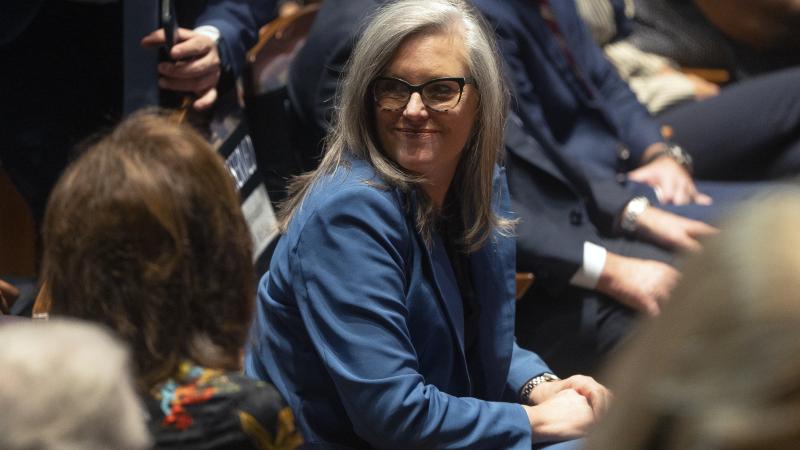
Former Trump lawyer Christina Bobb, a defendant in the Arizona 2020 election prosecution, asked for a hearing on the role of Eisen's group a year ago in her bid to disqualify Arizona Democrat Attorney General Kris Mayes from the case.
The state Supreme Court has thrown out the charges in the case, but Mayes has vowed to restore them. Bobb has pleaded not guilty to her prosecution, and a trial date was set for Jan. 5, 2026, but procedural motions have delayed that trial.
You can read that filing here.
"States United, as 'an initiative of' PSLC/DAGA, has an inherent conflict and cannot impartially participate in the prosecution of their obvious political opponents," Bobb wrote in a motion last year. "Kris Mayes had an obligation to disclose that the organization she hired, allegedly pro bono, to advise her on prosecuting prominent Republicans is effectively an initiative of DAGA, which is a committee of the Democratic Party. Instead, she tried to cover it up."
In an interview with Just the News, Bobb said the role Eisen's group played in the first wave of lawfare against Trump supporters should be a wakeup call for members of Congress who could be targeted in the next wave.
"Exchanging governmental authority for political access and funding is a surefire way to ensure everyday Americans lose their voice and end up in prison for disagreeing with those in power," Bobb said. "We have to stop pretending that this type of activity isn’t happening.
"People are so overwhelmed by the corruption that many (elected officials included) want to bury their head in the sand and hope it goes away. It’s not going away. It’s getting worse," she added. "...This prosecution enterprise is now targeting conservative officials. These elected leaders will have a rude awakening when this prosecution network targets them and no one cares."
Eisen did not respond to a Just The News inquiry prior to press time.
The memos chronicle how Eisen’s group secured relationships with Democrat attorneys general in multiple states to prosecute and disbar attorneys who assisted President Donald Trump in his 2020 election disputes.
SUDC describes itself as “a nonpartisan organization dedicated to the rule of law and free, fair, secure elections” that provides “direct support to state officials and law enforcement leaders as they uphold our system of checks and balances, protect public safety, and preserve our democracy.”
Though SUDC boasts a “Bipartisan Advisory Board,” the Republican members of that board have been prominent critics of Trump. For instance, former New Jersey Gov. Christine Todd Whitman, who famously urged Republicans in Congress to vote to impeach Trump over 2020 election claims.
And Eisen himself has been a relentless critic of the 47th president, cheerleading publicly efforts to prosecute Trump and going so far as to co-author an essay in the New York Times in 2023 titled “How to convict Trump.” In 2025, Getty Images captured him speaking to a "Hands Off" rally protesting the Trump administration's policy.
There is also a connection between SUDC and other Democrat-aligned organizations. According to SUDC’s 2023 tax filings, it paid prominent Democrat superlawyer Mark Elias’ law group more than $100,000 as an independent contractor. SUDC also formed out of the Voter Protection Program (VPP), which lists the same director (Joanna Lydgate) and many bipartisan board members as SUDC.
The October 16, 2020, press release announcing the launch of VPP is still on SUDC’s website. That press release states that VPP “is a nonpartisan initiative of the Progressive State Leaders Committee.”
The PSLC’s tax documents state that “compensation for officers of PSLC is issued by Democratic Attorney Generals Association (DAGA), an unrelated organization for tax purposes.” The documents also state that the PSLC reimburses DAGA for time spent on PSLC business, including salary and benefits for PSLC president Sean Rankin, who is also DAGA’s executive director.
DAGA’s tax forms also show that PSLC is its largest listed contributor, having received around more than $11 million from PSLC over the years. DAGA’s executive committee also includes notable figures tied to SUDC’s efforts, including Minnesota Attorney General Keith Ellison, Nevada Attorney General Aaron Ford (no longer listed), and Massachusetts Attorney General Andrea Campbell (no longer listed), all of whom contracted with SUDC.
SUDC has publicly denied being a program of PSLC, with an attorney telling the court in Arizona that SUDC “has never been a part or program of” PSLC, but the connections remain.
In Minnesota, Ellison, the former Deputy Chair of the Democratic National Committee, appointed SUDC Senior VP of Legal Christine P. Sun and SUDC in June 2023 as “Special Attorneys to serve at the pleasure of the Attorney General specifically to provide legal services to the Attorney General.”
Sun and the organization were to receive no benefits, compensation, or reimbursements for expenses incurred, and their client was Ellison himself.
The work conducted by Sun and SUDC was subject to “examination by the Attorney General and the Minnesota Legislative Auditor,” and had to comply with the Minnesota Government Data Practices Act should a request to release the data be received.
The Special Attorneys were instructed not to speak to the media about the work they were doing without approval from the AG’s office.
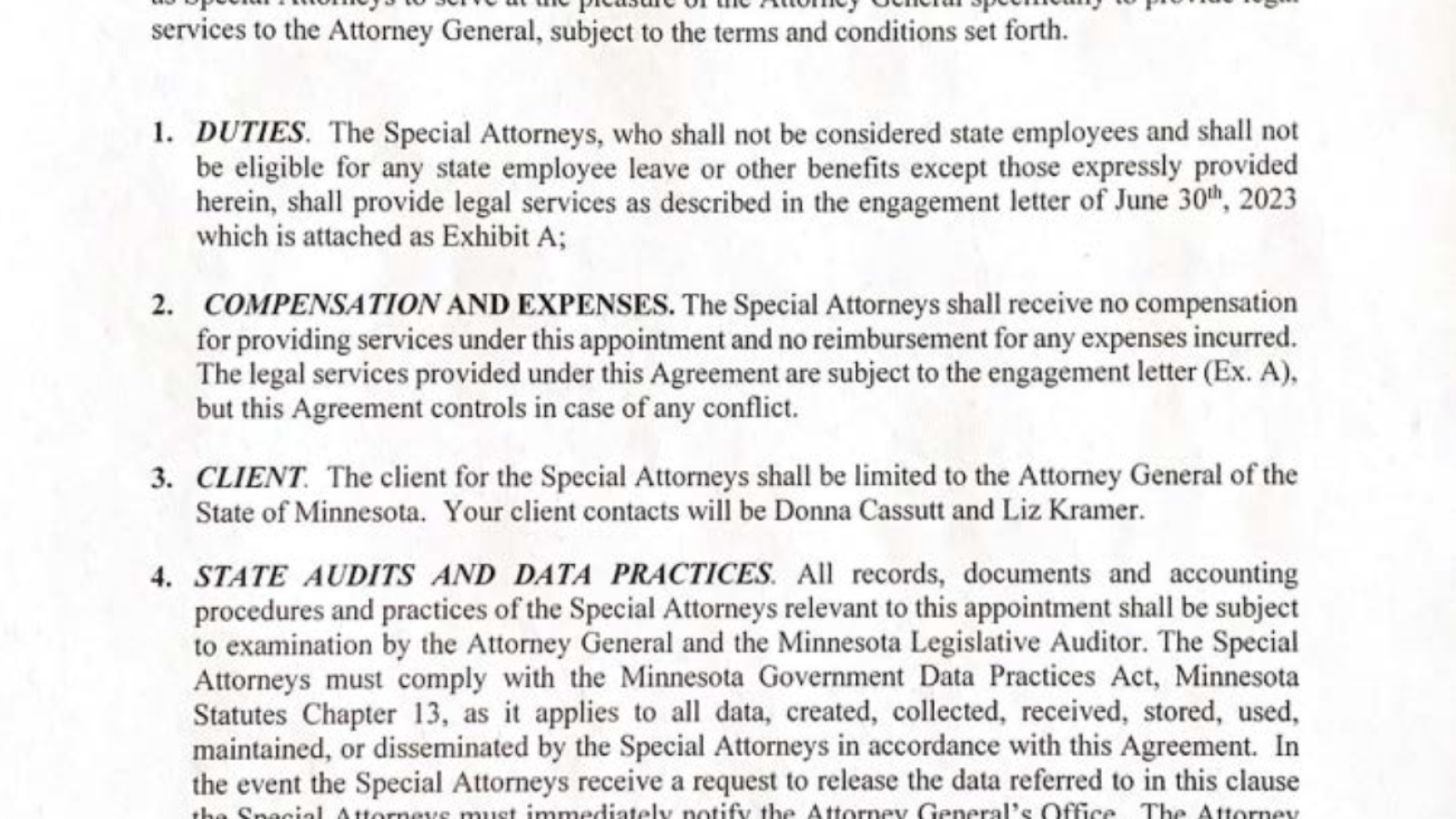
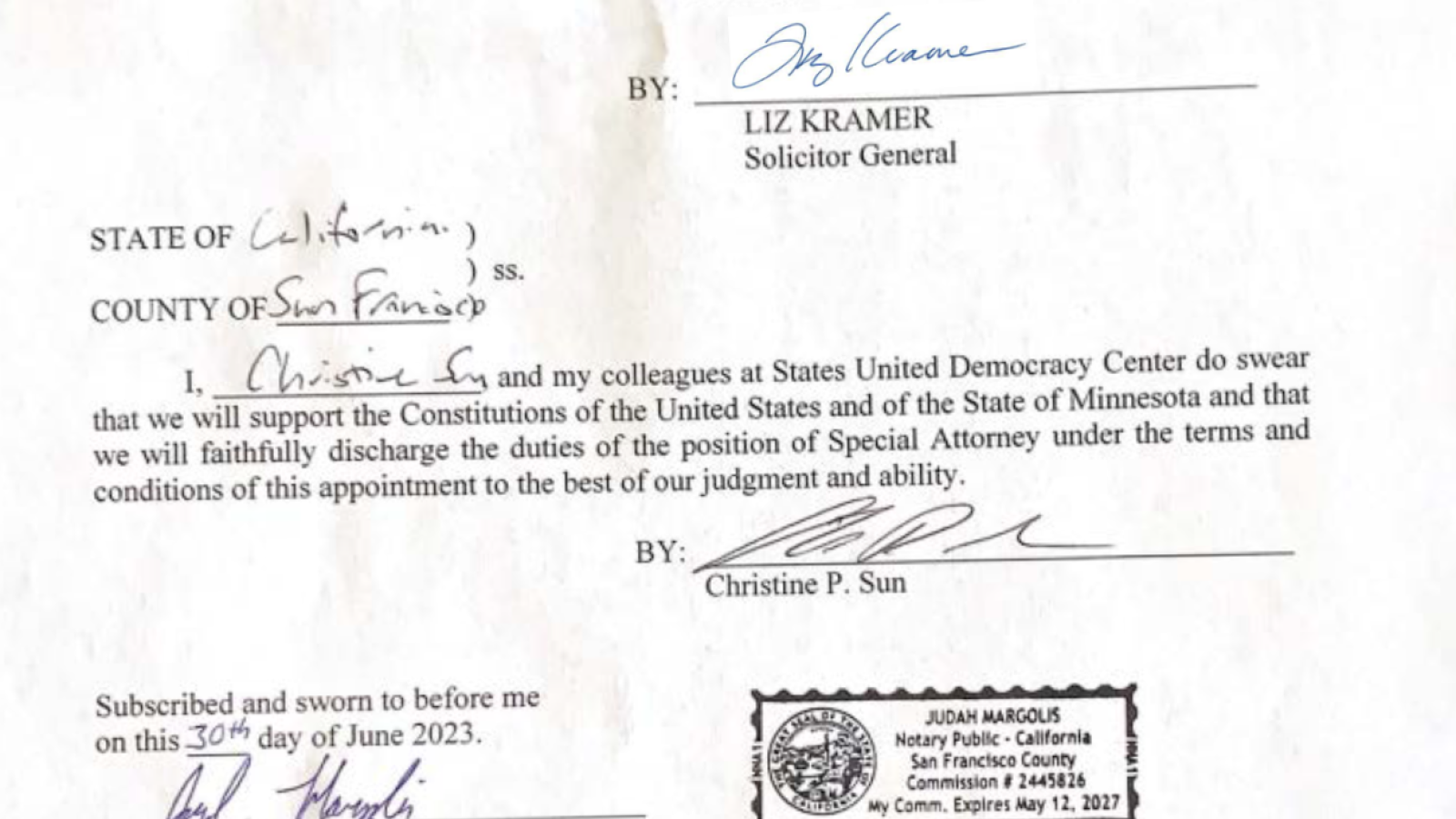
The appointment by Ellison constituted a state law-enforcement office placing outside, donor-funded lawyers under a government appointment. The month before this partnership, Arizona’s Attorney General’s office accepted an offer from SUDC to work pro bono for the state to advise on election-integrity legal strategy, according to documents obtained by Just The News.
In Arizona, Mayes’ chief of staff accepted the offer, signed by Sun. An SUDC memo was also used to support criminal search warrants.
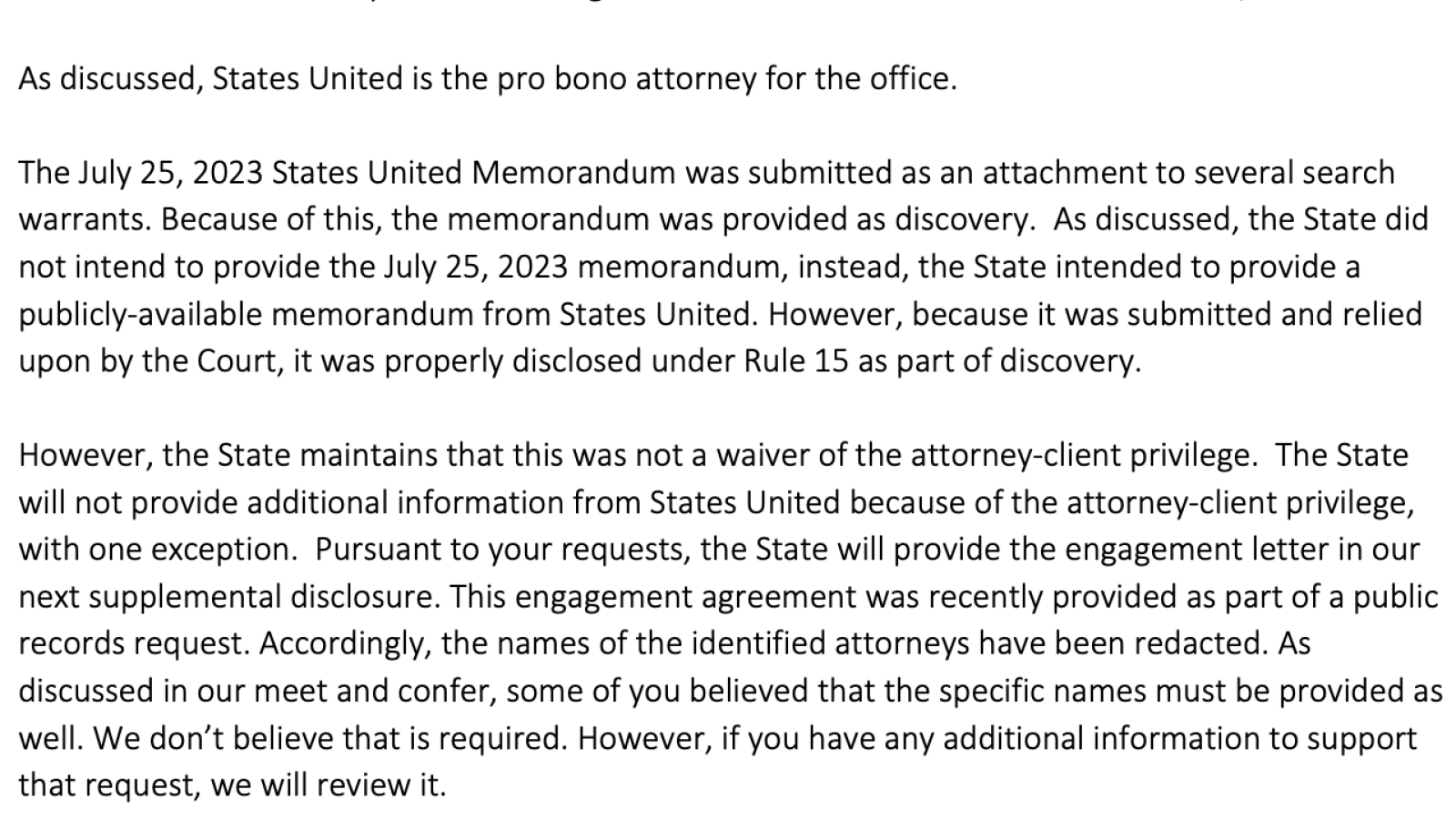
In an email dated Dec. 12, 2024, Kimberly Hunley, senior litigation counsel for Mayes’ office’s criminal division, wrote an email to attorneys representing Arizona electors who were being targeted by the AG stating that a July 25, 2023, States United Memorandum was “submitted as an attachment to several search warrants.”
Because of this attachment, the memorandum was provided to the attorneys as part of discovery. As Hunley wrote in her email, “the State did not intend to provide the July 25, 2023, memorandum” but a “publicly-available memorandum from States United.”
The July 25, 2023, memorandum is a 47-page document that “details important facts about the Arizona scheme and the false electors based on publicly available information and analyzes potential criminal violations committed by the false electors and others involved in the scheme.”
The memorandum also outlined potential defenses that the individuals named in the document might raise. It cites Arizona laws and lays out the case for the Arizona AG to punish those who questioned the 2020 election.
Other documents provided to Just The News reveal more from the network of Democrat-aligned organizations in Arizona.
On September 5, 2023 – nearly one year after Arizona AG Kris Mayes was elected – DAGA sent $50,000 to Mayes’ legal fund. This payment came just a couple of months after the AG’s office agreed to work with SUDC pro bono.
The payment occurred close to the opening of the AG office’s grand jury investigation into Trump elector.
Eighteen months later, DAGA made a second payment to Mayes’ legal fund to the tune of $150,000. This payment came one month after more than a dozen Trump supporters were arrested and accused of conspiring to overturn Trump’s 2020 loss in Arizona. An Assistant AG in Arizona previously denied any connections between DAGA and SUDC, but did not dispute the timing of the financial payments.
In May 2025, a Superior Court judge tossed those indictments. Arizona’s Supreme Court recently affirmed that decision.
Hunley’s email made clear the AG will not provide additional information from SUDC for discovery because of “attorney-client privilege,” with the exception of the engagement letter between the AG’s office and SUDC.
Without the accidental inclusion of the memo, attorneys for targeted Trump supporters would not have known about SUDC’s involvement.
SUDC has also helped push indictments of Trump supporters, attorneys, and Republican Party officials who worked to dispute the 2020 election in other states. As Judicial Watch previously reported, records from Michigan show that the state’s AG coordinated with SUDC on indictments, which were thrown out by a judge last year.
Those records include an email from SUDC litigator Jonathan Williams to Heather S. Meingast, the division chief of the state AG office’s civil rights and election division. In the email, Williams writes:
“Following up on our earlier conversations regarding the USPS, in collaboration with our clients in Nevada, we’ve put together a draft Common Interest Agreement for your consideration. Once we’ve got everyone on board, we can schedule a multi-state call to discuss further. Please let us know if you have any questions or concerns.”
That “Common Interest Agreement” is present in other states as well.
In Nevada, SUDC sent an email to Nevada AG Aaron Ford asking him to join other governors (including the governors of Minnesota and Michigan) in signing the common interest letter. In response, Solicitor General Heidi Parry Stern’s executive assistant agreed to sign on to the letter and asked that Stern be included in future communications.
Ford also signed a contract with SUDC to provide pro bono legal services throughout 2024 and 2025.
This letter was sent to multiple other states, including Wisconsin, and included signatures from the Attorneys General of Delaware, the District of Columbia, Illinois (who also signed an engagement letter for SUDC to provide pro bono advice on “the interplay between federal, state, and local authority”), Maryland, Massachusetts, New Mexico, and Vermont, along with several Democrat governors and former Republican governors, as well as the Secretaries of State for Arizona, Maine, and Minnesota.
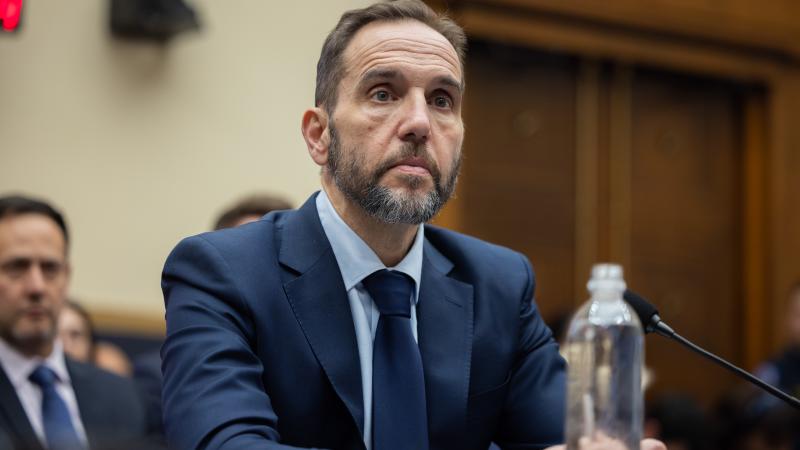
In documents obtained through Judicial Watch's public records request in Nevada, it appears the state's AG worked with former Department of Justice Special Counsel Jack Smith, who famously prosecuted Trump for his objections to the 2020 election and classified documents, even though, as President of the United States, Trump says he had the ability to declassify those documents.
Judicial Watch had requested "Any communications and/or documents with Jack Smith and/or the DOJ special Counsel group/team from January 1 2022, to the completion of this request." In response, Nevada AG Aaron Ford wrote that his office had "identified records that may not be released because the requested records are protected by common interest privilege."