Before they were against it, Democrats were right about machine voting
These efforts built on broader, long-standing Democratic (and some bipartisan) worries about electronic voting security dating back to post-2000 reforms under the Help America Vote Act, though Rep.
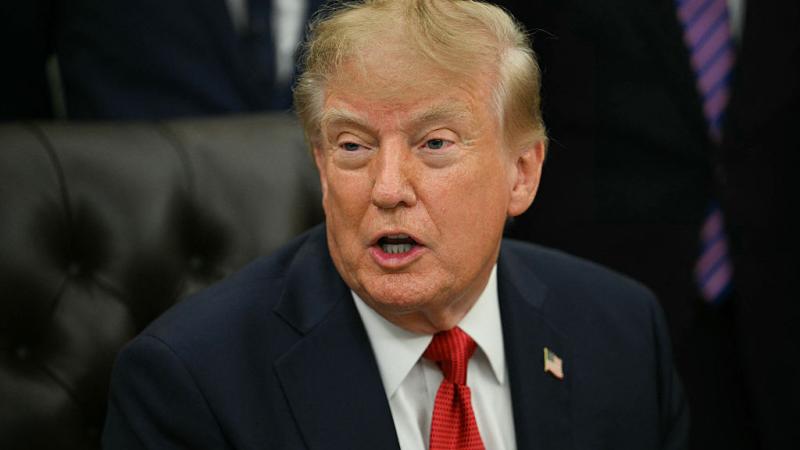
President Donald Trump on Thursday addressed the nation and presented newly declassified intelligence detailing vulnerabilities in voting machines, concerns that were, in fact, first raised by Democrats.
"For many years, Americans were blatantly lied to about the security of our election infrastructure, including electronic voting machines and ballot counting systems," Trump warned. "Almost all are vulnerable. And they are easily compromised, and people within our government knew that," Trump warned.
The vulnerabilities are severe enough that officials say they could allow foreign cyber intrusions and compromise the integrity of elections, according to administration sources and preview reports.
Such alarm bells were ringing years ago, thanks to such Democratic lawmakers as Sens. Elizabeth Warren, Massachusetts, and Ron Wyden, Oregon.
In 2017, Wyden sent letters to major voting machine manufacturers (including Dominion, ES&S, and Hart InterCivic) inquiring about their cybersecurity practices – such as the use of Chief Information Security Officers, dedicated security staff, independent audits and protections against hacking – prompted by Democrat claims of Russian efforts to target election infrastructure in 2016 after President Donald Trump won the election.
In December 2019, Warren, Wyden, and Minnesota Democratic Sen. Amy Klobuchar, a fellow Democrat, along with Rep. Mark Pocan, a Wisconsin Democrat, sent letters to private equity firms owning these vendors.
They highlighted how cost-cutting had left systems “prone to security problems,” citing outdated software, reported vote-switching incidents (e.g., in South Carolina), scanner issues, and a lack of paper records or meaningful innovation despite serving over 90% of voters.
Roughly 14 years earlier, former President Jimmy Carter, also a Democrat, voiced concerns about electronic voting machines. In 2005, he co-chaired the bipartisan Commission on Federal Election Reform with former Secretary of State James Baker.
The panel recommended that Congress require voter-verifiable paper audit trails for all electronic voting machines by 2008 to enable audits and recounts amid security and accuracy worries.
The efforts built on broader, long-standing Democratic (and some bipartisan) worries about electronic voting security dating back to post-2000 reforms under the Help America Vote Act.
The focus on both sides has consistently been on risks like outdated technology, supply-chain concerns, and the need for paper ballots and audits to ensure verifiable results, all of which are feasible remedies in the near future, according to Trump.
Trump, in the days after the November 2020 election that he lost, repeated claims that Dominion Voting Systems, which is cited in the newly declassified documents, and other equipment had switched or deleted millions of votes through glitches and foreign interference.
He intensified the attacks as late-counted ballots eroded his early leads in key states, repeatedly citing Dominion concerns in tweets, speeches and meetings.
The Facts Inside Our Reporter's Notebook


Top Stories



Trending
Just the News Spotlight
Just News, No Noise