Newsom signs 7 data center bills as California ramps up regulations
The Democratic governor signed legislation that ranged from making data centers pay their share of increasing electricity costs to providing local governments with water usage data.
(The Center Square) -
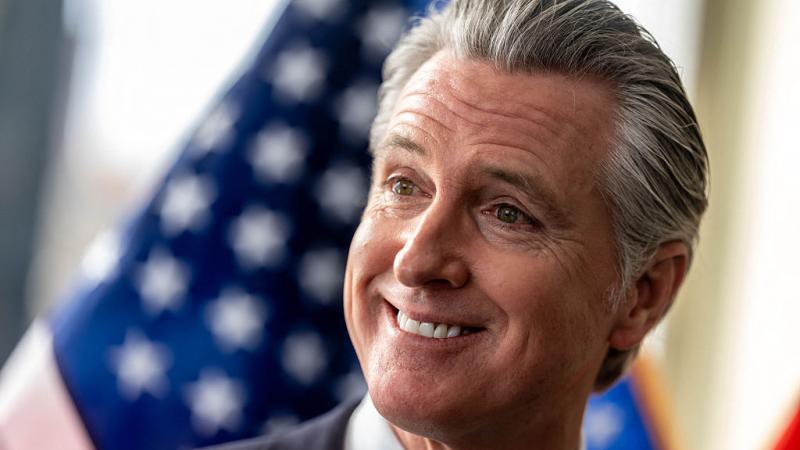
Gov. Gavin Newsom this week signed seven data center bills into law, bolstering California's effort to add protections for ratepayers and the environment as the state grapples with a growing number of centers.
The Democratic governor signed legislation that ranged from making data centers pay their share of increasing electricity costs to providing local governments with water usage data.
“Today we are once again laying the groundwork for a stronger approach, because we know that we don’t have to sell out Californians or sacrifice our well-being to innovate and succeed,” Newsom said in a press release.
“California has proven that time and time again. With these laws, we are ensuring that Californians remain in the driver’s seat – and that those profiting from data centers aren’t doing so at our expense," said Newsom, whose last day in office is Jan. 4.
The Center Square reached out to the Governor's Office for further comments, but did not hear back by publication time.
Three bills in the package of legislation Newsom signed, including Assembly Bill 2383, Senate Bill 886 and Senate Bill 1168, require data centers to pay the higher cost of electricity rates as demand spikes while the number of data centers rises statewide.
According to a November 2025 report published by the University of California, Riverside and San Francisco-based nonprofit Next10, electricity demand, water usage and carbon emissions all nearly doubled between 2020 and 2025.
That happened in large part because of the increased demands on data centers as the development of artificial intelligence technology ramped up. according to the report.
More than 30 companies who have developed AI, such as Anthropic and OpenAI, are headquartered in California, according to the Governor's Office.
“The goal of the bill [AB 2382] is really to respond to some of the potential impacts that data centers can have on our communities,” Assemblymember Rick Zbur, D-Los Angeles and the legislation's author, told The Center Square on Thursday. “So this whole package of bills is part of California’s leadership in making sure that with the innovation economy, we’re protecting the California public and, at the same time, trying to ensure that the public has the benefit of the innovation economy.”
One of the threats that data centers could pose for many communities is their large uses of electricity, resulting in price hikes for other ratepayers, Zbur said. AB 2382 requires that a separate rate structure is set up for data centers that requires the centers to pay their “fair share” of increasing electricity costs.
“It also makes sure that providers of the electricity, the energy providers - when they go out in the market and procure the electricity they need to serve [data centers] - they’re not left holding the bag if the data centers end up closing down,” Zbur said. “So it requires long-term contracts that have security so that ratepayers are protected and those costs are borne by the data centers and not by the everyday ratepayers.”
According to the UC Riverside and Next10 report, the expansion of data centers in California resulted in a 95% increase in the state’s electricity consumption, from 5.54 terawatt-hours to 10.82 terawatt-hours between 2019 and 2023. That 5.28 terawatt-hour increase is the same as if California had added 490,000 average households, the report said.
That report also found that California’s electricity consumption is expected to grow an additional 16.16 terawatt-hours to 25.28 terawatt-hours by 2028, roughly a 49.2% to 133.6% increase – roughly 2.4 million average American households.
According to the California Energy Commission, there are more than 200 operational data centers in California, putting it behind only Texas and Virginia. The agency regulates the energy infrastructure that data centers rely on.
“Around the world, data centers are presenting opportunities and challenges,” Gilbert Magallon, information officer for the California Energy Commission, wrote in an email Friday to The Center Square. “With these laws, California is striking a balance that encourages data center growth, while also ensuring that development aligns with California’s environmental protection values and protects ratepayers from spikes in their utility bills.”
Water use has grown as well because of the increase in data centers. In 2023, the UC Riverside/Next 10 report shows, data centers’ water consumption in California reached almost 13.2 billion gallons, or almost 40,463 acre-feet, and is expected to hit between almost 19 billion gallons and 30.8 billion gallons by 2028 – 58,308.4 acre-feet to 94,521.04 acre-feet.
However, not everyone believes that the increased regulations are necessary as AI technology and data center demands develop, Spence Purnell, senior fellow of Technology and Innovation at the Washington, D.C.-based R Street Institute, told The Center Square.
“The data centers are sort of being singled out,” Purnell said when asked if the legislation constitutes government overregulation. “The rate increases and some of the environmental review exemptions are things that are targeted towards that industry at a time when it’s at its most important growth stage. I do think it represents overregulation.”
However, Purnell told The Center Square, two bills Newsom signed – SB 1168 and AB 1577 – are appropriate because they ensure transparency as data centers expand in the state.
“Generally, those are the type of things that market advocates are looking for, which is to say we all have a right to know what they’re using, how much water, what’s the environmental impact to some degree,” Purnell said.
The Center Square reached out to cities with a high number of data centers, Los Angeles and Santa Clara, and several data center companies. None responded by publication time Friday.
The Facts Inside Our Reporter's Notebook


Top Stories





Trending
Just the News Spotlight
Just News, No Noise