Seattle mayor receives improved revenue forecast but not enough to close a $175 million hole
Friday’s revenue forecast improved Seattle’s budget position through 2028, but offered little room to restore cuts to services Mayor Katie Wilson proposed to close a $175 million hole.
(The Center Square) -
(The Center Square) - Friday’s revenue forecast improved Seattle’s budget position through 2028, but offered little room to restore cuts to services Mayor Katie Wilson proposed to close a $175 million hole.
The forecast showed revenues coming in $9 million higher than expected for 2026, with a $1.2 million projected increase in general fund dollars for 2027, while 2028’s revenue projection fell by $2.4 million.
The net effect is a $7.8 million increase to the general fund over the three-year outlook, so Wilson could use the extra in 2026 to offset the 2028 decrease.
Her 2027 budget proposal would reduce the $175 million deficit to about $23 million, before factoring in Friday’s forecast, which Wilson already hopes to fill with available fund balances leftover from 2026.
Not everyone was impressed with the numbers.
“I take this as a bad forecast,” Councilmember Dan Strauss told the Economic and Revenue Forecast Council after reviewing the minor shift and weak growth. “This is one of the smallest gains that we've had in the last seven years; so that's a real big problem — not your problem — our problem.”
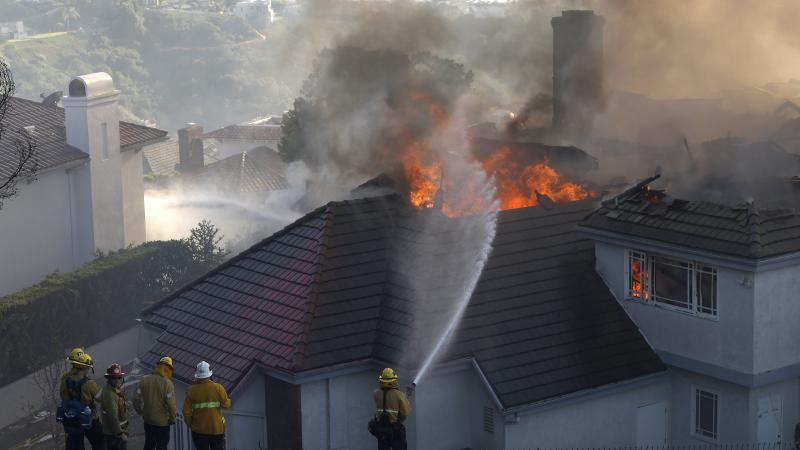
Councilmember Robert Kettle told The Center Square in a phone interview after the meeting that restoring a $7.06 million proposed cut to the Seattle Fire Department overtime budget is among his top priorities.
If approved, SFD’s daily staffing target would fall from 222 to 209, about 5.9%, with 1,600-1,700 unit outages annually, according to a council budget memo from this week.
Some neighborhoods, such as Magnolia, fear it could impact service access if their local fire station became tied up with other calls.
When asked where he would cut to free up the overtime funding, Kettle said he was still working on it.
“I'm confident that we're going to either have the whole of it or a good majority of it,” Kettle said after explaining that he’s waiting to hear from Strauss on where city council can move some money around.
Citywide and general fund spending are both set to increase in 2027-28, even as the mayor said she will cut about $50 million annually in her 2027 budget proposal to trim the structural deficit.
In reality, she plans to use fund transfers and reprioritize available resources to reduce the gap and fund her priorities.
While the Seattle Police Department would receive another $68 million in 2027 under her plan, about $56 million would fund contractually obligated pay increases agreed to by former Mayor Bruce Harrell.
SPD could lose $5.9 million in recruitment funding across 2027 to 2028, $3.1 million for nine vacant parking enforcement positions, $1.1 million for a civilian investigative support expansion, $511,000 for three vacancies in the Real-Time Crime Center and $206,000 for a filled police data analysis position.
Councilmembers Eddie Lin, Alexis Mercedes Rinck and Dionne Foster have challenged claims repeated by Kettle and others on the dais that the mayor is “unfunding” or “deprioritizing” public safety.
“Would you call that defunding or unfunding the police department, such a large increase?” Lin asked council staff during an SPD budget presentation on Thursday, “I do believe we need more officers."
SPD net hiring growth would halt in 2028 under Wilson’s plan, something else Kettle wants to address, as officer staffing levels continue to remain below that of 2019 before the COVID-19 pandemic.
While Friday’s forecast was a modest boost to the general fund for 2026, it wasn’t shared across every fund, especially when it comes to Real Estate Excise Tax, REET, revenue, which funds capital projects.
REET collections are projected to be $19.5 million lower than expected across 2026 to 2028, which is $7.8 million down from August’s revenue forecast for 2027 and $8.4 million for 2028.
That revenue pool is still expected to grow, but more slowly than expected, which Strass said he found concerning.
“This is the worst part of the revenue forecast, simply because REET is our telltale,” Strass said.
Less REET revenue means less money for infrastructure, potentially delaying projects for taxpayers.
The Economic and Revenue Forecast Council adopted its baseline October forecast on Friday, which assumes Seattle will not enter a recession over the next few months.
Under the pessimistic forecast, general fund revenues would fall $65 million below baseline in 2027 and $80.5 million below in 2028.
“The risks are there, but at this point it does not look like the economy is heading into a recession,” Jan Duras, interim director and chief economist of Seattle’s Office of Economic and Revenue Forecasts, said Friday.
The Facts Inside Our Reporter's Notebook




Top Stories



Trending
Just the News Spotlight
Just News, No Noise