Related Articles
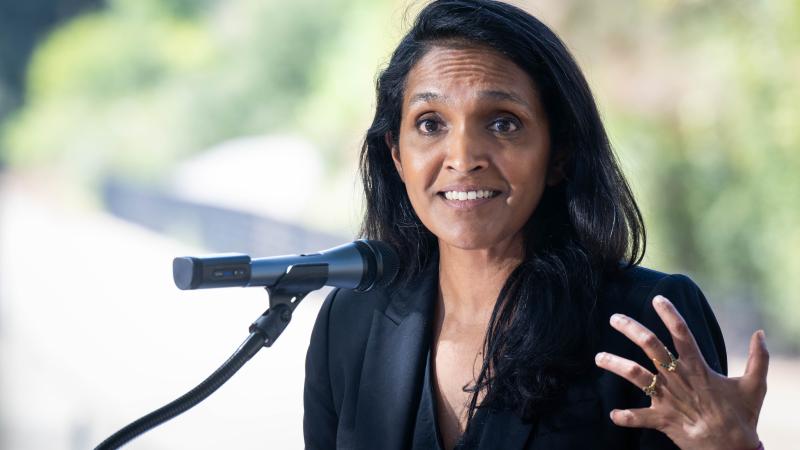


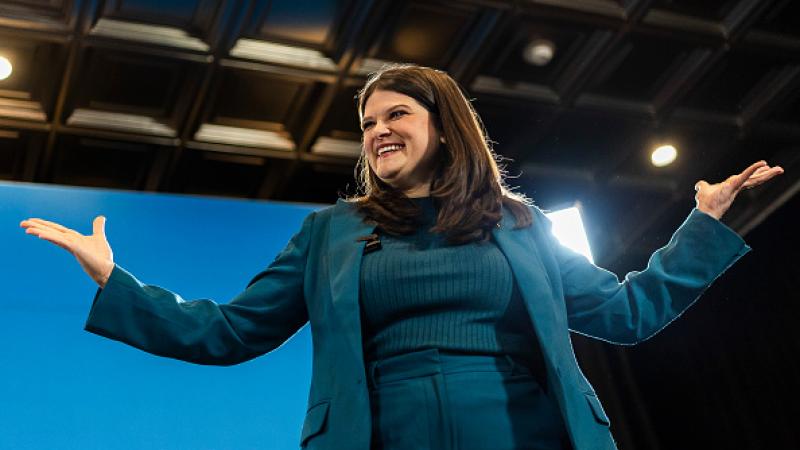
Adam Hamilton is asking Kansas voters to trust him with a Senate seat, but the last time he used his pastoral influence to raise money, the church-backed venture he promoted admitted breaking state securities laws and ran out of cash.
In 2000, the Rev. Adam Hamilton, now the Democratic nominee for U.S. Senate in Kansas, was the most visible advocate for a development company that raised millions from church members but failed to deliver on its promises.
Hamilton was the founding pastor of the Church of the Resurrection in Leawood, Kansas, just outside Kansas City when the church used a for-profit company, COR Development, LLC, to buy 47 acres to develop commercially, with 15 acres to be set aside for the church.
The company registered a public offering with the SEC but only raised about $8.65 million, or roughly half of its $16 million goal, and offered units directly to the public. The company's filing added that "COR Development is an early-stage company with no operating history, and COR Development expects to encounter risks frequently faced by early-stage companies in real estate development in growing markets."
The religious angle was unheard of during the dot-com boom of the early 2000s. The SEC filings list the Church of the Resurrection as the only member with an interest in CORnerstone Development, which selected COR Development’s managers. While the church was heavily involved in COR, Hamilton is not listed as a manager or leader in any documents regarding the company, but he appeared to be behind the land acquisition idea, according to an interview with Reuters in September 2000. Hamilton told the outlet that the decision to create a stock offering came after he realized the church needed more land – as it was one of the fastest growing churches in the nation at that time – but could not afford to pay $250,000 an acre for the land that was available in the area.
Hamilton reportedly told Reuters that the church began a massive fund-raising drive to build a new church by 2002, but that church members would not give large amounts of money to buy the land. A stock offering seemed like the best solution.
"When I went to seminary, I never dreamed of helping to design a commercial real-estate project," Hamilton told Reuters. "But this really is a means to another end.”
"We've said we want to be a 'whatever it takes kind of church.' The public offering is part of the whatever it takes."
Hamilton’s campaign did not respond to a Just the News inquiry prior to press time.
The plan for the 47 acres was to build shops and offices on about two-thirds of the land and donate 15 acres to the church, allowing investors to make charitable tax deductions. In COR’s SEC prospectus, the 15 acres were to be split into two donations: two acres to the church in the first year, and the remaining 13 acres in 2002. As of 2003, SEC filings still show the land donation as planned.
Hamilton does not appear as filing or being a signatory to the share offerings.
The entire development nearly collapsed in 2003. That year, COR admitted that it had violated Kansas and Missouri securities laws, stopped public SEC reporting in 2003, and disclosed that management had concerns the company might not be able to pay its debts or stay in business very long.
The company admitted that the 2001 sale had not complied with state exemptions from registration, so the units it sold “may be subject to rescission,” meaning that investors could demand their money back. COR also disclosed “substantial doubt about the Company's ability to continue as a going concern." On June 30, 2003, COR said it had zero dollars in cash, a $5.08 million banknote and a $610,000 bank overdraft. Its lender stated that it would not fund phase one of the development until a buyback offer to Kansas investors was completed. Because COR stopped public SEC reporting in 2003, Just the News was unable to find any results of the rescission or if any investors received their money back.
COR also made a $2 million loan to Market Foods for a grocery store in the development, but was only repaid $37,905 before Market Foods defaulted and eventually filed Chapter 11 bankruptcy in January 2005.
In the end, the development was completed as the Cornerstone of Leawood, which still exists today, and is, at least in part, still listed for sale or lease. The Church of the Resurrection eventually built a new church for $80 million, and Hamilton is still the church’s lead pastor.