Related Articles

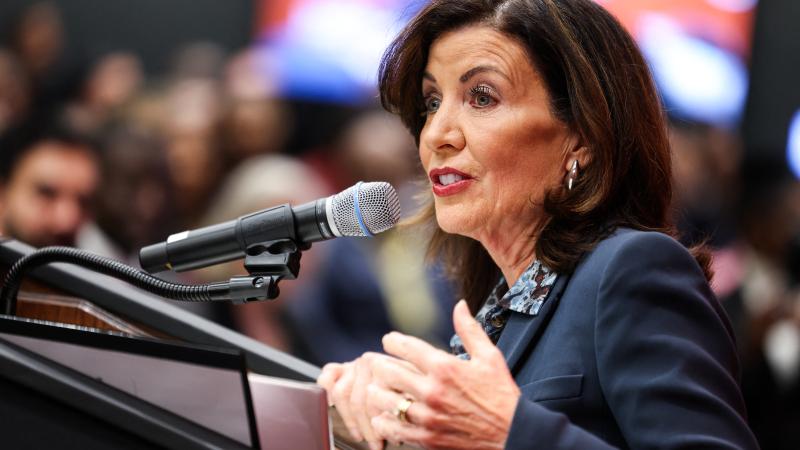


Public confidence in higher education loses traction, on par with steady decades-long declines, but high costs, politics and the emergence of AI has shaped the polling in new ways.
Americans' confidence in higher education was on the rise last year, but a new Gallup survey released Tuesday shows those gains now appear lost, amid concerns about the rising cost of going to college, the return on investment and the politicization of the institutions.
The percentage of respondents who said they have a "great deal/quite a lot” of confidence in higher education dropped to 38% from 42%. And the percentage of those whose level of confidence was “very little/none” increased from 23% to 25%, according to the Gallup survey done in partnership with the Lumina Foundation.
“Any decline is likely for the same reasons we've seen confidence declines over the last decade: increased costs and poor results; over-politicization and moral vapidness,” Chance Layton, communications director for the National Association of Scholars, told Just the News in an interview.
Although confidence declined across the board, Democrats reported the largest drop, down 11% from 2025 compared to Republicans (2%) and Independents (3%).
One possible explanation could be higher education reforms enacted by Education Secretary Linda McMahon, such as civil rights enforcement against Diversity, Equity, and Inclusion (DEI) practices and Title IX violations, federal student aid and grant restructuring and federal bureaucracy reduction – which left-leaning politicians and higher education institutions frequently oppose.
“Recent declines from the left-side of our political spectrum are more than likely a political sentiment born of the fact that current education reforms are led by Republicans,” Layton also said. “In our hyper-partisan politics, the cure to restore trust in higher education will be strongly disliked by the political left.”
Republicans show the steepest overall decline in confidence from 2015 – down 33 percentage points.
Still, Layton remains optimistic, saying if the reforms by President Trump, McMahon and the rest of the administration "last and succeed, we may end up in an environment where Republicans begin to regain trust in higher ed's social contract while leftists disavow it.”
At least 400 colleges and universities have cut, closed or rebranded their DEI programs in roughly the past 17 months – among them states like Florida, Ohio and Texas that have passed laws blocking public colleges from funding or hosting DEI initiatives.
But if one factor is all but certain, it would be the rising cost of attending college.
The average cost for students attending a four-year public university in their state – tuition, food and on-campus house – is now roughly $30,990, compared to a decade ago when it was roughly $24,500, according to a Forbes report in May.
Of 2026 survey participants who reported confidence in higher education, 33% cited its ability to provide good critical thinking abilities — up from 19% in 2024 and 24% in 2025.
Nineteen percent of respondents cited better job opportunities as a source of confidence, up from 16% in 2025 but down overall from 2024.
Thirty percent said it makes students more informed and knowledgeable, unchanged from 2025.
Despite those with a postgraduate degree consistently showing the most trust in higher education, followed by four-year degree-holders, and finally, those with no college degree, the survey found that confidence declined across all education levels by 5% between 2025 and 2026 — a loss of nearly all gains made between 2024 and 2025.
The value of higher education is now also facing the specter of Artificial Intelligence, which is rapidly becoming part of most career fields. Among the concerns is that jobs once attainable with a college degree will be eliminated altogether by AI and/or those who don't know how to create such content or integrate it in their field will end up unemployable.
Gallup rolled out a new survey question this year on the implications of AI on the value of college degrees in the next five years. It revealed mixed opinions among Americans:
Overall confidence in higher ed and education levels also impacted participant outlook on AI.
Among participants who expressed overall confidence in higher education, 32% believe college degrees will become less important because of AI, compared to 64% among those who lack confidence. Meanwhile, 49% of non-graduates and 39% of college graduates believe degrees will be less important.
The survey was conducted via phone interviews with a random sample of Americans 18+ living across all 50 states and the District of Columbia with a margin of sampling error between plus-4 and plus-5.