Concerns over Tennessee property taxes could lead to special session
Tennessee leads the country in property tax hikes, according to the Beacon Center, a Tennessee-based free market policy and research organization.
(The Center Square) -
Tennessee does not have a statewide property tax, and voters will be able to permanently ensure that one is never implemented in November, but their recourse when it comes to local property taxes is limited.
A constitutional amendment on the November ballot would bar the General Assembly from enacting property taxes statewide if approved by a majority of voters. But it doesn't apply to local property taxes enacted by cities, counties and school boards, which are increasing across the state.
Tennessee leads the country in property tax hikes, according to the Beacon Center, a Tennessee-based free market policy and research organization.
"We are in a cost-of-living crisis, and this just adds further to that, when the cost of your home is increasing annually because the government is maybe struggling on how they are budgeting," said Jason Edmonds, director of policy for the Beacon Center, in an interview with The Center Square. "There have been some major stories going on right now about the restaurant owners on Broadway, where they've seen their tax bill jump hundreds of thousands more."
It's not just the businesses on Nashville's Broadway Street that are affected. In the small Chattanooga suburb of Red Bank, property taxes increased by 14% this year; in Mount Juliet, a Nashville suburb, property taxes were raised by 164%, according to the Beacon Center.
State Rep. Jason Zachary, R-Knoxville, and Sen. Bo Watson, R-Hixson, introduced a bill in the General Assembly in January that could have curbed some increases. It would have barred local governments from enacting tax increases more than the rate of inflation plus 2%. If local entities want to raise taxes beyond the threshold, residents would have a chance to vote in a referendum. The bill never made it out of committee.
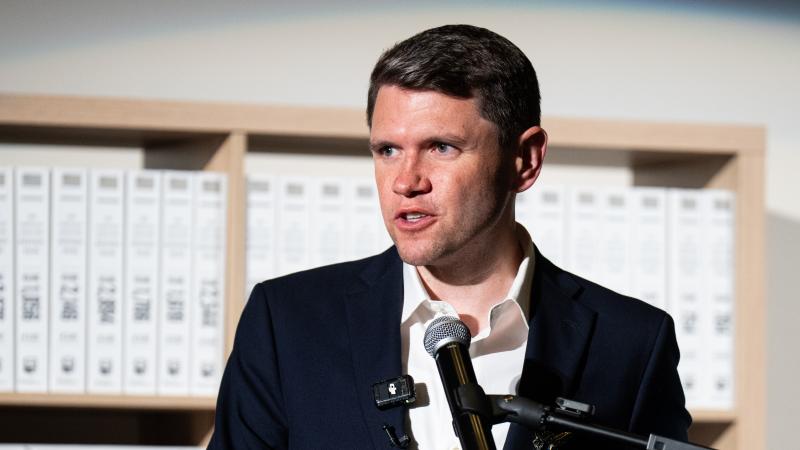
Connor Grady, spokesman for House Speaker Cameron Sexton, said lawmakers are looking at all possible solutions, including a special session.
The only recourse for residents now is to appeal their assessments to their local city or county, but beyond that, Tennessee does not have a bill capping property taxes or assessments, Edmonds said. Only three other states do not.
"We think that these are just basic taxpayer protections that Tennessee should have when nearly every other state has some form of property tax cap," he said. "Tennesseans shouldn't be one of the few that doesn't have these basic property tax protections for residents."
Another option for lowering property taxes is for local entities to cut spending. Property taxes are enacted to provide core government services, but that's not always the case, Edmonds said.
"They're spending it on noncore government services," Edmonds said. "So when we look at other states that do have these caps, there seems to be a realignment where they focus on what the government should be funding. You know, pickleball might be fun, but I don't know if every single small town in Tennessee needs a pickleball court."
Property tax concerns are not limited to Tennessee.
Georgia lawmakers also considered ways to lower property taxes during the 2026 session of the General Assembly. House Speaker Jon Burns' proposal to eliminate homestead property taxes didn't come to fruition before lawmakers adjourned sine die in April.
Cities that applied for a new Local Homestead Option Sales Tax to offset property taxes, if voters approved it, were shot down by Democratic lawmakers during a special session in June because the requests required a two-thirds vote in both chambers. More than 80 entities asked lawmakers to approve referendums from the small town of Santa Claus in Toombs County to metro Atlanta's Gwinnett County.
Albany Democrat Freddie Powell Sims defended his vote, saying the sales tax would shift the tax burden.
"Homeowners may save on property taxes only to spend more on sales taxes," Sims said in a statement. "In the name of affordability, we cannot pass legislation that kills jobs, raises grocery prices and wreaks havoc on Georgia families’ budgets in all tax brackets."
Georgia cities can ask lawmakers for a referendum again in 2027.
The Facts Inside Our Reporter's Notebook
Links


Top Stories



Trending
Just the News Spotlight
Just News, No Noise