Governors Cox and Shapiro engage at National Cathedral for 'A dialogue we sorely need'
The governors were asked who, if anyone, bears responsibility for the normalization of violent rhetoric. Shapiro blamed President Trump.
(The Center Square) -
(The Center Square) - Intense polarization and the alarming rise of partisan political violence has left many Americans wondering about the nation’s trajectory.
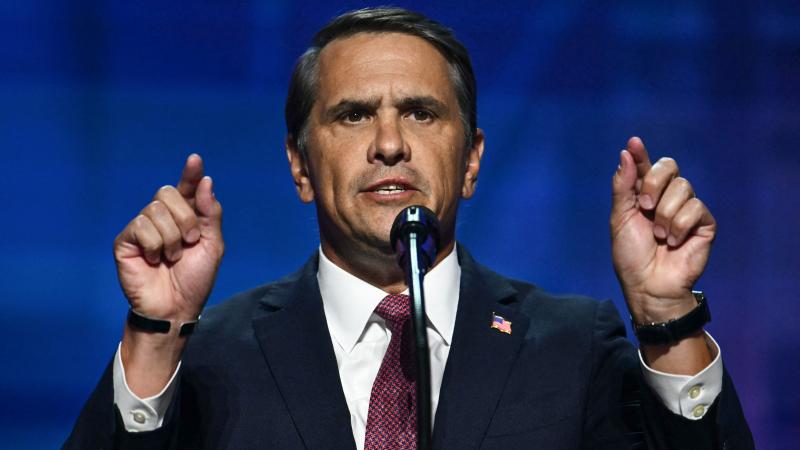
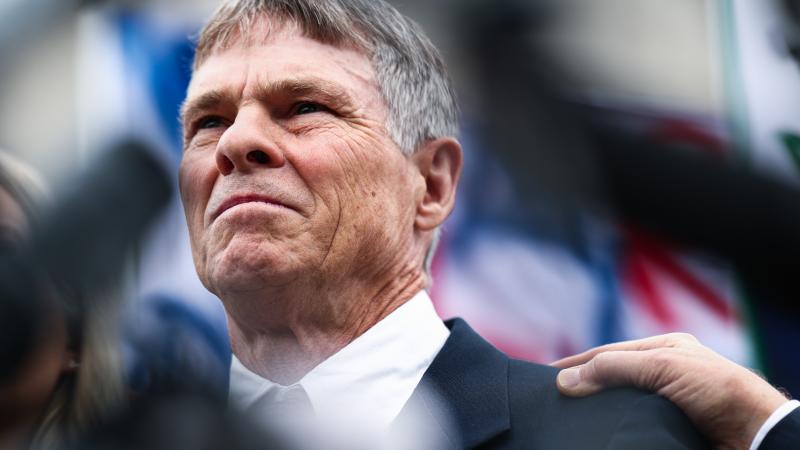
That’s why Gov. Josh Shapiro and Utah Gov. Spencer Cox joined journalist Savannah Guthrie for a discussion on the topic at the National Cathedral in Washington, D.C., on Tuesday evening.
Cox said the two made each other’s acquaintance within the National Governors Association. He found support from Shapiro in the wake of Charlie Kirk’s assassination in Utah. The Pennsylvania governor, the victim of arson and an assassination attempt in April, has been thrust into expertise on the subject of political violence. He gave Cox the same advice he’s frequently called upon national leaders to adopt, to act with “moral clarity.”
Before the governors took the floor, a panel including Dr. Yuval Levin, director of Social, Cultural, and Constitutional Studies at the American Enterprise Institute; Melody Barnes, founding executive director of the Karsh Institute of Democracy at the University of Virginia; and Heather Gerken, the 11th president of the Ford Foundation joined Cathedral Dean Randy Hollerith. The group discussed strategies to promote citizenship, political discourse, and civic engagement.
The panelists pointed out that the U.S. has a long history of political violence, contrary to the cooperation required for democracy to function.
“It's a substitute for arguing with each other, a dangerous substitute rather than an extension of it,” said Levin. “We should not imagine that the problem is that we disagree too much. And in fact, in some ways, the problem is that we disagree too rarely, that instead of disagreeing with each other, engaging with each other, we cocoon ourselves away with people we agree with and talk about people we disagree with as if they're caricatures that we hold of them is all there is to them, as if there's nothing to hear, to listen to in what they have to say.”
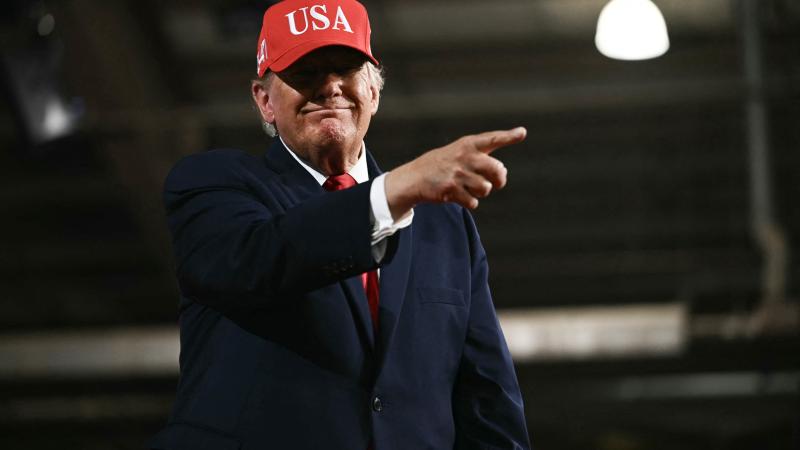
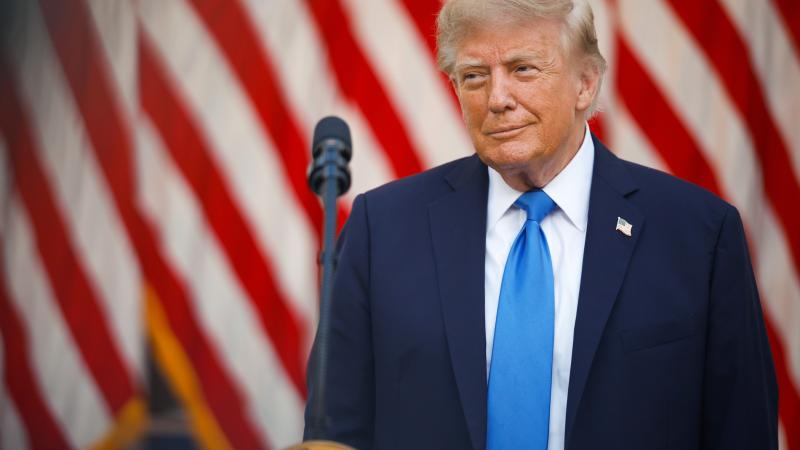
The governors were asked who, if anyone, bears responsibility for the normalization of violent rhetoric. Shapiro addressed the elephant in the room, a president whose social media posts have frequently defied the norms of accepted political speech, directly.
“All leaders must condemn all political violence, not cherry-pick which violence to condemn and which to accept,” said Shapiro. “When you’re a governor, when you’re a president of the United States, you are looked to for that moral clarity, and we have a president of the United States right now that fails that test on a daily basis.”
Shapiro pointed to Cox, a Republican, as an example of someone who has spoken out against violence from all sides.
“I think if President Trump were here right now, he would tell you this isn’t his thing, and he would be very honest about that,” said Cox, indicating the conversation being had.
He added that he had spoken with the president on the topic and that, violent rhetoric aside, the president has indicated support for nonviolent approaches to political differences.
Cox highlighted, however, that it would be citizens and not leaders who need to change the tone of things.
“We the people have to decide that this is not who we are,” said Cox, saying there is an “exhausted majority.”
Cox and Shapiro were both comfortable laying the blame on members of both parties but also acknowledged another responsible party — social media companies. The internet has become a hotbed for both misinformation and radicalization, algorithms that amount to Americans “being groomed for rage,” as Guthrie put it.
Cox has called for a federal ban for children under the age of 16, following suit with Australia, which enacted such a prohibition Wednesday. Shapiro said he would not support a ban but advocated for "digital literacy" education, which has been panned by critics as ripe for manipulation. Guthrie used the opportunity to demonstrate a civil debate between disagreeing parties.
The conversation was briefly interrupted at least four times by protesters whose words were unclear as they bounced through the echoing cathedral. Guthrie indicated that security would handle the matter while the trio continued to speak over the shouts.
Guthrie closed the conversation by asking if either governor plans to run for president in 2028. Cox responded, “One of us is not.” Shapiro, who has been widely rumored to be gearing up for a bid, simply smiled.


Top Stories



Trending
Just the News Spotlight
Just News, No Noise