PA House pushes aside objections and passes bill to limit license plate readers
GOP Rep. Timothy Bonner, a former prosecutor, said the cameras have been "essential in solving crimes" and by some estimates have helped reduce crime by 10% to 20%. The bill, he said, has some "good parameters" but goes too far.
(The Center Square) -
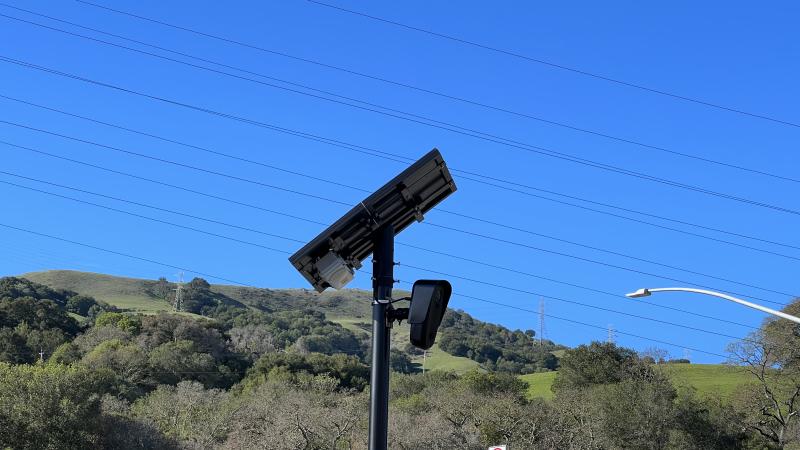
(The Center Square) - The state House on Monday gave overwhelming bipartisan approval to a bill to establish Pennsylvania's first rules on the automated license plate readers that have stirred controversy nationwide.
Opponents claimed it would inhibit law enforcement, which is already using the networked cameras or readers to solve crimes. Proponents said something had to be done about a technology whose expanding use is raising widespread privacy concerns.
The bill was approved 190-13. It was opposed by 12 Republicans and one Democrat, Rep. Manuel Guzman of Berks County.
It will now go to the Senate for consideration, with the knowledge that chamber has only two voting days left before the November election. Typically, little of substance is done in the final weeks of the two-year session that come after the election.
Rep. Jennifer O'Mara, the Delaware County Democrat who sponsored the bill, said in an interview she knew there was not enough time left for the bill to become law this year. The point, she said, was to have all the research and legwork done to have a bill ready to pass in the 2027-28 session, which will begin in early January.
"My intention is to move this forward now," O'Mara said. "No legislation passes right away."
Republican Rep. Rob Kauffman of Franklin County, speaking in a separate interview, agreed there was "no logistical way this gets voted through to the finish line" this session. He nonetheless called it an "absolutely a critical issue of the day."
During the debate, Democratic Rep. Emily Kinkead of Allegheny County said there have been instances of police misusing the cameras. Lawmakers, she said, need to be "the people who watch the watchers."
No one should be able to track someone using their license plate "when that person is doing nothing wrong," Kinkead said. "There are bad actors even within our law enforcement who need to be held to account."
Republican Rep. Timothy Bonner of Mercer County, a former prosecutor, said the cameras have been "essential in solving crimes" and by some estimates have helped reduce crime by 10% to 20%. The bill, he said, has some "good parameters" but goes too far.
"We can and must do better," Bonner said.
A legislative analysis found the bill would cost state government about $2 million in the first full year and about $1 million a year after that. The expense would be to cover the hiring of analysts, the filling of administrative positions, and training.
Among other things, the bill would:
Limit the use of a license plate-reading system to helping identify vehicles associated with a person who has an active arrest warrant for a homicide or felony violation; with a stolen vehicle; with a missing person; or with a homicide or felony investigation.Bans personal or political use of the systems; the use of them in tandem with facial recognition; and deploying them against communities based on race, ethnicity, or income.Data collected by the readers would have to be owned by a "government entity" and would have to be deleted within 72 hours of capture. It would not be available via Right-to-Know requests.Let local municipalities and authorities pass regulations even more strict than the state ones.
The license-reading cameras have become a hot-button issue nationwide. A recent poll of Wisconsin registered voters found that 63% of respondents felt they were an unacceptable violation of privacy rights.
The Facts Inside Our Reporter's Notebook


Top Stories

Trending
Just the News Spotlight
Just News, No Noise