Related Articles
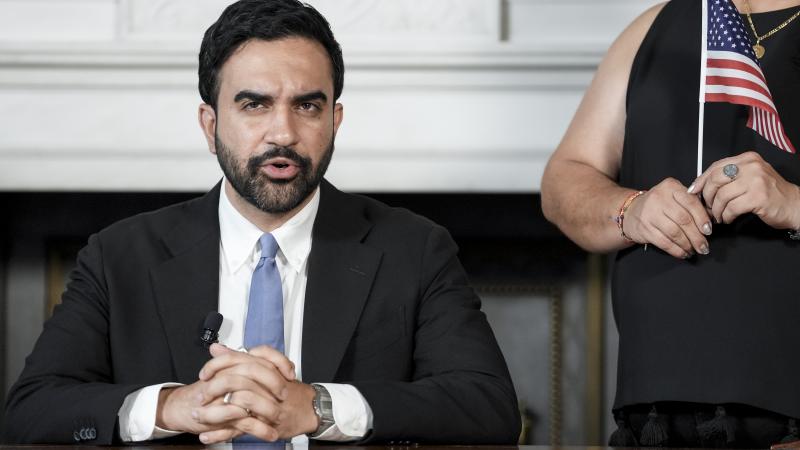


New Orleans will take a major step next week toward deciding whether and where large data centers can be built in the city months after officials temporarily halted development of the facilities.
New Orleans will take a major step next week toward deciding whether and where large data centers can be built in the city months after officials temporarily halted development of the facilities.
Conversely, Gov. Jeff Landry and other state officials spent Monday celebrating Meta's Richland Parish facility, a contrast illustrating the ongoing clash between Baton Rouge and New Orleans.
“It used to be, the saying was, ‘Where goes New Orleans, so goes the state.’ Let me tell you what happened today: that has changed,” Landry told reporters, referring to Meta's $50 billion commitment in Richland Parish.
Just minutes before, Landry had stood alongside Meta executives to announce an expansion of the company’s Hyperion data center in Richland Parish.
Landry was also joined by Richland Parish teachers, some of whom appeared in a promotional video produced by Louisiana Economic Development in which those teachers praised Meta for their recent $50,000 bonus.
“Meta’s presence has made a tangible difference in our classrooms,” Richland Parish Superintendent Sheldon Jones said. “From funding STEM resources and technology upgrades to workforce development initiatives, this partnership is directly strengthening the educational experience for Richland Parish.”
New Orleans leaders, by contrast, have greeted the prospect of large new data centers with open hostility. When a single proposed facility began taking its first steps toward development in the city, officials quickly imposed a temporary ban while they worked to decide how such facilities should be “defined and regulated.”
Councilmember J.P. Morrell argued that New Orleans’ limited geography makes large data centers fundamentally different here than in sprawling parishes.
“We are not a sprawling, 700-mile parish; we’re New Orleans,” Morrell said.
He added that large data centers could affect residents’ livelihoods because of their demands on land, water and the electric grid.
Councilmember Jason Hughes was even more aggresive in his opposition.
“We are committed to meaningful development in District E,” Hughes said in January. "But let me just put everyone on notice – if you don’t want something in your backyard, don’t put it in the backyards of my hardworking residents."
Since then, the City Planning Commission has been studying possible changes to the zoning code and weighing where data centers should be allowed and what standards should be met. The report will be published on July 21 and heard by the commission on July 28, after which it will be sent to the City Council for consideration.
Any recommendations adopted by the planning commission would still have to return to the City Council for consideration before changes to the zoning ordinance could take effect.
The divide over data centers is only the latest fault line between New Orleans and the Landry administration. Over the past year, they have clashed over criminal justice, state funding, economic development and the proper role of government.
"The state of Louisiana is tired," Landry said. "New Orleans thinks they're so special. They used to have four assessors, two clerks, a sheriff that ran out of a different town. That parish is going to operate exactly like the rest of this state. And the people in the state recognize that."