
Arizona attorney general to review state’s use of Flock cameras
Several Arizona local governments have either ended their contracts with Flock or adjusted their policies with the company.
(The Center Square) -
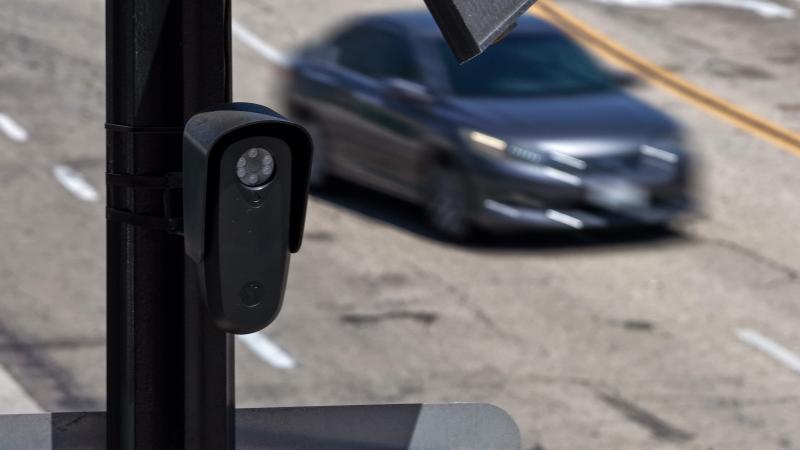
Arizona Attorney General Kris Mayes said she will conduct a review of the state’s use of Flock cameras and other automatic license plate readers.
This summer, several Arizona local governments have either ended their contracts with Flock or adjusted their policies with the company.
Mayes said her analysis will consider how Flock cameras are being used, the impact they are having on Arizonans' privacy and possible Fourth Amendment violations.
The Fourth Amendment of the U.S. Constitution protects Americans from “unreasonable searches and seizures.”
Richie Taylor, communications director for the attorney general, said Arizona towns and cities “have been grappling with these questions on their own, and that’s part of why this review is needed.”
“Issues of constitutional rights and privacy are too great to be decided in isolation at the local level. Attorney General Mayes believes these are questions that deserve a coordinated, statewide approach,” Taylor told The Center Square.
According to Mayes, technology can assist law enforcement in solving and preventing crime, but it needs to “be balanced against the Constitution and Arizonans’ privacy rights.”
“Arizonans are rightfully concerned about the documented examples of the misuse of this technology as well as how it affects their privacy rights. I share those concerns," Mayes said."We need a statewide approach to this issue.”
In response to Mayes' announcement, Paris Lewbel, a spokesperson for Flock, said the company’s license plate readers “capture still, point-in-time images of vehicles in public view.”
“Agencies own and control their data, access is limited to authorized users, every search requires a documented reason, and each search creates a permanent audit trail," Lewbel told The Center Square.
“More than 40 courts across the country have determined that fixed license plate readers do not violate the Fourth Amendment and cannot track the whole of an individual's movements,” he added.
Lewbel said misuse of Flock technology is “completely unacceptable,” noting when it does occur, the company believes “accountability matters — including in the cases Arizona agencies are currently reviewing.”
There have been allegations of misuses of Flock technology by police in the Arizona cities of Surprise, where an unnamed officer was cleared of any wrongdoing, and Apache Junction, where Officer Joshua McDaniel resigned after admitting he used the technology improperly to track his wife's vehicle.
Lewbel said Arizona has seen the impact of Flock cameras being used as they are intended.
“In Youngtown, Flock’s cameras have helped the city solve a number of crimes, largely auto thefts," the Flock spokesperson said.
Lewbel also pointed to Chandler, where Flock “has supported the recovery of stolen vehicles, arrests tied to burglary, robbery, and fatal hit-and-run cases, and helped locate missing and endangered people, including elderly drivers and out-of-state missing persons safely recovered in the city.”
Last month, Chandler terminated its Flock contract after an audit discovered unexplained system activity.
The Facts Inside Our Reporter's Notebook



Top Stories





Trending
Just the News Spotlight
Just News, No Noise