Trump's AI executive order likely to face resistance from red and blue states alike
The proposed executive order, the details of which are not yet known, has faced pushback from conservative governors who have expressed interest in regulating AI locally.
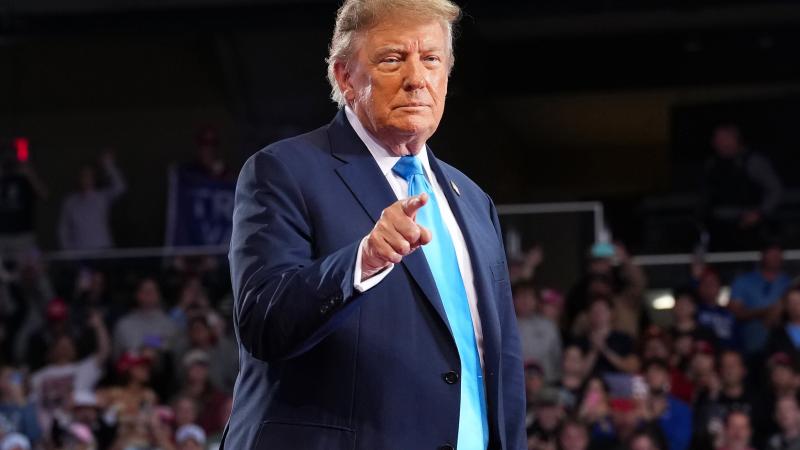
President Donald Trump fired off a warning to states this week that his administration will be issuing an executive order to set a national standard for Artificial Intelligence development, but the measure faces stiff resistance from both Republican and Democratic states alike.
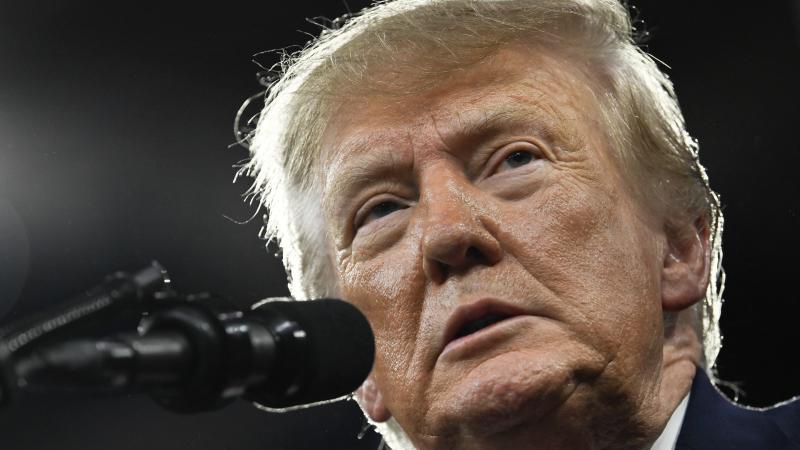
“There must be only One Rulebook if we are going to continue to lead in AI,” Trump said in a post to Truth Social.
“We are beating ALL COUNTRIES at this point in the race, but that won’t last long if we are going to have 50 States, many of them bad actors, involved in RULES and the APPROVAL PROCESS,” he said.
“THERE CAN BE NO DOUBT ABOUT THIS! AI WILL BE DESTROYED IN ITS INFANCY! I will be doing a ONE RULE Executive Order this week. You can’t expect a company to get 50 Approvals every time they want to do something. THAT WILL NEVER WORK!” he concluded.
Pushback from conservatives
The proposed executive order, the details of which are not yet known, has faced pushback from conservative governors who have expressed interest in regulating AI locally to protect rights of citizens and ensure its safety.
Florida Governor Ron DeSantis, who just this week proposed an AI Bill of Rights in his state, said that an executive order could not undo state laws on AI under the Constitution.
“An executive order doesn’t/can’t preempt state legislative action. Congress could, theoretically, preempt states through legislation,” DeSantis posted on X on Tuesday. “The problem is that Congress hasn’t proposed any coherent regulatory scheme but instead just wanted to block states from doing anything for 10 years, which would be an AI amnesty. I doubt Congress has the votes to pass this because it is so unpopular with the public.”
Last week, DeSantis unveiled a proposal to implement a “Citizens Bill of Rights for Artificial Intelligence” that would prevent subsidies for big technology companies, allow localities to block data centers, and implement new privacy protections for users. Most importantly, the proposal would block utility companies from charging residents more in order to support the development of data centers.
The proposal is the most wide-ranging from a Republican state so far, but follows a patchwork of regulations and proposals from a variety of both conservative and liberal states. The president’s move to prevent states from implementing AI regulation comes after efforts to enshrine in law a 10-year moratorium on local AI regulations through Congress. Originally, President Trump’s allies tried to slip such a requirement into the One Big Beautiful Bill, but it was later stripped after bipartisan criticism. A similar provision was slated for inclusion in the annual National Defense Authorization Act, but later removed as well.
At the time, Arkansas Gov. Sarah Huckabee Sanders—President Trump’s former press secretary and close ally—wrote an op-ed criticizing the planned 10-year moratorium on AI regulation in the OBBB, calling it “unacceptable.”
“That Congress proposes to strip away the right of any state to regulate AI is the antithesis of what our founders envisioned when they established our federal system,” she wrote. “As we compete with China, we cannot sacrifice the health, safety and prosperity of our own people. We must curb AI’s worst excesses while also encouraging its growth, which is exactly what states have done through the creation of their own regulatory frameworks.”
But, the Trump administration’s warning about regulation of AI seems aimed at addressing onerous requirements on the table in Democrat-controlled states that could have impacts on the AI industry outside the individual states.
Blue states' regulations problematic
Neil Chilson, the former Chief Technologist at the Federal Trade Commission and current Head of AI policy at the Abundance Institute, told Just the News it is the regulations from blue states that present the most danger to the growing industry.
“[This] latest… promised, pending executive order is targeted at a very important problem that the Biden administration, likewise, did not wrestle with, which was the growing action at the state level, in a way that is regulating national policy at the state level,” Chilson told the John Solomon Reports podcast.
“[We] have had more than 1,000 bills introduced at the state level since the beginning of this year. And when the legislatures come back in January […], I think we can expect to see another boatload of these provisions,” Chilson said. “They have a wide range of effects. Some of them are, you know, pretty much good governance, like, figure out what you're doing with your own technology here. But some of them are very, very, very invasive.”
A new law in Colorado, for example, imposes a requirement on AI developers and deployers to protect users from “algorithmic discrimination.” The state defines this as “differential treatment or impact that disfavors an individual or group of individuals” based on qualities like race, national origin, language or a disability.
The Trump Justice Department’s Civil Rights division formally rewrote regulations under Title VI of the Civil Rights Act to eliminate such “disparate impact liability,” which has been used for decades by plaintiffs to challenge neutral government policies. In those cases, violations of civil rights could be alleged if a statistical disparity was measured between races because of the policy, regardless of the intent or purpose of the policy.
“Colorado probably has the worst bill of this lot that focuses on algorithmic discrimination and uses a disparate impact standard that, basically, it doesn't matter what you intended when you built your AI system, if, if it discriminated in any way,” Chilson said. “The category of sensitive areas is very broad, as one might expect for, you know, a purplish, bluish state like Colorado, if you discriminate against any of those categories, then you could be held liable.”
Other liberal states, such as California and Illinois have also implemented policies targeting algorithmic discrimination, but, so far, only for the use of AI in hiring.
The Trump administration believes that any state regulations on the nascent AI industry could threaten to strangle innovation and prevent the United States from competing with China.
Commerce Clause raised
They believe the Constitution’s provision permitting Congress to regulate interstate commerce gives the executive branch the authority to issue pauses on state AI policy, White House AI Czar David Sachs said.
“First, this is not an ‘AI amnesty’ or ‘AI moratorium.’ It is an attempt to settle a question of jurisdiction,” Sachs wrote in a post on X. “When an AI model is developed in state A, trained in state B, inferenced in state C, and delivered over the internet through national telecommunications infrastructure, that is clearly interstate commerce, and exactly the type of economic activity that the Framers of the Constitution intended to reserve for the federal government to regulate.”
He warns that efforts by conservative states to regulate AI and protect citizens from bias and discrimination, which he calls “a worthy goal,” will not be effective because of the large market share by liberal states like California.
“At best, we’ll end up with 50 different AI models for 50 different states – a regulatory morass worse than Europe. This will stymie innovation, especially by small startups who can’t afford the compliance burden. Meanwhile, China will race ahead,” he said.
Sachs did note, however, that a federal framework for AI would not actually prevent states from implementing many of the regulations proposed by conservatives, including Florida’s DeSantis and Arkansas’ Sanders. For example, he said, states would still be free to protect children, stop the construction of data centers, and implement strict copyright protections.
“So our Federalist structure, you know, says that states can deal with things that are their local issues, that are local problems, that cause local harms, but that when their laws start to reach across state lines and start to affect people in other places, that's when it's a lot more skeptical,” Chilson said. “Our Constitution is a lot more skeptical of that activity. That's the type of activity that Congress and the federal government are supposed to act on.”
The Facts Inside Our Reporter's Notebook
Links
- Trump said in a post to Truth Social
- DeSantis posted on X
- DeSantis unveiled a proposal
- tried to slip such a requirement
- wrote an op-ed criticizing
- current Head of AI policy
- protect users from âalgorithmic discrimination.â
- formally rewrote regulations
- California
- Illinois
- Sachs wrote in a post to X
- he said

Top Stories


Trending
Just the News Spotlight
Just News, No Noise