Trump says U.S. will get Venezuelan oil flowing again, but some experts say that could take years
Ramping up Venezuelan production could take 5-10 years, experts tell Just the News. Infrastructure mismanaged under years of socialist rule need to be repaired or replaced, investors may hesitate to jump into an unstable situation, and today's low oil prices may not entice them.
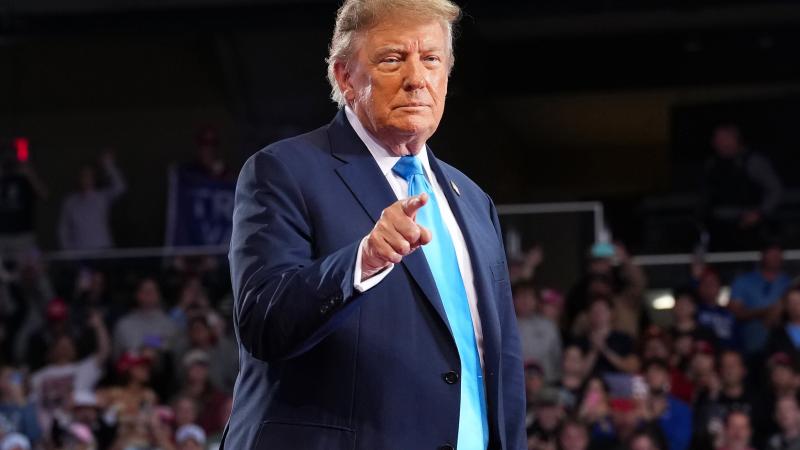
During a press conference Saturday concerning the capture of Venezuelan President Nicolás Maduro, U.S. President Donald Trump spoke optimistically about the future of Venezuelan oil production. He said that “very large United States oil companies” would “fix badly broken [oil] infrastructure,” which would begin producing revenues for Venezuela.
“As everyone knows, the oil business in Venezuela has been a bust, a total bust, for a long period of time. They were pumping almost nothing by comparison to what they could have been pumping and what could have taken place,” the president said.
How quickly Venezuela, which has the largest proven oil reserves in the world, is uncertain. Robert Rapier, a chemical engineer and editor-in-chief of Shale Magazine, told Just the News that producing Venezuelan oil isn’t easy. Much of the country’s oil infrastructure has been mismanaged and left idle without maintenance for several decades now.
“It's going to be a slow process,” Rapier said.
Declining industry
In 1970, Venezuela was cranking out over 3.7 million barrels of oil per day. By the mid-1970s, production had been cut nearly in half, and then-Venezuelan President Carlo Andrés Pérez nationalized the country’s oil industry.
Following labor strikes that started in late 2002, President Hugo Chávez, fired approximately 18,000 employees of the state-owned oil company Petróleos de Venezuela S.A. (PDVSA), and installed a workforce loyal to his administration. The U.S. first imposed oil sanctions in 2019, and Maduro maintained the politicization of the industry.
Today, Venezuela produces less than 1 million barrels per day. By comparison, the United States, which is the largest producer in the world, produces 13.8 million barrels of oil per day.
Thick, heavy crude may require different expertise
David Blackmon, author of the “Energy Absurdities” Substack and an analyst with more than 40 years of experience in the oil and gas industry, told Just the News that Venezuela’s oil is a very thick, tar-like substance, similar to that that comes out of wells in Kern County, California. It doesn’t flow through infrastructure like the oil coming from other areas.
“It really is almost like tar you see on a paved road,” Blackmon explained.
American companies like Exxon and Chevron, as well as Britain-based Shell, developed technologies that could extract and transport that heavy oil, which uses steam and diluents to make the oil flow.
Though the country nationalized its oil industry in the 1970s, foreign investors were allowed back in during the late 1990s. After coming to power, Chavez instituted a policy requiring the state to have majority control of the country’s oil assets, and companies who refused — namely Exxon and ConocoPhillips — had their assets expropriated. The companies later won settlements in international court over the actions, but the scheme ultimately deprived the country of the expertise it needed to extract its oil.
“Chavez put a lot of political appointees into technical roles. And then came sanctions and corruption, and everything just collapsed,” Rapier said.
Infrastructure is a wild card
To some degree, the sanctions suppressed Venezuela's oil production, and when those sanctions come off, Rapier said, there will be a quick jump in production. But he also estimates that it could be as long as a decade before the country returns to or exceeds the production levels it saw in the 1970s.
“Best case scenario, if companies went right in immediately and started trying to rebuild the industry, you might get a few hundred thousand barrels a day over the next few years,” Rapier estimated. How quickly production begins to grow beyond that will depend on the condition of the infrastructure, he said. It’s hard to say how well it’s been maintained, mismanaged or neglected.
“I think the wild card here is really how much of that infrastructure is decayed and no longer usable,” Rapier said.
On top of that, oil prices are low, and the news in Venezuela hasn’t moved the global prices much. Low oil prices don’t offer a lot of incentive to investors. There’s also the problem of the country’s historic hostility toward foreign investors, which could deter many of them. The removal of Maduro may change that, but only time will tell, Rapier said.
Could be sooner
Blackmon estimates the timeline could be as short as five to seven years. Much of the infrastructure is dilapidated, he said, and needs to be modernized, but what remains may cut the timeline down.
Blackmon said there are a couple other factors that could come into play. It’s too early to say how much of a say the U.S. will have over administration in the country, but if it can fast track permitting in the country, that will speed things up. The U.S. federal government could also step in to provide low-interest loans or other investor incentives to help assuage their hesitation.
“Depending on how all this is going to work, you could end up with substantial new production within just a couple of years. Venezuela used to produce 4 million barrels a day. It's less than a million now, but you could — theoretically, anyway — rapidly ramp that up to maybe a million and a half to 2 million [barrels of oil] a day. So this could go pretty quickly, just depending on how all the mechanics are going to work,” Blackmon said.
Impacts on other nations
On his Substack, Blackmon points out that increased production in Venezuela could have repercussions for Canada and OPEC+ countries. While the U.S. produces a lot of oil domestically, most of its refineries were built in the 1970s before shale oil technologies unleashed all that oil.
The oil coming out of U.S. shale is a light, sweet crude, unlike the heavy crude oil that comes out of Venezuela, Canada, and the Middle East. Refineries in the U.S. were set up to process heavy crude oil, so a large portion of the oil used in U.S. refineries has to be imported. About 60% of the oil the U.S. imports comes from Canada.
Frustrated with Trump’s tariffs, Canadian Prime Minister Mark Carney had been working with Albertan Premiere Danielle Smith to build a pipeline to carry oil from Canadian oil sands to the West Coast, which would allow Canada to tap into Asian markets.
“Now, armed with control over Venezuela’s heavy crude riches, the leverage reverses in Trump’s favor,” Blackman wrote.
With the U.S. influencing a key OPEC+ country, America will now have a say in quota negotiations. This will cause Russia and Iran, both struggling with sanctions, to have less bargaining power, Blackmon wrote.
While there’s a lot of uncertainty about the future of oil in Venezuela, its impact on global crude oil markets going forward may ripple across the globe.
The Facts Inside Our Reporter's Notebook


Top Stories



Trending
Just the News Spotlight
Just News, No Noise