Related Articles
Trump has a lot of interest in revitalizing Venezuelan oil production, including the leverage it will give the U.S. over China. Some oil companies want much more assurance before they'll risk investing in the county's industry, but others say they're ready to get started now.
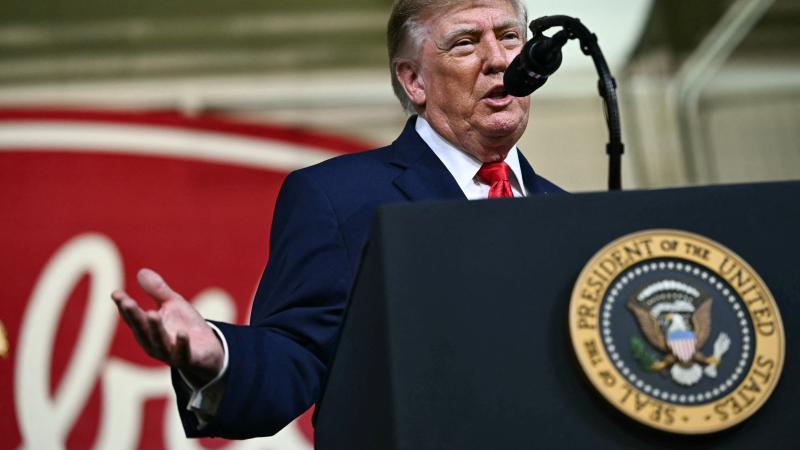
Donald Trump met Friday with more than a dozen oil executives and companies involved in infrastructure development and project finance, to discuss ramping up production of Venezuelan oil.
That could be a challenge. The country’s oil infrastructure, neglected and abused under years of socialist rule, will need billions of dollars to refurbish or replace — Trump threw out $100 billion as the figure — and companies are seeking security for their assets from socialist expropriation and protection for their equipment and personnel from criminal violence.
“They’re going to put pressure on him [Trump] to do that, but there’s a lot of things he can’t make happen,” said Robert Rapier, a chemical engineer and editor-in-chief of Shale Magazine.
Some of the companies Trump is working with expressed hesitation about the prospect of rebuilding the Venezuelan oil industry, but others, including Chevron, which is already operating in the country, may pursue the opportunity.
Trump has a strong interest in working with the companies to come to terms they can agree on. The president has been pursuing his own version of the Monroe Doctrine in South America. The policy, signed by President James Monroe in 1823, warned European powers not to interfere with American interests in the Western Hemisphere. Some wags have dubbed Trump's implementation "The Donroe Doctrine."
Trump is extending that same warning to China and Russia, and at Friday’s press conference, Trump explained that the purpose of the capture of Venezuelan strongman Nicolás Maduro was to protect Venezuela from Chinese or Russian control.
“I think everyone has to know that if we didn’t do this, China or Russia would have done it,” Trump said.
Trump also stated that he was open to resuming exports of Venezuelan oil to Russia and China. Writing in “Master Resource,” a free-market energy blog, energy analyst Allen Brooks explains that selling Venezuelan oil to China ensures the nation will maintain commercial relationships with Venezuela. This will be a signal to China, which has mines, ports and other investments in South America, that the U.S. intends to enforce the Monroe Doctrine, Brooks wrote.
Likewise, Brooks argues, China will know that hostility toward or otherwise uncooperative behavior toward the U.S. will result in a key energy supply being cut off.
“This risk may explain why China has been building its oil inventories despite flagging oil demand,” Brooks wrote.
In a statement delivered at the press conference, Darren Woods, ExxonMobil chair and CEO, explained that the company had its assets seized twice by the Venezuela government, and its history of working with the country since 1940 leaves ExxonMobil with some reservations.
“If we look at the legal and commercial constructs — frameworks — in place today in Venezuela, today it’s uninvestable. And so, significant changes have to be made to those commercial frameworks, the legal system, there has to be durable investment protections, and there has to be a change to the hydrocarbon laws in the country,” Woods said in the statement.
Blackmon, author of the “Energy Additions” Substack, told Just the News that Woods' characterization of the current situation as ‘uninvestable’ is likely accurate.
“I think conditions can be changed pretty quickly in a lot of ways, and in terms of the legal structure that needs to be revised,” Blackmon said.
One thing the companies are going to need is lasting security guarantees, Blackmon said. It’s not just about protecting their assets. The criminal element, which includes drug cartels, will need to be dealt with.
“These companies are not going to want to put their workers in harm's way. So there has to be some pretty strong guarantees from both the United States and Venezuelan government that their employees are not going to be risking their lives to go out and revitalize Venezuela's oil fields,” Blackmon said.
Venezuelan President Hugo Chavez, Maduro’s predecessor, enacted a policy requiring that oil companies partner with the state-owned Venezuelan oil company PDVSA and accept minority stakes. Chevron took the deal and has remained in the country ever since while the others, including ExxonMobil, had their assets expropriated. They won settlements in international courts over the seizures and have been fighting ever since to collect payment.
Rapier said that Chevron stands to benefit from the capture of Maduro and the vision Trump has for the country.
“They stayed after the expropriation, and probably the terms were poor. It was probably a money loser for Chevron, but they were playing the long game, and now they could potentially benefit depending on the exact terms of the deal,” Rapier said.
The infrastructure investment is going to be a challenge, especially with oil prices low, he said. Goldman Sachs is forecasting that the West Texas Intermediate price — the U.S. benchmark — could dip to $50 per barrel by the end of this year, Reuters reported.
Rapier said that producing in Venezuela is not like in Saudi Arabia where the oil practically flows out of the well. There are many technical challenges to producing oil in Venezuela and so investing in infrastructure development will be vital to realizing the resource.
Trump may be successful in creating a more secure regulatory environment for oil companies operating in Venezuela, but Rapier said it’s going to take more than that. These projects are going to last for multiple administrations. It's possible that another authoritarian far-left politician could rise to power again in Venezuela, and investors may once again lose their assets.
“There's really no protection against that, unless you've got future presidents who would commit to going in and protecting those assets,” Rapier said.
Blackmon also said the prospects of a democracy being established and growing in Venezuela are much more promising than in Iraq and Afghanistan, where U.S. efforts didn’t succeed. Venezuela, Blackmon said, was once a prosperous, democratic country, so its citizens are more likely to embrace a return to that government structure, which will provide the companies with the regulatory environment they need.
While some companies are hesitant to invest in Venezuelan oil, others might be willing to accept the risk. Energy Secretary Chris Wright, who was at the meeting with the oil executives, told Fox News that Woods’ remarks are an “outlier.”
“We had Chevron, Shell, Repsol, ENI, four of the biggest oil companies in the world saying we will immediately start ramping up our investments and growing our production. I’ve got a crew of American wildcatters that said we’ll go down this week and start checking things out. We’re ready to go,” Wright said.
Kevin Killough is the energy reporter for Just The News. You can follow him on X for more coverage.