With U.S. leading oil and gas production, environmental outcomes better for world energy: study
Of the world's top three producers, the U.S. has an Environmental Performance Index more than 9 points higher than the global average, and way ahead of of the next largest producers -- Saudi Arabia and Russia -- who are below the global average, an analysis by the Institute for Energy Research shows.
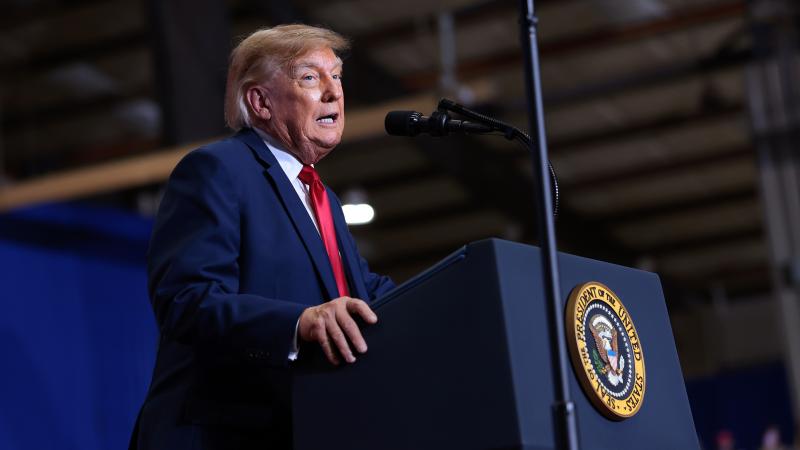
President Donald Trump has been reversing the energy policies of the previous administration, which has led to considerable consternation among activists about how unbridled oil and gas production will impact the environment.
Fossil fuels are expected to be the dominant energy source for years to come — currently supply approximately 87% of global energy consumption — so people will be getting petroleum from someone if they don't get it from the U.S. Fortunately enough, the U.S. has a high environmental performance rating compared to its peers, despite being the largest producer of oil and gas in the world, a new study finds.
According to the Institute for Energy Research (IER) analysis, the U.S. has a production-weighted Environmental Performance Index of 57.2 for oil, natural gas, and coal. The global average for oil is 48.1, and 49.9 for natural gas. The global average for coal is 38.7.
The study also compared rankings on the Cato Institute’s Human Freedom Index and found that countries in the top quintile of human freedom have an average EPI of 59, suggesting a correlation between economic liberty and environmental performance.
U.S. leading in both production and environmental standards
The figures are determined using the Environmental Performance Index rating by the Yale Center for Environmental Law and Policy. The ratings use 58 performance indicators across 11 environmental issues to come to a single score on a scale of 0-100.
The IER then multiples the EPI scores by production volumes to come to a production-rated environmental quality score. According to the IER, this kind of analysis provides a benchmark for environmental quality for the average barrel of oil produced in a country.
Of the 22 top oil-producing countries, the U.S. comes in third place for EPI behind Canada and Norway. Saudi Arabia is the second-largest producer of oil in the world — producing half as much as the U.S. — but its EPI is 42.5. Russia, the third-largest producer, has an EPI of 46.7.
In terms of natural gas, Russia is the second-largest producer in the world, followed by Iran, which has an EPI of 41.8.
Property rights builds community relations
The study also shows the top three rankings for EPI of the oil-producing countries also rank high on the Human Freedom Index. Norway ranks 12 on the index, and it has an EPI of 69.9. Canada ranks 11, with an EPI of 61.1, and the U.S. has a ranking of 17.
The index uses 86 indicators of personal and economic freedom to arrive at its scores. In the U.S. economic freedoms have played a large role in the explosive growth of its oil and gas production. Approximately 78% of U.S. oil and 87% of its gas is produced on private and state lands, which leaves the federal government mostly out of the process.
The U.S. has also been a leader in innovation, developing hydraulic fracturing and horizontal drilling technologies from which most oil and gas come from today. William Rampe, policy analyst with IER, told Just the News that there’s a relationship between drilling on private land and the high environmental outcomes the U.S. sees.
“If you have your own property, obviously, you want to get the most out of it that you can. And you want it to be sustainable,” Rampe said.
Alex Stevens, manager of policy and communications for IER, said large amounts of oil and gas development on private lands has also led to relationship building between communities and the oil and gas industry. “When the companies want to get access to those resources, it's an opportunity for the companies to come into the community and speak to the people who own the land that the resources are under. There's just a much closer connection between the companies and the landowners,” Stevens said.
Coal production led by countries with low environmental standards
Whereas the U.S. has been able to be the leader in oil and gas production while achieving high environmental standards, it’s been less successful with coal. Wyoming produces 41% of U.S. coal, but it has little access to markets in Asia that are utilizing coal. The state’s coal industry has proposed an export terminal in Longview, Washington, but Washington successfully killed the project.
As such, most coal is produced in China and India, which rank low on the Human Freedom Index and have low EPI scores. China has an EPI of 35.4 and ranks 150 on the Human Freedom Index. India has a score of only 27.4 and ranks 110 on the index. Indonesia has the third-highest production, with an EPI of 33.6 and ranks 87 on the index.
The U.S. comes in next, with only 10% of the volume of coal that China produces.
“Potentially more concerning than shifting production to countries with lower environmental standards is the risk that limiting U.S. production transfers demand, wealth, and influence to nations with far worse records on human freedom,” the study states.
Fortunately for Americans, the U.S. is leading the world in oil and gas production, with exports of both increasing every year. If opponents of fossil fuels had been successful at lowering production in America, as with coal, more countries would likely be sourcing their energy from Russia and the Middle East, where environmental standards are lower.
Kevin Killough is the energy reporter for Just The News. You can follow him on X for more coverage.
The Facts Inside Our Reporter's Notebook


Top Stories



Trending
Just the News Spotlight
Just News, No Noise