Hydrogen task force in Louisiana adopts report on clean energy future
President Trump's One Big Beautiful Bill Act, signed into law in July, made l changes to tax credits that clean energy companies use.
The administration’s announcement refers to carbon capture as “proven and cost-effective control technologies," but critics have argued that the technology is expensive to scale up to a degree it can have any impact on carbon dioxide emissions and will drive up energy costs.
Faucheux highlighted the 346,000 jobs and $54 billion economic impact attributed to the oil and gas industry in Louisiana in 2021, arguing that emerging carbon capture technology will play a critical role in maintaining or increasing those numbers.
To reach the International Energy Agency's carbon-reduction targets 70 to 100 carbon capture facilities will have to come online every year for the next 27 years. Installing the technology on a single power station in Wyoming would cost nearly $468 million.
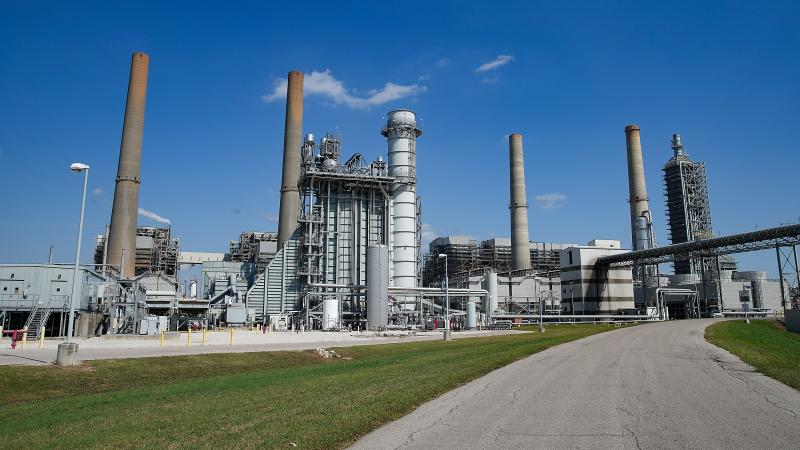
The Biden adminsitration is reportedly looking to make carbon capture an integral part of power plants across America.
The captured CO2 is compressed and transported by pipeline, ship, rail or truck to be used in a range of applications, or injected into deep geological formations such as depleted oil and gas reservoirs or salt domes.
PHMSA launched this process in 2020 in the wake of a CO2 pipeline rupture in Satartia, Mississippi, that hospitalized 45 people with life-threatening symptoms and forced 200 people to evacuate the area.
During budget hearings in May, Energy Secretary Chris Wright warned that the Biden-Harris administration was pushing out billions in loans without proper controls. This is the same office that provided failed solar startup Solyndra with a $535 million loan guarantee under Obama.
The aquifer serves over 100 communities, businesses, and farmers throughout central Illinois and is vital to the economy.
House Bill 783 would require landowners be compensated per acre to "no less than the maximum amount paid to any other landowner in that project."