Related Articles
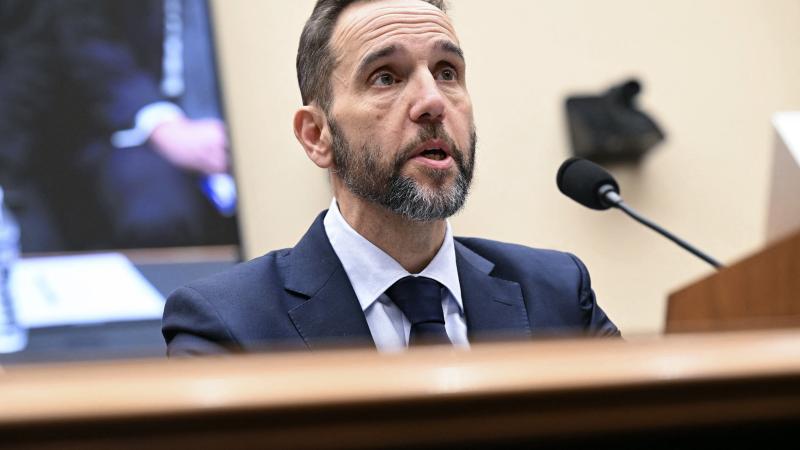

"The Supreme Court has spoken to every state legislature and school district in America: you do not have the right to keep parents in the dark about their own children," say lawyers for parents whose victory led to new appeals ruling.
The writing appears to be on the wall for elected officials and bureaucrats who keep parents in the dark about their children's mental health, as a Supreme Court ruling in favor of parental rights in public schools trickles down to the lower courts.
A three-judge panel of the 9th U.S. Circuit Court of Appeals blocked parts of a California law that gives students veto power over school districts and teachers telling their parents they don't identify with their sex – even when parents explicitly ask whether their children exhibit gender confusion – though the order is limited to the plaintiffs themselves.
The third time was the charm for the reportedly most overturned federal appeals court since 2007, which twice refused to block California Assembly Bill 1955 in litigation by Huntington Beach, a conservative redoubt in the Los Angeles metro area, and parents in that school district, saying they hadn't shown legal standing to sue.
SCOTUS pulled the rug out from the 9th Circuit's reasoning in an emergency order in March, reinstating another judge's permanent injunction against so-called gender secrecy policies in a separate case, Mirabelli, brought by California parents and teachers. The 6-3 majority emphasized a century of parental-rights precedents it said the lower courts were ignoring.
Thursday's unsigned order, by two judges nominated by President Trump and the other by President Biden, went largely unnoticed over the Juneteenth federal holiday, announced only by the plaintiffs' lawyers and those in the Mirabelli case on Friday. As an order on a motion for reconsideration, it's not posted under the 9th Circuit's opinions.
The panel found the parents challenging the law have demonstrated "irreparable harm" and do not need to jump through hoops to show they have legal standing to sue.
The Mirabelli precedent did not require California parents who object to secret social transitions to show it was likely their "particular child would actually experience gender dysphoria and have that information withheld," as California Attorney General Rob Bonta and other state officials wanted, the panel emphasized.
The Huntington Beach parents are likely to prove the Golden State violated their "affirmative" due process rights "not to be shut out of participation in decisions regarding their children’s mental health," including gender dysphoria, the order says.
It's the second federal appellate victory for America First Legal, which represents Huntington Beach and the parents, based on Mirabelli.
A split 3rd Circuit panel in April found AFL's client, also anonymous, had legal standing to sue Pennsylvania's Pine-Richland School District for damages, for refusing the mother's demand to be notified if her daughter expressed gender confusion or even tell her before it referred the girl to a mental health counselor or social worker.
The 9th Circuit order confirms "California cannot use state law to force schoolteachers and administrators into a conspiracy of silence against parents," to "intentionally interfere with the parent-child relationship and separate a child from their parent," AFL senior counsel Nick Barry said.
"This decision is a direct result of the courage of our clients who challenged California’s gender secrecy regime back in 2023," said Thomas More Society special counsel Paul Jonna, who represented the Mirabelli plaintiffs.
"The Supreme Court has spoken to every state legislature and school district in America: you do not have the right to keep parents in the dark about their own children," Jonna wrote in an email to Just the News when asked how widely the precedent applies.
"It doesn't matter what state you're in or how your policy is worded," he said. "Mirabelli is the law of the land and we intend to use it" against every policy that "secretly transitions a child at school without their parents' knowledge."
Parents are 'objects of the challenged exclusion policies'
Parents challenging gender secrecy policies in public schools haven't faced a hurdle-free road despite key victories in various courts, especially U.S. District Judge Roger Benitez's consistent rulings against California's policies since 2023, most recently ordering the state to pay the Mirabelli plaintiffs $4.5 million in attorney's fees. (California is appealing the judge's permanent injunction.)
The 9th Circuit in January overturned his permanent injunction on AB 1955 and class certification of both parents and teachers to challenge the law for deceiving and muzzling them, respectively. After SCOTUS rebuked it, the appeals court rejected California's last-ditch attempt to save at least some of the gender secrecy policy.
But the high court this month denied a petition to review California's alleged end-run around parental notification, invoking a collective bargaining agreement to invalidate a school district's requirement that teachers not hide students' gender identity from their parents. It also turned down a Massachusetts case involving the secret social transitioning of a student.
In the Huntington Beach case, the new panel of judges acknowledged that SCOTUS had rejected their colleagues' fundamental understanding of both gender secrecy policies and who has legal standing to challenge them.
As the "objects of the challenged exclusion policies," the Mirabelli parents "very likely" have legal standing, and the class certification to challenge the law was "likely proper," the panel said, quoting the high court's ruling.
Since gender dysphoria "has an important bearing on a child’s mental health" but California both hides it from parents and "facilitate[s] a degree of gender transitioning during school hours," the policies likely violate parental rights to "direct the upbringing and education of their children," the majority had ruled.
"In light of Mirabelli, the Movants are likely to succeed on the merits of their constitutional claim," including their legal standing, the panel said of the Huntington Beach parents. Since the class certification covers only parents "injured" by the gender secrecy policies in Mirabelli, not all parents, these plaintiffs likewise have standing to challenge AB 1955, the order says.
It doesn't matter that school districts and public employees are the "directly regulated parties" under the law because the ultimate "target" of the law's provisions are "objecting parents," who were denied "constitutionally required mandatory access to information about their children’s exhibiting symptoms of gender dysphoria," the panel said.
The SCOTUS precedent also forbids requiring parents to demonstrate legal standing by showing that "their particular school districts or administrators would choose" parental notification policies in the absence of AB 1955, since they seek to "remove that unlawful impediment to compliance with the Constitution," according to the order.