NASA projects may have violated law hundreds of times with joint research with China, Congress finds
The House Select Committee on the Chinese Communist Party raised concerns that NASA-funded researchers are collaborating with China and not seeking the required waivers under federal law.
A House investigation has identified hundreds of scientific publications in which NASA-funded U.S. researchers appear to have conducted joint work with Chinese institutions, potential violations of a federal law that has barred such collaboration for more than a decade.
The report, released on Wednesday by the House Select Committee on the Chinese Communist Party, also found that, in several instances, some of that research involved collaboration between National Aeronautics and Space Administration (NASA) scientists and institutions that are part of “China’s defense research and industrial base.”
Keeping America ahead
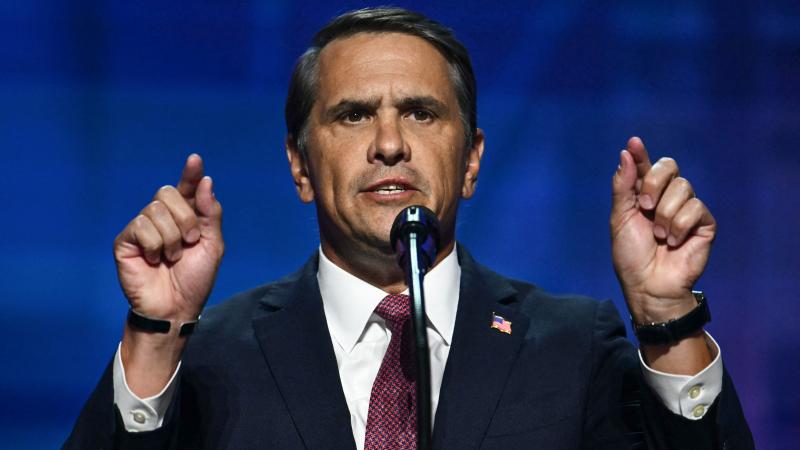
The findings have serious relevance at the current moment, the committee’s chairman, John Moolenaar, R-Mich., said, because the United States is currently engaged in a new space race with the Chinese Communist Party.
NASA’s successful Artemis II mission last month demonstrated the space agency’s capability to return Americans to lunar orbit, with the goal of reaching the lunar surface by 2028, for the first time since the end of the Apollo missions. China is also planning its own expedition to the moon, hoping to land its own astronauts, called "taikonauts," on the moon by 2030.
“The successful Artemis II mission made all Americans proud of the incredible work happening at NASA. We are the world leader in space exploration, and we want to make sure the taxpayer-funded research that keeps America ahead is protected from adversaries including China,” Moolenaar said in a statement.
“NASA worked cooperatively with the Committee throughout this review, acknowledged areas where improvements were needed, and demonstrated it is taking these issues seriously through concrete steps to improve its research security and compliance processes moving forward,” he added.
"I appreciate the rigorous review that the House Select Committee on China and Chairman Moolenaar as well as the Senate Judiciary Committee and Chairman Grassley have undertaken, which has brought needed visibility to gaps in NASA’s past compliance practices," NASA Administrator Jared Isaacman told Just the News in a statement.
"I take these findings seriously. It is clear that earlier policies did not provide the safeguards necessary to ensure full adherence to the Wolf Amendment. That is unacceptable. Protecting U.S. innovation and intellectual property is critical to maintaining American leadership in space," he continued.
The Wolf Amendment's limitations
The Wolf Amendment, originally authored by former Virginia Congressman Frank Wolf and enacted in 2011, prohibits NASA and the White House Office of Science and Technology Policy from using funds for joint research or coordination with China or any Chinese-owned entities. Any such engagement requires either specific congressional authorization or an FBI certification that the activity poses no national security risk.
The law was adopted amid longstanding concerns about China's human rights record and its well-documented strategy of surreptitiously acquiring foreign technology to advance its military capabilities. The law has been reaffirmed annually under both Republican and Democratic majorities.
"The law is clear: compliance is not optional," former congressman Wolf wrote in a foreword to the report.
“This report raises serious concerns that the law has not been adequately enforced. As the author of the Wolf Amendment, it is unacceptable to learn, fifteen years later, that NASA has failed to properly enforce this law and that universities have continued to engage in conduct that appears inconsistent with both the letter and the intent of the statute,” he added.
You can read the report below:
Arizona State, Stanford submitted apparently false certifications
Among the most serious findings involve Arizona State University and Stanford University, which the committee says submitted false certifications to NASA affirming they were not collaborating with any Chinese entities under an active grant.
Despite those certifications, the Principal Investigator on the award later listed a 2024 co-authored publication that involved undisclosed Chinese affiliations as a direct component of that NASA grant, the committee found.
NASA reviewed the award after being alerted by Select Committee Chairman Moolenaar and Senate Judiciary Committee Chairman Chuck Grassley, R-Iowa, and concluded that there had been “a significant breakdown in compliance with the Wolf Amendment driven by inaccurate and incomplete institutional disclosures,” the committee report reads.
The Principal Investigator on that grant, Dr. Wendy Mao, has previously faced scrutiny from the select committee for her work at a U.S. Energy Department laboratory while failing to disclose her position at a subsidiary of China’s primary nuclear weapons research complex.
The subsidiary, the Center for High Pressure Science and Technology Advanced Research, has been designated by the Commerce Department since 1997 as “reasonably believed” to be “involved […] in activities contrary to the national security or foreign policy interests” of the United States, Just the News previously reported.
Research linked to China's defense industrial base
The committee also flagged cases where NASA-supported research involved institutions tied directly to China's defense establishment, including universities within China's so-called "Seven Sons of National Defense" — a cluster of schools with deep ties to the People's Liberation Army — as well as entities already on U.S. government restricted lists.
Research areas cited in the report include hypersonics, autonomous systems, radar signal processing, and advanced aerospace engineering, all fields that align closely with China's military-civil fusion priorities.
In one previously settled case, a University of Delaware professor, Xiao-Hai Yan, funded by a NASA grant had affiliations with the Chinese government, including employment at a Chinese university. He was also part of China’s "Thousand Talents Program", a government initiative to attract scientists – primarily overseas Chinese – to bring their knowledge and experience back to China.
The committee's additional research found that Yan led development of China's first low-cost synthetic aperture radar small satellite, work that appeared to overlap with his concurrent U.S. government-funded research activities. The university paid a civil settlement to the Justice Department in December 2024 for failing to disclose Yan’s affiliations.
The report notes that NASA's own public guidance, available since at least 2013, explicitly defines co-authorship between U.S. and Chinese researchers as bilateral collaboration prohibited under the statute, leaving universities little basis to claim they were not aware of the regulations.
"Universities cannot credibly claim ignorance where the agency has made its expectations explicit and accessible for over a decade," the report states.
NASA says it has taken steps to address gaps
The committee acknowledged that NASA has moved to address shortcomings since being alerted to the problems, establishing a dedicated research security office, updating award terms and conditions, and coordinating with its Inspector General.
“The Select Committee commends NASA for these actions, which represent meaningful progress and demonstrate that large federal agencies can adapt quickly when gaps are identified,” the committee wrote.
Among its recommendations, the committee calls for a joint NASA Inspector General and Department of Justice task force to investigate Wolf Amendment violations, including potential False Claims Act liability for institutions that submitted fraudulent certifications, and urges Congress to pass legislation to bar researchers performing federally funded work from collaborating with entities on U.S. government restricted lists.
"Under my leadership, strengthened controls have already been put in place, and the Office of Inspector General will conduct a thorough review to ensure accountability where any violations have occurred. The stakes in space are high; we all understand the national security implications of this domain and the cost of mistakes," NASA's Isaacman told Just the News. "At NASA, we are committed to ensuring complete compliance to the Wolf Amendment and ensuring America’s leadership in space."
The Facts Inside Our Reporter's Notebook
Documents
Links

Top Stories


Trending
Just the News Spotlight
Just News, No Noise