Related Articles


The case is the second major Second Amendment one before the high court this term. In the first, justices heard arguments in a case challenging a Hawaii law limiting where licensed concealed-carry holders may bring firearms.
The Supreme Court heard oral arguments Monday in United States v. Hemani, a closely watched Second Amendment case that could determine whether people who use illegal drugs – including marijuana – may lawfully possess firearms.
The case involves Ali Danial Hemani, a Texas man indicted in 2023 under 18 U.S.C. § 922(g)(3), a federal statute that bars firearm possession by anyone who “is an unlawful user of or addicted to any controlled substance.”
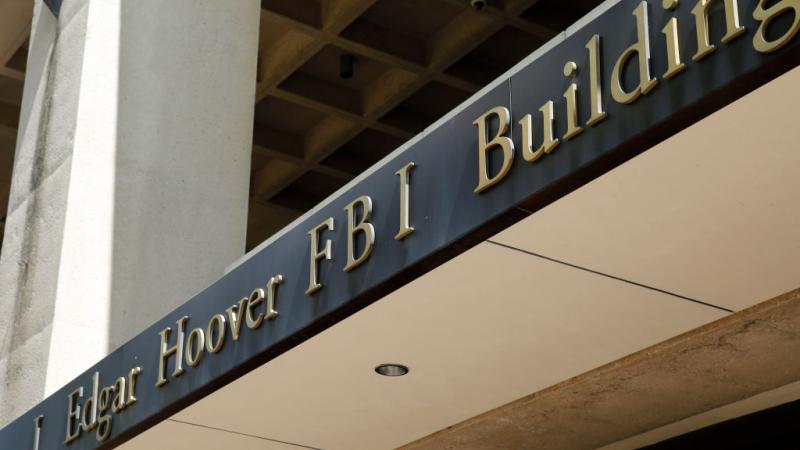
During a 2022 search of Hemani’s family’s home, FBI agents recovered a Glock 9mm pistol, roughly 60 grams of marijuana, and 4.7 grams of cocaine. Hemani told investigators that he used marijuana roughly every other day and that the cocaine – found in his mother’s bedroom – belonged to him.
A federal district court in the Eastern District of Texas dismissed the indictment, concluding that the statute violated the Second Amendment as applied to Hemani. The U.S. Court of Appeals for the Fifth Circuit affirmed, relying heavily on the Supreme Court’s 2022 decision in New York State Rifle & Pistol Association v. Bruen, which requires gun regulations to be consistent with the nation’s historical tradition of firearm regulation.
The government asked the Supreme Court to review the decision, arguing that the Second Amendment allows Congress to disarm individuals whose habitual illegal drug use poses a risk to public safety.
During Monday’s nearly two-hour argument, several justices expressed skepticism towards the government’s position. The government relied primarily on historical analogues, pointing to founding-era laws that restricted firearm possession by groups deemed dangerous, including “habitual drunkards.” But multiple justices questioned whether those historical examples meaningfully apply to modern laws that criminalize firearm possession based on drug use alone.
Justice Neil Gorsuch pressed the government on the breadth of its analogy, noting that alcohol consumption was widespread among the Founders and rarely resulted in disarmament absent extreme circumstances. He suggested that historical laws targeting severe intoxication or public disorder may not justify modern restrictions on individuals who are not impaired while possessing a firearm.
Chief Justice John Roberts and Justice Samuel Alito appeared more receptive to the government’s arguments. Roberts expressed concern about courts substituting their judgment for that of Congress on questions of public safety, while Alito emphasized the government’s interest in preventing firearm possession by individuals engaged in illegal drug activity.
Hemani is the second major Second Amendment case the Court has heard this term. Earlier this year, the justices heard argument in Wolford v. Lopez, which challenges a Hawaii law limiting where licensed concealed-carry holders may bring firearms. Observers noted skepticism from several justices toward that restriction as well.
A decision in Hemani could have far-reaching consequences for federal gun law and clarify how lower courts should apply Bruen’s history-and-tradition test to modern regulations. The Court is expected to issue its ruling by the end of June.