Related Articles


The court held that Trump's executive order limiting automatic citizenship for certain individuals born in the United States violated the 14th Amendment.
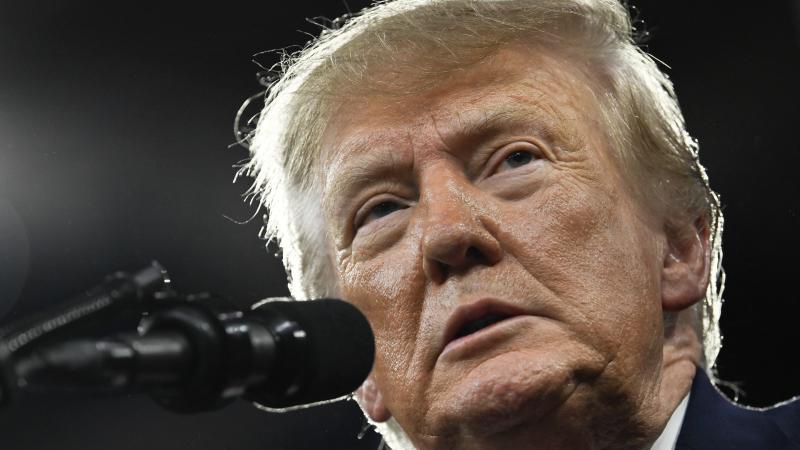
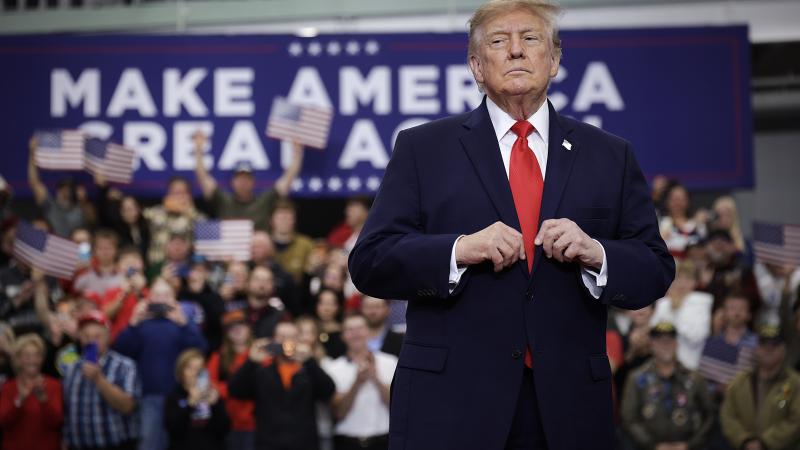
President Donald Trump has vowed to petition the Supreme Court to rehear its decision striking down his executive order restricting birthright citizenship—a decision handed down in Trump v. Barbara on the final day of the court’s term.
The court held that Trump's executive order limiting automatic citizenship for certain individuals born in the United States violated the 14th Amendment.
Amid Trump's outrage at the high court's June 30 ruling about so-called birthright citizenship – calling it "insane" and a “miscarriage of justice" – a high court rehearing of a case on its merits is exceptionally rare.
In the Truth social post Wednesday calling for a rehiring, Trump also warned that the ruling, if left in place, would “destroy America.”
The Supreme Court rarely grants rehearing petitions. They are generally reserved for extraordinary circumstances, such as a significant legal or factual error or an intervening development that materially affects the case. Unless the Court specifically requests a response, the opposing party does not file one, and successive or untimely petitions are prohibited.
The court's Rule 44, pertaining to such matters, reads: "Any petition for the rehearing of any judgment or decision of the Court on the merits shall be filed within 25 days after entry of the judgment or decision. ... The petition shall state its grounds briefly and distinctly. ... A petition for rehearing is not subject to oral argument and will not be granted except by a majority of the Court, at the instance of a Justice who concurred in the judgment or decision."
The only time the Supreme Court has granted rehearing, then reversed its own merits decision was in Reid v. Covert.
In 1956, the Court initially ruled 5-4 that civilian dependents of U.S. service members stationed overseas could be tried by military courts-martial. After granting rehearing, the Court reconsidered the case following the retirement of two justices who had formed the original majority. In 1957, the Court issued a new 6-2 decision holding that U.S. citizens abroad retain fundamental constitutional protections, including the right to a jury trial, and therefore cannot be subjected to military tribunals under those circumstances.
Petitions for rehearing at the certiorari stage, before the Court has heard arguments or decided a case on the merits, have occasionally been more successful. For example, the Court granted rehearing after initially denying certiorari in Boumediene v. Bush, a case about the constitutional rights of detainees held at Guantanamo Bay, ultimately agreeing to hear the case.
Rule 44 also requires that rehearing be granted only “at the instance of a Justice who concurred in the judgment.” As a result, Trump's petition would have to persuade at least one member of the six-justice majority to support reconsideration. Absent a significant new legal or factual development, court observers say that is highly unlikely.
Although the petition is expected to face long odds, it underscores the administration’s continued effort to defend the executive order and advance its broader immigration agenda despite the Court’s ruling.