Why Trump just might win the Lisa Cook case before Supreme Court
The high court is expected to make a decision by the end of the term.
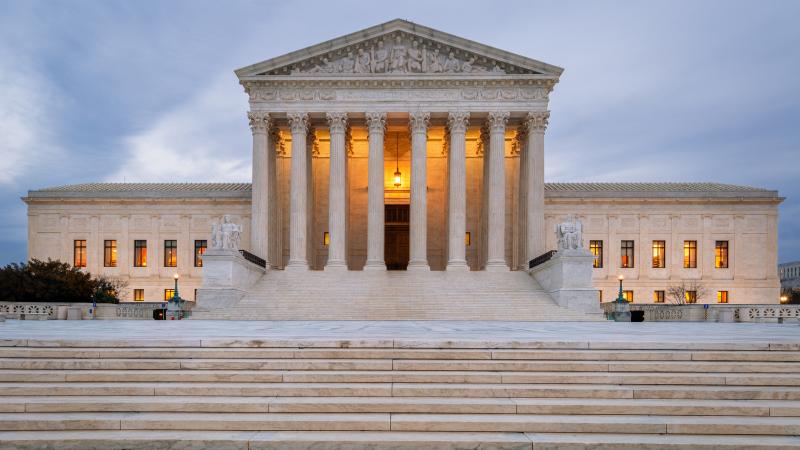
The Supreme Court now faces a consequential question with implications for both presidential power and central bank independence: whether President Donald Trump lawfully removed Lisa Cook from the Federal Reserve Board of Governors.
Why The President Fired Cook
Cook was first nominated by President Joe Biden in 2022 to fill the remainder of an unexpired term on the board. In 2023, Biden nominated her again– this time to a full 14-year term set to expire in 2038 – and the Senate confirmed her appointment.
Under the Federal Reserve Act, board members serve 14-year terms but may be removed by the president “for cause.” However, statute 12 U.S.C. § 242 does not define “cause,” nor does it specify what conduct qualifies or what procedures must precede removal.
In August 2025, during Cook’s first full term, Trump concluded that cause existed to remove her. According to the removal notice, Cook had made contradictory representations in two mortgage agreements executed within a short period of time – asserting in each that a different property, one in Michigan and another in Georgia, would serve as her principal residence.
Each mortgage agreement identified the representation as material to the lender, consistent with the industry practice of offering more favorable terms for principal-residence loans, which are generally considered less risky.
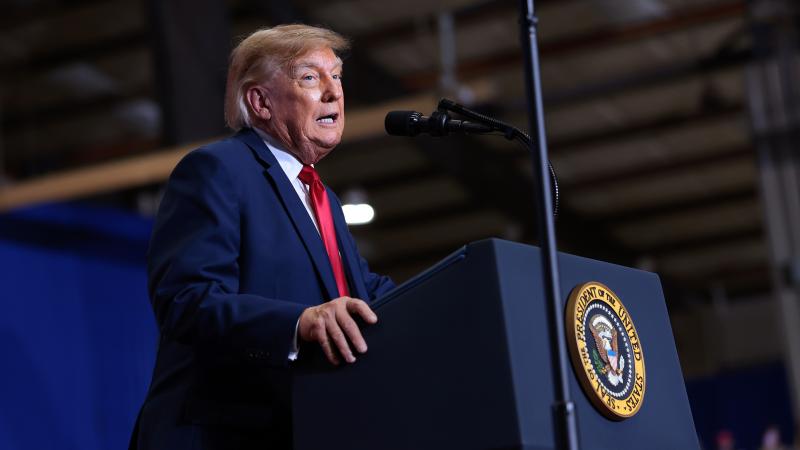
After the mortgage documents became public, Federal Housing Finance Agency Director Bill Pulte accused Cook of mortgage fraud, and Trump publicly called on her to resign. When she did not, the president posted a letter on social media on August 25, 2025 announcing that Cook was fired from the board “effective immediately.”
The letter described Cook’s conduct as “deceitful and potentially criminal” and concluded that it rendered her unfit to serve as a financial regulator. At a minimum, the president asserted, the conduct demonstrated “gross negligence in financial transactions” that called into question her judgment and trustworthiness.
The removal letter stated that Cook was dismissed “[p]ursuant to [the President’s] authority under Article II of the Constitution of the United States and the Federal Reserve Act of 1913, as amended,” and that there was “sufficient cause” for removal based on alleged dishonesty or gross negligence in a financial matter.
To date, Cook has not publicly reconciled the conflicting mortgage representations or offered a substantive explanation for them.
An Emergency Application, Not a Typical Appeal
The dispute reached the Supreme Court through an unusual procedural posture. Rather than arriving via a petition for certiorari after final judgment, the case comes to the court on an emergency application seeking to stay a preliminary injunction.
Three days after her purported termination, Cook filed suit in the U.S. District Court for the District of Columbia against the president, the Federal Reserve Board, and Fed Chair Jerome Powell.
She alleged that her removal was not “for cause” and that she was deprived of a hearing allegedly required by statute and the Due Process Clause. She sought declaratory relief, mandamus, and an injunction, along with a temporary restraining order to preserve the status quo.
The case was assigned to Judge Jia Cobb, who granted a preliminary injunction reinstating Cook to the board. A divided panel of the U.S. Court of Appeals for the D.C. Circuit declined to stay that order, prompting the Trump administration to seek emergency relief from the Supreme Court.
While most emergency applications are resolved without oral argument, the high court took the unusual step of setting this case for argument, which it heard last week.
A Notable Amicus Brief
The court received multiple amicus briefs before oral argument, but one drew particular attention: a joint submission from every living former Federal Reserve chair. The brief warned that permitting the president to remove a governor under these circumstances could undermine the Fed’s independence and destabilize financial markets.
Justice Amy Coney Barrett pressed Solicitor General John Sauer to respond to a claim advanced in the brief that a ruling for the president could “trigger a recession.” Sauer forcefully rejected the premise, arguing that markets had actually improved following Cook’s removal in August and urged the court to discount speculative economic predictions.
While the brief attracted significant media attention, it is far from clear that it will carry decisive weight. Several justices appeared wary of resolving a statutory and constitutional dispute based on macroeconomic forecasts – particularly when those predictions were contested and unverifiable.
Other Signals from Oral Argument
At oral argument, several justices expressed concern about the implications of the administration’s position on Federal Reserve independence. Justice Brett Kavanaugh warned that the government’s theory – under which the president alone defines “cause” and judicial review is minimal – could “weaken if not shatter the independence of the Federal Reserve.”
“If this were set as a precedent,” Kavanaugh said. “What goes around comes around.” He predicted that if the president wins in this case, future presidents will remove prior administrations’ appointees at the start of each term, effectively transforming independent entities into political agencies.
Even Justice Samuel Alito, typically sympathetic to Trump administration arguments, questioned whether the mortgage documents at the heart of the alleged misconduct are even in the case’s record yet.
Those exchanges led court observers to predict that the president faces an uphill battle.
But other lines of questioning cut in the president’s favor.
Several justices appeared troubled by the lack of any statutory definition of “for cause” in the Federal Reserve Act, suggesting that Congress may have deliberately left the term flexible. And others emphasized that the alleged misconduct involved personal financial dealings – an area in which integrity and judgment are central to a regulator’s role.
For Trump, the strongest arguments are structural and textual.
The Federal Reserve Act expressly permits removal “for cause,” and Congress declined to combine that authority with detailed procedural requirements or narrow definitions. The court has historically been reluctant to read additional limitations into such statutes, particularly where the president’s Article II authority is implicated.
If the court concludes that alleged dishonesty in personal financial transactions qualifies as “cause” – or that courts should defer to the president’s judgment absent clear statutory constraints – Trump could prevail.
A decision is expected by the end of the term.


Top Stories



Trending
Just the News Spotlight
Just News, No Noise