Related Articles
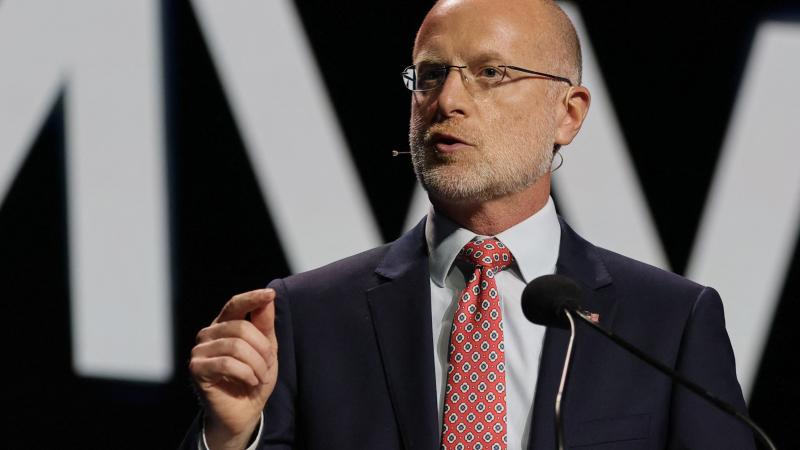
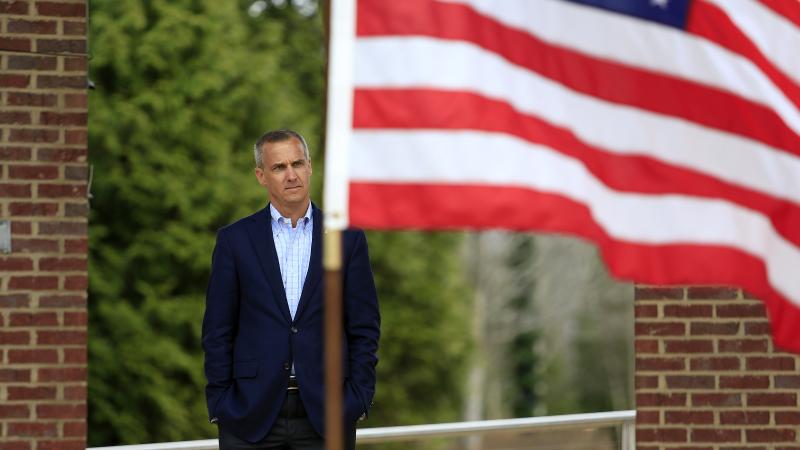

Retired Special Agent Bassem Youssef, who ran the FBI’s Communications Analysis Unit from late 2004 until late 2014, witnessed agents hired under Jim Comey's watch, for political leanings and warned of potential for abuse of surveillance programs. Those warnings were ignored.
The former FBI agent who ran the bureau’s warrantless spying program said this week that he personally witnessed the director and other senior officials recruiting agents based on political leanings, not qualifications, during Director James Comey’s tenure.
Bassem Youssef, a retired special agent who ran the FBI’s Communications Analysis Unit from late 2004 until his retirement in late 2014, also says he warned senior officials about the potential for civil liberties abuses in the surveillance program that he oversaw, but said neither Comey nor the White House took his warnings seriously.
The FBI’s surveillance practices have been back under a microscope in recent months. FBI records released by Sen. Chuck Grassley, R-Iowa, last year showed the bureau snooped on phone records of Republican elected officials as part of its investigation into Jan. 6.
Just the News also reported in February that the Government Accountability Office assessed that the FBI opened 1,200 probes related to politicians, journalists, religious leaders, academics and others tied to “sensitive investigative matters,” using a special investigative tool that required no factual predicate to launch. The vast majority of those probes were closed without accusations of wrongdoing or criminal charges against those targets being scrutinized.
Youssef told the Just the News, No Noise TV show on Tuesday that he believes the failure of the bureau to learn from past intelligence collection mistakes, like in the Trump-Russia probe whose underlying allegations were later discredited, is because FBI leadership had begun to hire employees based on political leanings rather than merit or capability.
“When I worked in the bureau, in field offices, and then eventually at FBI Headquarters, where I oversaw the Communications Analysis Unit that there was already a process where you could see that from the highest levels of the FBI, meaning the director's office and the executive assistant, directors that there is a soft recruitment of people of like mind that didn't necessarily meet the requirements for the job, but they were recruited because of their leaning, which was, in fact, very politically motivated,” Youssef said.
Just the News reported this week that President Trump and his supporters were targeted by four consecutive FBI code-named counterintelligence investigations over the last decade that subjected hundreds of Americans to privacy-invading tactics and essentially treated the man twice elected president as a national security threat for most of the first nine years of his political career.
FBI Director Kash Patel has led an effort in the administration to review the four operations code-named Crossfire Hurricane, Round River, Plasmic Echo and Arctic Frost that stretched from summer 2016 to January 2025.
Those who have seen the records told Just the News they chronicle how the FBI's expanded counterterrorism and counterintelligence missions after the Sept, 11, 2001, terrorist attacks eventually became hijacked by politics and led agents to deploy tools meant for terrorists and spies against everyday Americans in a bid to find a way to bring criminal cases against Trump.
“It tells you that the FBI, unfortunately, during the previous administration has cast a wide drag net that got so many people who were not involved in any way,” Youssef told Just the News. “And I hate to use that word, but it's really framing those people for some kind of malfeasance when there really wasn't in the first place.”
Before Youssef departed the bureau in 2014, he approached then-Director Comey to warn that he saw the potential for civil rights abuses in the FBI’s warrantless surveillance, which he oversaw from his perch atop the Communications Analysis Unit.
“I had been trying to brief the director at that time, it was Comey, of this special program, the program that was leaked by Snowden, if you remember, in 2012 and the executive assistant director under him was blocking me from briefing him,” Youssef said.
Edward Snowden, who was a National Security Agency contractor, leaked classified information in 2013 detailing several U.S. surveillance programs, including the FBI’s PRISM program to monitor internet communications and details about the Foreign Intelligence Surveillance (FISA) Court.
“I had a concern about this particular program,” Youssef said.
“And eventually, I went up to see [Comey], before I retired, [and] explained to him that the program has some issues and could be misused and abused, and he assured me that the program would be taken a very good look at it,” the former official explained.
“At that time, the then-President, Barack Obama, gave a press release saying that this is unacceptable, that we will definitely curb the authority of this program, if not shut it down altogether,” said Yousseff.
“Fast forward to the end of his tenure, the end of his administration, and to find out that the program was not curbed, but in fact, it was expanded, and authority was given to people who had no business in the Intel world, such as the then UN ambassador who was given access to that program,” he said.
Youseff previously detailed his specific concerns with the program, including an audit that showed it was generating large numbers of “false negatives and positives.”
Additionally, he said “there was collateral damage in terms of civil liberties” of Americans whose phone records were unnecessarily searched or who were falsely identified as connected to terrorism, Just the News reported in 2020.