Twenty-five years after 9/11: how the attacks defined every president since
From the War on Terror to the conflict with Iran, the 9/11 attacks have shaped decades of U.S. foreign policy and presidents's legacies.
On that fateful day 25 years ago today, when Islamic terrorists used hijacked commercial airliners to strike at the heart of Western civilization and kill thousands, the skyline of New York City and America’s soul changed forever. The Sept. 11 attacks, the deadliest on United States soil in history, and their aftermath, have also essentially haunted every presidential administration since. And the echoes of those first post-9/11 months still shape the U.S. today.
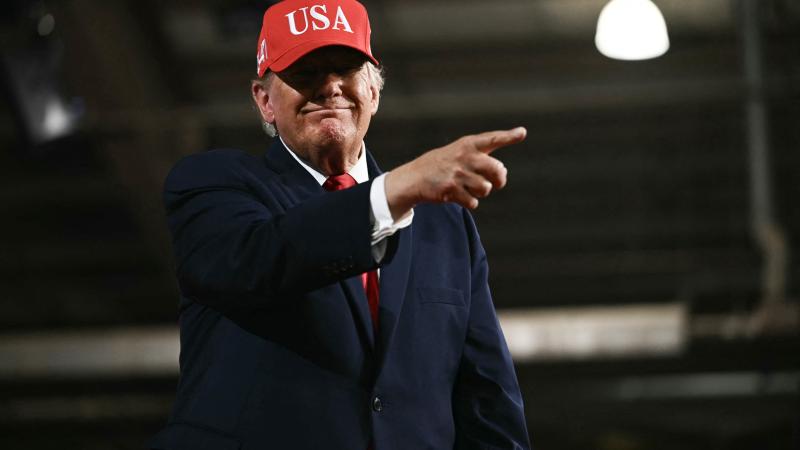
President George W. Bush called out Iran for sponsoring terrorism in the wake of the attacks. And his successor 15 years later, Donald Trump, despite campaigning a third time for the White House on a message of “no new wars,” just this year launched an operation aimed at defanging the Islamic Republic’s military, destroying its nuclear program, or toppling the Mullah-led regime. His administration justified its action in part because of Iran’s sponsorship of terrorism.
President Joe Biden, known for years as one of the preeminent Democratic voices on foreign policy as a senator from Delaware, struggled during his 2021-2025 term to extricate his political fortunes from the botched and chaotic withdrawal from Afghanistan, first invaded by President Bush two decades prior for harboring the terrorists responsible for 9/11.
And Barack Obama, Bush’s immediate successor, dealt with a new threat – the rise of ISIS – which many attributed to the withdrawal of U.S. forces from Iraq. The Democratic president also led the final effort to locate and kill Osama bin Laden, the al-Qaeda leader responsible for planning the 9/11 attacks.
The War on Terror
George W. Bush’s early presidency began in the shadow of a highly contested presidential election that ended only with a Supreme Court ruling that halted a recount in Florida, the decisive state for Bush’s electoral college victory. In his early months, the new president heavily focused on achieving his domestic agenda, including securing tax cuts and working on education reform. The 9/11 attacks completely upended his presidency.
Within a month, the United States had tracked the terrorists responsible for the deadly attacks to the al-Qaeda network then operating in Afghanistan. Bush demanded that the Taliban-controlled government turn over al-Qaeda leaders, but they refused. U.S. operations against al-Qaeda and Taliban regime targets in Afghanistan began on October 7, 2001 – nearly one month after the terrorist attacks on the World Trade Center and the Pentagon. Thus began America's War on Terror.
The U.S. invasion was focused on locating al-Qaeda leader Osama bin Laden, though the initial operations failed to corner him, and he fled in December to neighboring Pakistan and disappeared.
Just one month later, Bush labeled three countries – North Korea, Iran and Iraq – as an “Axis of Evil” for allegedly harboring, financing, and aiding terrorists.
Bush also named Iran a sponsor of terrorism and warned of the regime’s desire for nuclear weapons. Though Bush would invade Iraq, partly on claims that its dictator, Saddam Hussein, had obtained weapons of mass destruction, he would not act on Iran, which has now become a key focus for his Republican successor, Donald Trump. After launching a broad attack against the Iranian regime and military targets earlier this year, Trump invoked Iran’s sponsorship of terrorism.
“We cannot allow a nation that raises terrorist armies to possess such weapons that would allow them to extort the world to their evil will,” Bush said in his 2002 State of the Union address. The Bush administration later used claims that Iraq was developing, or had obtained, weapons of mass destruction as justification for an invasion to topple Hussein in 2003. Like Afghanistan, the occupation lasted much longer than anticipated.
ISIS & bin Laden
Obama, as a first-term Illinois senator, campaigned for president on vows to end Bush’s wars, but the terror networks born of 9/11 would come to define his presidency as well. He inherited the search for bin Laden, who had evaded U.S. forces since slipping into Pakistan. Nearly a decade later, intelligence officials tracked him to a fortified compound in Abbottabad, Pakistan.
On the night of May 1, 2011, a team of Navy SEALs raided the compound and killed the al-Qaeda leader in a firefight. Obama announced the operation from the White House hours later, telling the nation “justice has been done.” Bush, in a statement, called it a “momentous achievement” in the fight his administration had launched a decade earlier.
Bin Laden's death did not end the terror threat, however.
In December 2011, Obama completed a full withdrawal of U.S. combat troops from Iraq, a war he had long opposed. Within three years, a Sunni extremist offshoot of al-Qaeda in Iraq, calling itself the Islamic State (ISIS), exploited the resulting security vacuum and the chaos of the Syrian civil war to seize territory across both countries. ISIS captured Mosul in June 2014 and declared a caliphate that at its peak controlled significant portions of Syria and Iraq.
The Obama administration eventually intervened, birthing Operation Inherent Resolve, a U.S.-led coalition campaign that would run until December 2021. Critics, including former military commanders, argued Obama's 2011 withdrawal had created the conditions for the group's rise. The president and his defenders countered that the roots of the insurgency predated his presidency and that the alternative, an ongoing occupation, carried its own costs.
Regardless, the president’s handling of ISIS would provide a political opening for the man running to be his successor. Trump, as a 2016 GOP presidential candidate, centered his eventual winning campaign in part on defeating the ISIS caliphate and criticizing Obama for the way he withdrew U.S. forces from Iraq.
“He was the founder. The way he got out of Iraq ... that was the founding of ISIS, OK?” Trump said during the campaign.
The Afghanistan withdrawal
Biden came to the presidency after decades on the Senate Foreign Relations Committee, and he moved quickly to close out the war Bush had launched in Afghanistan in October 2001. Building on a 2020 agreement the Trump administration had struck with the Taliban, Biden ordered a full military withdrawal to be completed by the 20th anniversary of the 9/11 attacks. The exit did not go as planned and the president’s approval ratings never recovered.
Taliban forces advanced far faster than U.S. intelligence assessments had projected, and the Afghanistan capital of Kabul fell quickly in August 2021, sending the Afghan government fleeing and triggering a chaotic scramble to evacuate Americans and Afghan allies.
On August 26, a suicide bomber affiliated with ISIS-K, the Afghan affiliate of the Islamic State, detonated an explosive at the Kabul airport’s Abbey Gate. The attack killed 13 U.S. service members and more than 170 Afghan civilians.
The last U.S. military flight departed Kabul, on August 30, formally ending America's longest war. Biden defended the decision even as the withdrawal's execution drew bipartisan criticism and a lasting political toll. A House Republican-led investigation later concluded the administration's planning failures contributed directly to the Abbey Gate deaths, a finding Biden allies disputed.
War in Iran
Where Bush named Iran a state sponsor of terror but stopped short of military action against it, Trump has now struck the Islamic Republic twice. In June 2025, after Israel opened a bombing campaign against Iran's nuclear infrastructure, Trump ordered Operation Midnight Hammer, sending B-2 stealth bombers to strike the regime’s underground enrichment sites. Trump declared the strikes had "completely and totally obliterated" the country’s nuclear program.
Then in February 2026, the United States and Israel launched a far larger joint operation, code-named Epic Fury by the Pentagon, aimed simultaneously at Iran's missile arsenal, its navy, its nuclear program and its leadership.
The opening strikes killed Supreme Leader Ali Khamenei along with roughly 30 senior military, intelligence and nuclear officials, decapitating much of the regime's chain of command. Trump framed the campaign explicitly as an opportunity for regime change, despite his historical aversion to previous so-called regime change wars. He told Iranians it was their “greatest chance” to reclaim their country, while Iran retaliated with missile and drone strikes against American bases and allied nations across the Gulf.
A shaky ceasefire took hold in April 2026, but broke down by August, leaving the core disputes over Iran’s nuclear ambitions and Gulf shipping unresolved. Meanwhile, much like Bush, the American public is turning against the war in Iran. The most recent Reuters/Ipsos poll shows Americans’ support for the war has declined to only 31%, the lowest point since the conflict began earlier this year. The decline came in large part from fewer Republicans supporting Trump’s actions.
The Facts Inside Our Reporter's Notebook
Links
- tracked the terrorists responsible
- began on October 7, 2001
- labeled three countries
- Bush said in his 2002 State of the Union address
- Obama announced the operation from the White House hours later
- a statement
- ISIS captured Mosul in June 2014
- including former military commanders
- Trump said during the campaign
- the presidentâs approval ratings never recovered
- The attack killed 13 U.S. service members
- later concluded
- Operation Midnight Hammer
- declared the strikes had "completely and totally obliterated"
- The opening strikes killed Supreme Leader Ali Khamenei
- framed the campaign explicitly as an opportunity for regime change
- most recent Reuters/Ipsos poll

Top Stories

Trending
Just the News Spotlight
Just News, No Noise