Congress flipped, Trump didn't: Miller pick signals an aggressive stance through 2028
Without a veto-proof majority in the House or Senate, Democrats will likely hit a wall on their own legislation. But after the Supreme Court's ruling on executive power, Trump will likely push the limits of that power: He has nothing to lose.
During President Donald Trump's final two years of governance, he will not have the majority support of the U.S. House or Senate. But Friday's chief of staff pick of Stephen Miller signals an offensive move that will hardly follow the pattern of the typical lame-duck president.
"I wanted to make a change," Trump said.
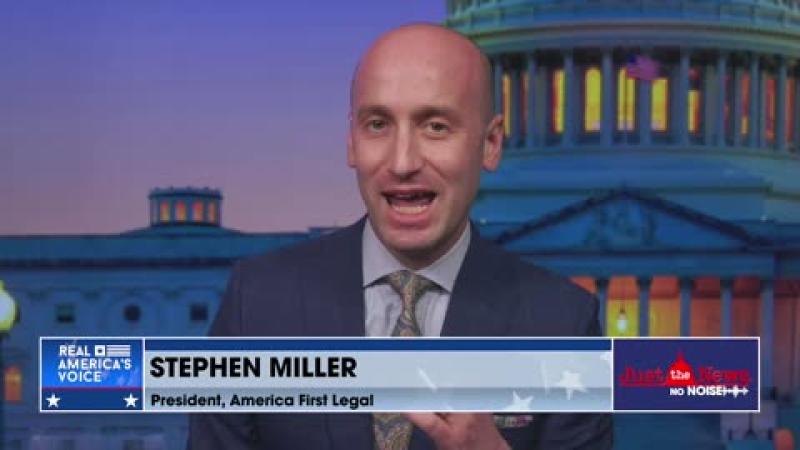
Miller, the blunt-speaking architect of Trump's immigration agenda, will replace Susie Wiles as White House chief of staff starting Monday.
The move came just two days after the president congratulated Democrats and said he was "open to working with them" [...] "unless they want to be destructive" while reminding them he holds the veto. Together, the two models show what could be called a velvet hammer: a cordial public tone backed by an executive branch built to keep the blows coming.
With no future elections of his own to win, Trump has little reason to pull punches.
A playbook drafted in advance
Miller doesn't need guidelines to step into the new role, because he has experience doing the work required. Since April, Miller and budget director Russell Vought have worked with the White House Counsel's Office to identify executive actions on immigration, tariffs, housing costs and federal spending that require no congressional sign-off, Reuters reported last week.
Options under consideration include new tariffs on critical minerals and wind turbines, tighter visa rules for international students and temporary foreign workers, and steps to lower housing and construction costs. Vought is also examining which priorities can move forward with money that Congress has already appropriated. Asked how comfortable Trump would be governing through executive authority, one person familiar with the planning who requested anonymity answered: "very comfortable."
Trump told CBS News he is prepared to use "tremendous powers," pointing to recent Supreme Court rulings that strengthened presidential authority.
Retreat or reset for a president who already governs by the pen
The playbook upon which Miller relies is based on a well-tested record. Trump has signed 292 executive orders in his second term, an average of 167 a year and the highest average of any president since 1981. His second-term total already exceeds the 276 orders Barack Obama signed over eight years.
According to Reuters, Trump has used that authority to impose sweeping tariffs, intensify immigration enforcement, shrink the federal workforce and wage war against Iran without new laws from Congress.
The major exception was the tax and spending package Republicans passed in July 2025.
History offers two playbooks for presidents who lose Congress late in their tenure.
In 2006, George W. Bush chose retreat, at least at first. The day after Democrats captured the House, Bush announced Rumsfeld's resignation, sacrificing his embattled defense secretary as voters soured on the Iraq war.
Trump has gone the other way. This week he said he has every intention of keeping Defense Secretary Pete Hegseth, despite some Republicans blaming the Iran war for Tuesday's losses. For their part, some Democrats have long called for Hegseth's scalp: Rep. Shri Thanedar, D-Mich., submitted H.R. 935 in December of last year which called for Hegseth's impeachment. The bill has gone nowhere.
Trump thrives on adversity
Over the years, Trump has faced the task of showing he has the ability to do his best work with his back against the wall. In October 2016, the release of the "Access Hollywood" tape seemed to finish his campaign. On Election Day, prominent pollsters gave him less than a 20% chance of winning. Hollywood celebrities filled the airwaves with supercilious hot takes about his being doomed to failure. He won the presidency anyway.
After leaving office in 2021, he was widely written off. He launched his 2024 bid in November 2022, days after Republicans fell short of an expected red wave in that year's midterms, much like the setback his party suffered Tuesday.
What followed would have ended most political careers. Instead, each of his four criminal indictments boosted him in the polls, and he raised more than $52.8 million within 24 hours of his New York conviction.
When a gunman's bullet grazed his ear in Butler, Pennsylvania, in July 2024, Trump rose with his fist in the air, and "fight, fight, fight" became a rallying cry for his supporters. Four months later, he reclaimed the White House in what The Associated Press called an "extraordinary comeback."
"I've got a pen, and I've got a phone," Obama said
Obama instead chose the reset. A day after Democrats lost the Senate in 2014, he vowed executive action on immigration. Two weeks later, he unveiled sweeping orders shielding nearly 5 million people from deportation over furious Republican objections. He famously bragged to CBS News that "I've got a pen, and I've got a phone."
Bill Clinton, facing a Republican Congress and a sex-scandal in 1998, leaned on executive orders so heavily that aide Paul Begala famously summed it up: "Stroke of the pen, law of the land. Kind of cool."
The veto backstop
Trump enters his final two years with a sturdy firewall. Democrats fell short of veto-proof majorities in either chamber, so any bill aimed at unwinding his agenda would need Republican defectors to survive his veto.
The broader reshuffle is already underway. Harmeet Dhillon, the Justice Department's civil rights chief, resigned Thursday amid expected shake-ups. Senate Republicans, meanwhile, are racing to confirm pending judicial nominees before Democrats take control Jan. 3.
Democrats are signaling a fight. House Democratic leader Hakeem Jeffries of New York called Miller a "dangerous xenophobe," The Hill reported. Rep. Robert Garcia, D-Calif., the likely next chairman of the House Oversight Committee, suggested Miller hire a lawyer.
Critics argue the pick ignores a clear message from voters, and CBS News described it as doubling down on a rejected agenda. Supporters counter that a president with nothing left to lose at the ballot box has every reason to finish what he started, just as Obama did in 2014.
Trump has already previewed how he expects the standoff to end. "You veto, veto, veto," he told reporters in October, "and then they come and they say, 'How do we get it done?'"
Amanda Head is White House Correspondent for Just the News. You can follow her here.
The Facts Inside Our Reporter's Notebook
Links
- replace Susie Wiles
- and said
- unless they want to be destructive
- reminding them
- reported last week
- answered
- told CBS News
- the highest average
- exceeds the 276
- Reuters
- announced Rumsfeld's resignation
- every intention
- Republicans
- H.R. 935
- seemed to finish
- prominent pollsters gave
- filled the airwaves
- launched his 2024 bid
- boosted him
- became a rallying cry
- called an extraordinary
- vowed executive action
- unveiled sweeping orders
- bragged to CBS News
- famously summed it up
- fell short of
- resigned Thursday
- pending judicial nominees
- The Hill reported
- suggested Miller hire
- doubling down
- told reporters in October
- here

Top Stories



Trending
Just the News Spotlight
Just News, No Noise