Related Articles

Because diesel fuel powers a majority of U.S. farmers’ trucks, tractors, pumps and other harvest-preparation equipment, the increase in diesel costs has hit their industry at an inconvenient time before harvesting. Farmer's groups have praised the president's efforts, which may reduce perceived "affordability" issues for American consumers before the midterms.
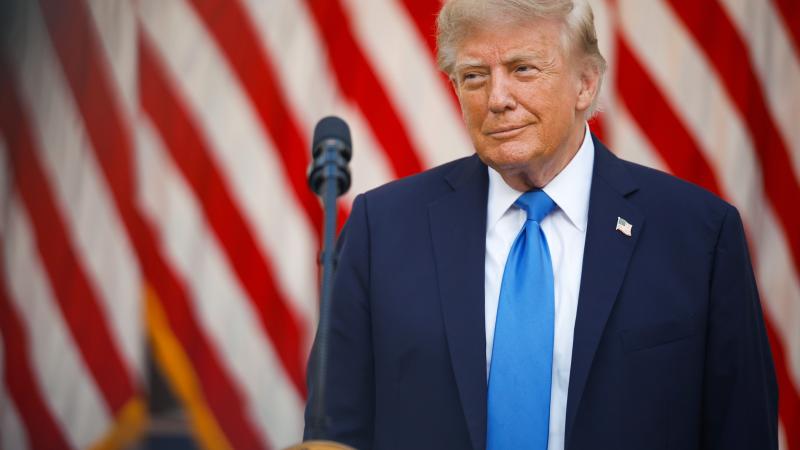
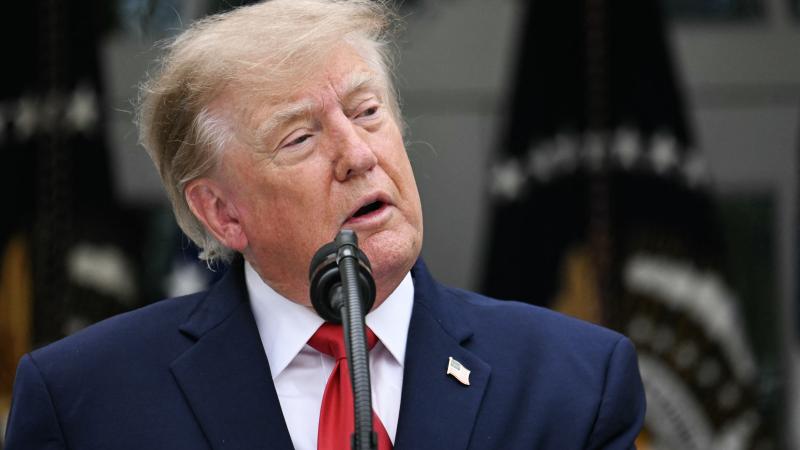
President Donald Trump and Agriculture Secretary Brooke Rollins announced Monday at a Kansas rally that the Department of Agriculture (USDA) will make $8 billion available for one-time payments to American farmers this harvest season through a new Harvest Fuel Relief Program, according to the USDA.
The payments aim to offset recently elevated diesel and other fuel-related costs that are squeezing agricultural producers during temporary market disruptions driven by overseas conflicts.
The administration described the aid as proportional support based on modeled losses for the 2026 crop year, so farmers can continue operations without interruption. The program comes as diesel prices have roughly doubled in many areas compared with last fall, adding thousands of dollars in costs for machinery, irrigation, and transport at the peak of harvest, as reported by The Kansas City Star.
Diesel prices have surged amid global supply disruptions tied to the Iran conflict and reduced Russian refined-product exports after Ukrainian strikes on refineries.
The U.S. national average retail price for diesel stood at $6.32 per gallon as of October 20, compared with roughly $3.62 a year earlier, according to The American Automobile Association (AAA). Weekly data from the Energy Information Administration put the U.S. average near $6.28 for the week of October 19, reflecting a sharp year-over-year increase.
During the Biden administration, national average diesel prices peaked above $5.80 per gallon in mid-2022 following the Russian invasion of Ukraine, with gasoline also hitting a record near $5 per gallon in June of that year, per historical EIA records.
Praising the effort to ease concerns about rising costs, National Corn Growers Association (NCGA) President Matt Frostic said in a statement that "We appreciate the administration recognizing how the high cost of inputs, especially diesel fuel prices during harvest time, is adding to the economic pain of America’s farmers. Corn growers are eager to learn more details about the Harvest Fuel Relief program design and implementation for the 2026 crop year."
The current spike reflects a combination of Middle East shipping constraints through the Strait of Hormuz and lower diesel export volumes from Russia, creating tighter global inventories just as U.S. harvest demand rises. The administration has taken parallel steps, including an earlier executive order expanding access to tax-exempt dyed diesel for off-road agricultural use, as detailed by Reuters.
The National Farmers Union (NFU) was also appreciative of the president's efforts, but added that it is up to Congress to create a long-term solution, saying that "We need to provide long-term certainty and investment in diversifying our fuel sources with renewable options, not a cycle of ad hoc relief. That’s why Congress must commit to passing a strong farm bill that gives family farmers the stable footing they need.”
Farmers rely heavily on diesel for combines, grain trucks, irrigation pumps, and field preparation, particularly during the short fall harvest window.
USDA’s Economic Research Service has forecast fuel and oil expenses to rise 28.8% to $21.6 billion in 2026 while overall production expenses climb 4.5 percent and net farm income declines 2.6 percent in nominal terms, according to the American Farm Bureau Federation.
High diesel prices add thousands of dollars per operation on larger grain farms and can delay or reduce harvest efficiency if producers ration fuel or face cash-flow shortfalls. The relief may function as a short-term buffer by transferring a portion of the projected extra costs from individual farm balance sheets to the Commodity Credit Corporation, reducing the immediate pressure on farmers from price movements driven by overseas conflicts.
Similar CCC-backed programs have previously addressed temporary shocks from weather, trade, or input volatility, as noted in CBS News coverage. Payment timing will depend on the November rate announcements and subsequent application processing, with officials emphasizing the goal of supporting continuity of domestic food production while broader energy supply adjustments continue.
Democratic operatives and legacy media have been attacking both Trump and the GOP on a so-called "affordability" crisis. Rep. Greg Landsman, D-Ohio, said in a press release that “The affordability crisis didn’t start 10 months ago — families have been feeling this for years. But this administration has made it worse, from cutting healthcare to pushing sweeping tariffs that drive up prices."
Voters about to engage in the upcoming midterms are seeing headlines and articles asserting a gloomy picture. Politico reported that "More than half the country said the cost of living in their area is the worst they 'can ever remember it being' this August, about 55%.” An August poll from that same outfit claimed that six in ten people say the government should prioritize bringing down the cost of everyday essentials.
On the other hand, others call into question the use of the word "affordability" at all. No less a specialist publication than The Economist explained that "Affordability is a fuzzy term that can mean whatever feels true." Understanding that the word "affordability" is wholly subjective, the Manhattan Institute wrote that "Affordability has been an issue for years, but it became an acute problem when inflation spiked after the pandemic and there was a drop in real income. Inflation is still high, about 3%. But real income growth is still positive for most Americans, suggesting that income is rising to cover many of the goods and services that are increasing in price."
The data Commodity-specific rates for major Title I crops are expected in November, with details for other eligible commodities to follow, according to Fox Business. Title I crops generally consist of major crops for the U.S. such as corn, rice, wheat, soybeans, and cotton. Lowering the costs for producing those crops, in turn, most likely helps strengthen the affordability of food and clothing for the American consumer.
The relief is authorized under the Commodity Credit Corporation Charter Act and will be administered by the Farm Service Agency. Payments will use a uniform formula drawing on Farm Service Agency planted-acre reports, Economic Research Service cost-of-production estimates, and World Agricultural Supply and Demand Estimates yields and prices to cover a portion of modeled losses.
Crop insurance is not required, though USDA encourages producers to use enhanced risk-management tools available under recent tax legislation. Producers of non-Title I commodities, including specialty crops and fishermen, can submit fuel-cost data to HarvestFuel@usda.gov for consideration. Eligible farmers are urged to create a Login.gov account linked to USDA ahead of the application period, as noted by UPI.
Amanda Head is White House Correspondent for Just the News. You can follow her here.