Trump’s affordability crusade beats the streets with tiny truck solution
When reliable transportation became unaffordable for average families under Biden, it trapped millions in a cycle of debt, limited job opportunities and eroded independence, turning what used to be a basic middle-class necessity into a luxury that many could no longer attain.
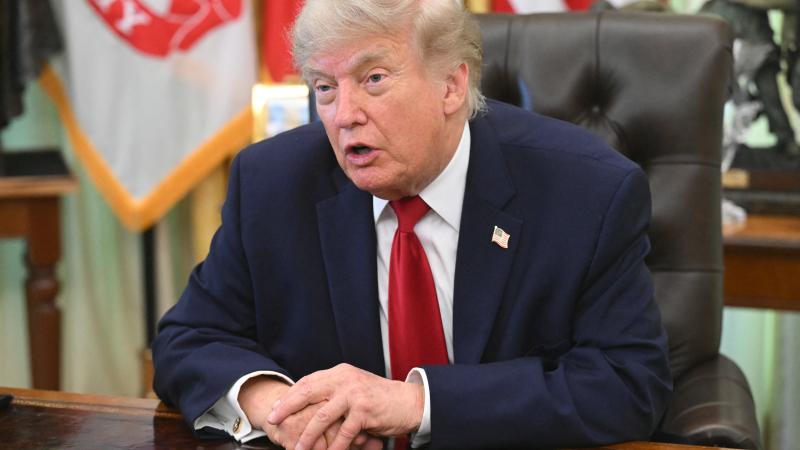
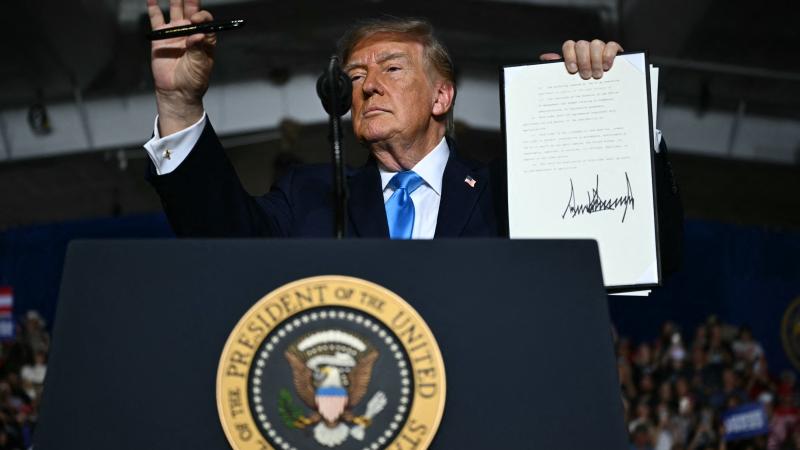
On Wednesday, President Donald Trump announced a comprehensive reset of federal fuel economy standards, aiming to ease regulations on the auto industry to boost American manufacturing and reduce costs for consumers.
One vehicle in particular will benefit from such regulation reduction: the Asian sensation Kei truck, also known as Kei vans or micro-trucks, a category of ultra-compact, lightweight pickup trucks and utility vehicles popular in Asia, especially Japan, South Korea, and parts of Southeast Asia like Malaysia.
Trump encountered the tiny tonka during his October Asia trip, which included stops in Japan, Southeast and East Asia for trade talks. In Japan amid negotiations over U.S. exports like the Ford F-150 pick-up, which Japan reportedly considered buying as snow plows to appease Trump, he spotted Kei trucks zipping around narrow streets and described them as "very small, really cute, and beautiful."
Multiple models would be highly marketable and profitable in the U.S. including the $14,000 Toyota Hilus, the $2,000 Micro-EVs or the $4,000 Suzuki Alto.
Fully functional workhorses
Kei trucks are typically under 11 feet long, 4 1/2 feet wide and 6 1/2 feet tall, a size that lends itself to weaving through city traffic or parking in tight spots. The engines are also smaller. They are limited to 660 cc, which is significantly smaller compared to U.S. trucks' 5+ liters, producing around 40 to 65 horsepower.
Originating in Japan in the post-World War II era, "Kei" (short for keijidōsha, or "light vehicle") refers to a special class of vehicles designed for narrow urban streets, high fuel efficiency, and affordability. Despite their petite size, they are not toys or scale models; they are fully functional workhorses, often used for deliveries, farming, or small business logistics.
Many barriers have blocked the vehicle's prominence. They are not outright banned federally, but they occupy a legal gray area in which strict regulations make them challenging to import, register, and drive on public roads. National Highway Traffic Safety Administration (NHTSA) standards require crash protection, lighting, and emissions compliance designed for larger vehicles. Kei trucks' small size means they fail side-impact and rollover tests without costly modifications.
State laws also prevented their success: even modified imports (over 25 years old via the "classic car" loophole) are often off-limits on public roads—restricted to farms or low-speed private use in places like California, or banned outright elsewhere due to speed limits (top 60 mph) and vulnerability next to semis.
Americans can no longer afford new cars
Automobile affordability has reached a crisis point due to a number of factors. The average cost of a new car sits at roughly $48,800 with monthly payments exceeding $760, which has left many American families struggling to afford transportation amid broader economic pressures.
Much of this unaffordability stems from persistent inflation that eroded purchasing power, with prices rising over 21% since early 2021. As wages lagged behind, public sentiment trends towards seeing vehicle purchases as a luxury rather than a necessity.
The Biden administration's $1.9 trillion American Rescue Plan in 2021, which passed despite warnings from economists like Larry Summers, flooded the economy with stimulus, adding up to 4 percentage points to inflation and driving up costs across sectors including automobiles. Compounding the issue, Biden's stringent Corporate Average Fuel Economy (CAFE) standards and electric vehicle mandates imposed burdensome regulations on automakers, forcing costly technological upgrades that pushed new car prices up by an estimated $1,000 per vehicle and contributed to a 25% overall surge in costs.
CAFE standards rolled back
Adding to Trump's affordability efforts in the automotive sector, on Wednesday, Trump announced a major rollback of Biden's CAFE standards, reducing the 2031 fleet-average target from ~50 mpg to ~34.5 mpg and cutting required annual efficiency gains from 2% to just 0.5%. The proposal eliminates the CAFE credit-trading system that benefited Tesla and resets standards for 2022–2031, aiming to lower vehicle prices, preserve consumer choice in gas-powered cars, and end what the administration calls an unlawful backdoor EV mandate.
The rule is now open for public comment and, if finalized, will significantly ease fuel-economy requirements for traditional vehicles while drawing criticism from environmental groups for increasing long-term fuel use and pollution.
The Facts Inside Our Reporter's Notebook



Top Stories




Trending
Just the News Spotlight
Just News, No Noise