Hegseth says U.S. has right to conduct Midnight Hammer-type attack over Iran’s enriched uranium
The U.S. military inflicted massive damage to the Iranian military, but at least part of the Iranian regime's highly-enriched uranium stockpile remains in the regime's hands. Although successful negotiations may render such action unnecessary, Hegseth made clear that if required, the U.S. could conduct a similar operation again.
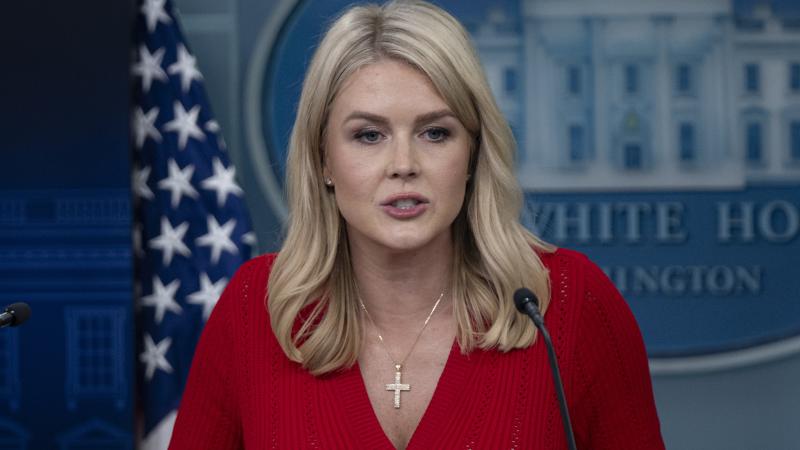
Secretary of War Pete Hegseth said that, despite the current ceasefire, the U.S. still reserved the right to conduct an Operation Midnight Hammer-style operation inside Iran to eliminate the Iranian regime’s stockpile of enriched uranium, insisting it was non-negotiable that Iran would never be allowed a nuclear weapon.
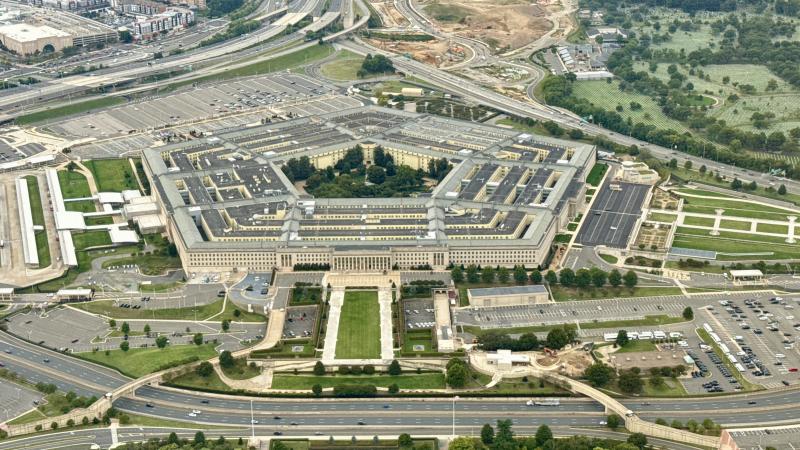
Just the News asked Hegseth during a Wednesday press conference at the Pentagon about any future peace deal with Iran and whether the Iranians handing over all of their enriched uranium and promising not to enrich any future uranium would be a non-negotiable term for the United States. The war secretary suggested both a diplomatic deal and military options both remained on the table, despite the U.S. and Iran agreeing to a two-week ceasefire on Tuesday.
"They’ll never have a nuclear weapon or the capability to get a path to one": Hegseth
“It’s always been non-negotiable that they won’t have nuclear capabilities. And so right now it’s buried and we’re watching it. We know exactly what they have, and they know that,” Hegseth said. “And they [the Iranians] will either give us — which the president has laid, they’ll give it to us voluntarily, we’ll get it, we’ll take it, we’ll take it out — or if we have to do something else ourselves, like we did with Midnight Hammer or something like that, we reserve that opportunity. But what’s clear, what the Iranian — the new Iranian regime — knows, is they’ll never have a nuclear weapon or the capability to get a path to one.”
The U.S. military carried out Operation Midnight Hammer last summer, with U.S. Central Command (CENTCOM) inflicting significant damage upon Iranian nuclear sites at Fordow, Natanz, and Isfahan, but the International Atomic Energy Agency (IAEA) says that Iran likely maintains a significant enriched uranium stockpile, assessing much of it is likely buried beneath one of the rubbled sites.
Another reporter asked a follow-up question on Wednesday about whether getting the Iranian uranium might require special forces, also asking who would be trusted to go into Iran to get the uranium out.
“Again, on the uranium, we’re watching it. We know what they have. And they will give it up, and we’ll get it, and we’ll take it. If we have to, we can do it by any means necessary,” Hegseth replied. “So, that’s something that the president is going to solve for. We already have with Midnight Hammer, with the place we put them in, and the reason it’s in the situation where it is.”
"A very productive Regime Change": Trump
President Donald Trump had said on his Truth Social site on Wednesday morning that “the United States will work closely with Iran, which we have determined has gone through what will be a very productive Regime Change!”
“There will be no enrichment of Uranium, and the United States will, working with Iran, dig up and remove all of the deeply buried (B-2 Bombers) Nuclear ‘Dust.’ It is now, and has been, under very exacting Satellite Surveillance (Space Force!),” the president said. “Nothing has been touched from the date of attack.”
Hegseth had also said Wednesday that “this new regime was out of options and out of time, so they cut a deal.”
“They know this agreement means they will never, ever possess a nuclear weapon. Under the terms, any nuclear material they should have will be removed — any material, excuse me, they should not have will be removed,” Hegseth said. “Right now their dust is deeply buried and watched 24/7 overhead. The president has been clear from the beginning: there will be no Iranian nuclear weapons. Period, full stop. Other presidents said it, President Trump did it.”
Hegseth added: “Now we have a chance at real peace and a real deal. The War Department — for now, for now — has done its part. We stand ready in the background to ensure Iran upholds every reasonable term. And as everyone knows, nobody makes a better deal than Donald Trump.”
The U.S. and Iran had proposed a fifteen-point plan and a ten-point plan respectively to end the current conflict. The two alleged plans diverge sharply on a raft of issues, including the nuclear question.
Battling descriptions of a 10 or 15-point plan
U.S. envoy and negotiator Steve Witkoff confirmed the delivery of a fifteen-point plan to the Iranians during a Cabinet meeting late last month.
The U.S. peace proposal does not appear to have been made public in full, but some of its purported points include that: Iran must make a permanent commitment to never develop nuclear weapons; must dismantle its three aforementioned nuclear facilities; must not engage in uranium enrichment on Iranian soil; and must turn over its enriched uranium stockpile to the IAEA.
Iranian state-owned Press TV has said that the Iranian regime’s plan to end the war included “acceptance” by the U.S. “of uranium enrichment” by Iran, as well as “no new aggression against Iran.” The Iranian regime-run outlet said other points include “continued Iranian control over the Strait of Hormuz” as well as the “removal of all primary sanctions” and the “withdrawal of U.S. combat forces from the region.”
“Subject to the Islamic Republic of Iran agreeing to the COMPLETE, IMMEDIATE, and SAFE OPENING of the Strait of Hormuz, I agree to suspend the bombing and attack of Iran for a period of two weeks,” Trump had announced on Truth Social on Tuesday evening. “This will be a double-sided CEASEFIRE! The reason for doing so is that we have already met and exceeded all Military objectives, and are very far along with a definitive Agreement concerning Longterm PEACE with Iran, and PEACE in the Middle East.”
The president added yesterday: “We received a 10-point proposal from Iran, and believe it is a workable basis on which to negotiate. Almost all of the various points of past contention have been agreed to between the United States and Iran, but a two week period will allow the Agreement to be finalized and consummated. On behalf of the United States of America, as President, and also representing the Countries of the Middle East, it is an Honor to have this Longterm problem close to resolution.”
Trump also shared what he dubbed the “Official Statement of Iran” where Iranian Foreign Minister Seyed Abbas Araghchi said that “considering the request by the U.S. for negotiations based on its 15-point proposal as well as an announcement by POTUS about acceptance of the general framework of Iran's 10-point proposal as a basis for negotiations” that Iran would agree to a ceasefire.
The president said on Truth Social on Wednesday morning that “we are, and will be, talking Tariff and Sanctions relief with Iran” and that “many of the 15 points have already been been [sic] agreed to.”
Iranian Parliament Speaker Mohammed Ghalibaf added to the confusion about their ten-point proposal and Trump's response when he tweeted on Wednesday afternoon that there had been a “violation of three key clauses” from Iran’s ten-point proposal, including the “denial of Iran’s right to enrichment.”
The only genuine negotiations will be behind closed doors
Later on Wednesday afternoon, Trump posted that “numerous Agreements, Lists, and Letters are being sent out by people that have absolutely nothing to do with the U.S.A. / Iran Negotiation, in many cases, they are total Fraudsters, Charlatans, and WORSE” and argued that “there is only one group of meaningful ‘POINTS’ that are acceptable to the United States, and we will be discussing them behind closed doors during these Negotiations. These are the POINTS that are the basis on which we agreed to a CEASEFIRE.”
In an interview with CBS News in late March, Trump reportedly declined to say whether it would be feasible for the U.S. to declare victory without getting rid of the Iranian regime’s enriched uranium stockpile. "I don't even think about it. I just know that, you know, that's so deeply buried it's gonna be very hard for anybody,” Trump reportedly told the outlet.
"Finally people admit it was obliteration,” Trump reportedly said in reference to the strikes conducted during Operation Midnight Hammer. “It's down there deep. And they haven't been able to do it. You know, even without a war they haven't been able to do it. So […] it's pretty safe. But, you know, we'll make a determination."
The Wall Street Journal in late March and The Washington Post in early April both reported that Trump had been briefed on potential U.S. military plans to forcibly seize Iran’s enriched uranium, although the U.S. did not attempt such an operation.
Determining what Iran's stockpile of enriched uranium is
IAEA Director General Rafael Grossi said in an official report in late February that, as of June 2025, the agency’s “estimate of Iran’s total enriched uranium stockpile” was roughly 19,929 pounds, including roughly 972 pounds of highly-enriched uranium enriched up to 60% purity.
Grossi added: “Perhaps there are some limitations as to what one can say publicly, but these are some tunnels, and in these tunnels there are areas of storage, areas of research and development activities, areas of — I mean, it's a multiplicity, it's a network of tunnels. In one of those, you have that material.”
It remains to be seen whether this point of contention over Iran's enriched uranium stockpile will be able to be overcome by negotiators in the U.S. and Iran.
The Facts Inside Our Reporter's Notebook


Top Stories




Trending
Just the News Spotlight
Just News, No Noise