Beyond lowering drug prices, Trump ups national security by restoring America’s pharma supply chain
The ingredients negotiated by Trump can help to rebuild the ingredient layer of the American drug supply that Washington has talked about since the last shortage scare but never actually filled.
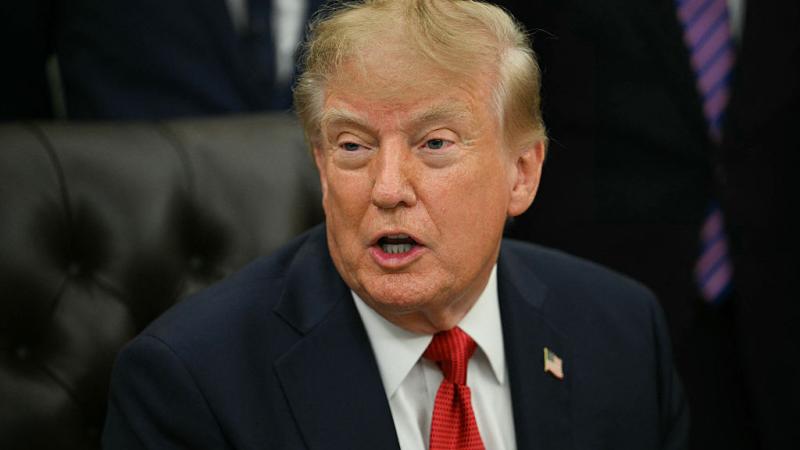
On Monday, President Donald Trump made a major announcement about drug pricing for Americans, but what could be even more impactful is the durability it provides for America's national security through domestic pharmaceutical supplies.
The price cut was the headline that emerged from the Oval Office. However, the longer-lasting aspect never made the podium: nine mid-sized drugmakers pledged $19.6 billion in U.S. plants and, in several cases, tons of raw antibiotics vital to supplying the Strategic Active Pharmaceutical Ingredients Reserve (SAPIR).
"It's critical because the original ingredients that are in a capsule or tablet of antibiotics, previously they had been sourced from India or China," Dr. Peter McCullough told Just The News.
"You can imagine if we got into some difficult, negative relationships with either country, the drug supply could be at risk," he continued. "So it's very strategic, and I think wise, to be able to produce our own key drugs here at home, and that way, Americans don't have to worry if we have a supply chain problem."
Drug security is national security
If those commitments hold, Trump’s most-favored-nation (MFN) deals are not only bargaining down what consumers pay—they are attempting to rebuild the ingredient layer of the American drug supply that Washington has talked about since the last shortage scare but never actually filled.
The announcement highlighted the administration's efforts to cut U.S. prescription costs to levels paid in other wealthy countries. The new agreements with Alcon, Astellas Pharma, BeOne Medicines, BridgeBio, CSL, Kyowa Kirin, Sun Pharma, Teva Pharmaceuticals and UCB bring the total to 26 companies covering about 89 percent of the branded market, with Medicaid programs gaining access to the lower prices and additional medicines slated for the TrumpRx direct-to-consumer platform.
The White House reports that patients have already saved more than $700 million through TrumpRx since February and projected the broader MFN deals will save Americans hundreds of billions.
A reliant nation is a vulnerable nation
Heavy U.S. reliance on overseas pharmaceutical ingredients became a national-security issue during COVID-19, when factory shutdowns and export curbs produced shortages of antibiotics, pain medicines and other hospital drugs.
China restricted and redirected medical supplies early in 2020 while ramping up domestic use, and analysts have warned that Beijing could later withhold key starting materials (KSM) the way it has restricted other strategic goods.
India, which supplies much of America’s generic finished drugs, itself depends on Chinese intermediates and has a long record of FDA findings of contamination, data integrity failures, and unsanitary plants. Those two-country chokepoints still leave many essential medicines one disruption away from shortage.
SAPIR's impact and background
The SAPIR is a U.S. government-backed stockpile of active pharmaceutical ingredients (APIs) and KSMs that can be rapidly converted into finished essential medicines during shortages or emergencies. It was created in 2020 under the first Trump administration after COVID-19 exposed heavy U.S. reliance on foreign API suppliers like China and India.
In May 2020, BARDA (Biomedical Advanced Research and Development Authority) awarded Phlow Corp. a contract of up to $354 million (potentially $812 million) to manufacture at-risk medicines and help build the reserve. Phlow originated the SAPIR concept and still powers its infrastructure today.
APIs were chosen because they cost less and last longer than finished drugs. A 2024 analysis found the already-built warehouse sat at roughly 1 percent of capacity. The 2025 White House expressed concerns that the Biden administration did not fill the warehouse, despite billions spent on supply-chain efforts, leaving it nearly empty.
An August 2025 executive order then directed the Administration for Strategic Preparedness and Response (ASPR) under HHS to stock a six-month API supply for about 26 critical drugs and plan coverage for 86 essential medicines.
Amanda Head is White House Correspondent for Just The News. You can follow her here.
The Facts Inside Our Reporter's Notebook


Top Stories

Trending
Just the News Spotlight
Just News, No Noise