Related Articles
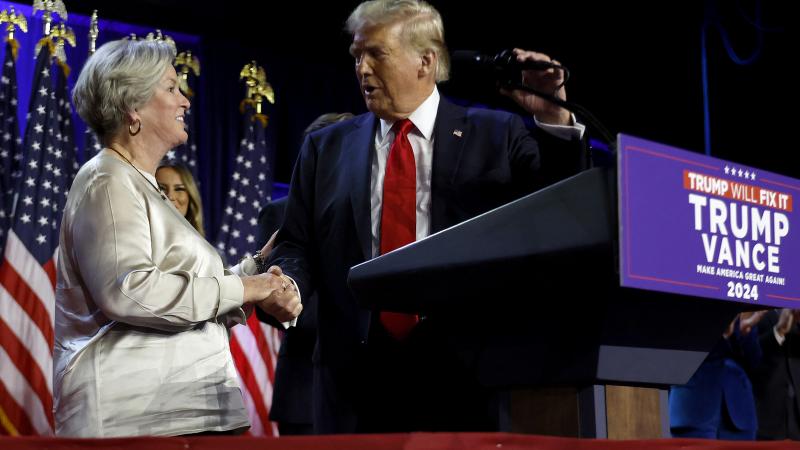



Economic warfare: Trump targets Iran’s cryptocurrency networks to enforce preexisting sanctions and starve the theocratic regime of revenue.
Under President Donald Trump, Iran has endured a debilitating escalation by the U.S. in the last 72 hours, and two strategies in particular tightened the screws enough to bring the Persian nation closer than ever to waving the white flag.
"The Islamabad Memorandum of Understanding has never been closer. Pending its finalization, the media should refrain from entering speculation about its content. In line with our responsible and transparent approach, all details will be shared with the public in due course," Iran's Foreign Minister Abbas Araghchi posted to his X account.
On June 9 and 10, the U.S. conducted fresh "self-defense" strikes on Iranian air defenses, radar, surveillance, communications and military sites near the Strait of Hormuz. The escalation, involving Tomahawk missiles, aircraft, and naval assets, followed Iran’s downing of a U.S. Apache helicopter and came amid stalled talks over a potential peace deal.
Equally crushing for Iran's Islamic regime was action by the U.S. Treasury Department, under Secretary Scott Bessent, targeting Iran’s cryptocurrency networks to enforce pre-existing sanctions and starve the regime of revenue.
"Taking crypto accounts, that's really going to focus their attention, because they may or may not care about how their people are suffering, but they really care about their private fortunes that they've skimmed off of their society. It's a brilliant move by the secretary," Former Special Assistant in the Office of the Secretary of War James Robbins told Just The News exclusively
The strategy included sanctioning multiple Iran-linked crypto wallets (freezing roughly $344 million in assets, often with stablecoin Tether’s cooperation), seizing roughly $500 million to $1 billion in regime-tied cryptocurrency, and designating Iran’s largest exchange, Nobitex, along with others like Bitpin, Ramzinex, and Wallex, plus executives, as Specially Designated Nationals (SDN) on OFAC's (Office of Foreign Assets Control) sanctions list.
A stablecoin is a type of cryptocurrency designed to maintain a fixed value, typically by being pegged 1:1 to a traditional fiat currency like the U.S. dollar. By combining the speed and global reach of digital assets with the price stability of traditional money, they act as a reliable bridge between cash and crypto.
The moves were meant to disrupt sanctions evasion, terror financing via the IRGC, and illicit fund transfers, complementing broader pressure on Iran’s oil trade and shadow banking.
The effort, a novel approach by the Trump administration, revealed crypto's dual role as both a sanctions circumvention tool for nations like Iran and a traceable vulnerability for US enforcement.
The deal reportedly stipulates a 60-day extension to the ceasefire, ending active US-Iran hostilities and related relational fronts.
The revitalized Memorandum of Understanding (MOU) also features a number of commitments which Iran had previously expressed were nonstarters. Namely, and most importantly, that the nation would never acquire a nuclear weapon and would resolve the questions surrounding its enriched uranium supply.
The MOU also calls for the Strait of Hormuz to reopen immediately without tolls, and a 30-day deadline for returning to pre-war shipping volumes. The U.S. blockade would be lifted in return.
Iran has a long history of acting in bad faith, repeatedly reneging on international agreements, engaging in covert nuclear activities, and supporting proxy militias that destabilize the region, which underscores its untrustworthy track record.
Victoria Coates, former National Security Advisor to Trump during his first term, spoke to Just The News about what an insurance policy looks like to make sure Iran adheres to their promises.
According to Coates, Iran understands that "there is not significant sanctions relief for the Iranians up front, that they have to fulfill a series of benchmarks—you're not going to get pallets of cash this time," a reference to former President Barack Obama sending wooden pallets of euros and Swiss francs to Iran in 2016, which was heavily criticized as ransom for four American prisoners released around the same time.
Any new deal with Iran should therefore be approached with caution, verifying compliance through rigorous, ongoing inspections rather than naive hope, while maintaining strong deterrence to guard against further deception.
These recent actions follow the broader conflict that began with Operation Midnight Hammer in June 2025. The U.S. then used stealthy B-2 bombers and "bunker-buster" ordinance to heavily damage Iran’s nuclear facilities at Fordow, Natanz and Isfahan, aiming to degrade its program without regime change.
Major fighting resumed in February with U.S.-Israeli Operation Epic Fury, which targeted leadership and infrastructure, leading to a fragile April ceasefire. Renewed brinkmanship over the Strait of Hormuz, proxies, and nuclear issues have defined the volatile period since, with calibrated U.S. strikes maintaining pressure toward negotiations.
Amanda Head serves as White House Correspondent for Just The News. You can follow her here.