University of Wisconsin partnership with Chinese school bolstered Beijing surveillance state: report
The report focuses on the schools’ establishment of the Joint Research Institute on Internet of Mobility in 2017 and its research on vehicle-road-cloud development.
A Wisconsin university’s partnership with a Chinese academic institution helped the communist government in Beijing to expand its surveillance state, according to a report being released Tuesday.
The report by Strategy Risks, a geopolitical analysis and data firm, finds that the University of Wisconsin-Madison’s partnership with Southeast University in China ultimately worked to bolster the Chinese Ministry of Public Security’s (MPS) efforts to surveil its citizens.
The report focuses on the schools’ establishment of the Joint Research Institute on Internet of Mobility in 2017 and its research on vehicle-road-cloud development. Strategy Risks contended that the technology has dual use for civilian and military/security purposes.
The technology uses roadside sensors to augment those of the passenger vehicles, while wider networks can permit a system to take over driving and to monitor traffic more broadly.
While the report does not allege any direct intent by the UW-Madison to aid Chinese surveillance, it contends that the JRI’s research, including portions contributed by UW-Madison’s personnel, aided the development of “civilian-framed dual-use technology in technical areas that also received U.S. institutional and federal research support.”
“When Beijing incorporated this technology into national standards, the state absorbed a system that has significant surveillance, military, and human rights dimensions,” the report also states.
Strategy Risks also highlighted the federal funding issued to UW-Madison, through the College of Engineering’s Wisconsin Automated Vehicle Proving Grounds, which is a federally designated site for testing automated vehicles.
Just the News has sought comment from the University of Wisconsin-Madison.
Other funding channels it linked to the road-cloud work came through the Center for Connected and Automated Transportation (CCAT), but Strategy Risks emphasized that “[t]hese records document overlapping research areas, but do not establish that U.S. federal funds supported the China-based collaboration.”
Aside from the Joint Research Institute’s efforts, the Strategy Risks report looked at the astronomy project Tianlai, which is based in Xinjiang. Specifically, it asserted that UW-Madison physicists, who received federal funding, had participated in the project and collaborated with the 54th Research Institute of the China Electronics Technology Group (CETC 54), which has been identified as a major contractor for the Chinese military.
Strategy Risk’s report concluded with an outline of UW-Madison’s receipt of $1.93 billion in federal funds during fiscal year 2024, which came from an array of agencies, including the Departments of Transportation, Agriculture, War, and Energy. The university ranks fifth nationwide in terms of receipt of federal dollars.
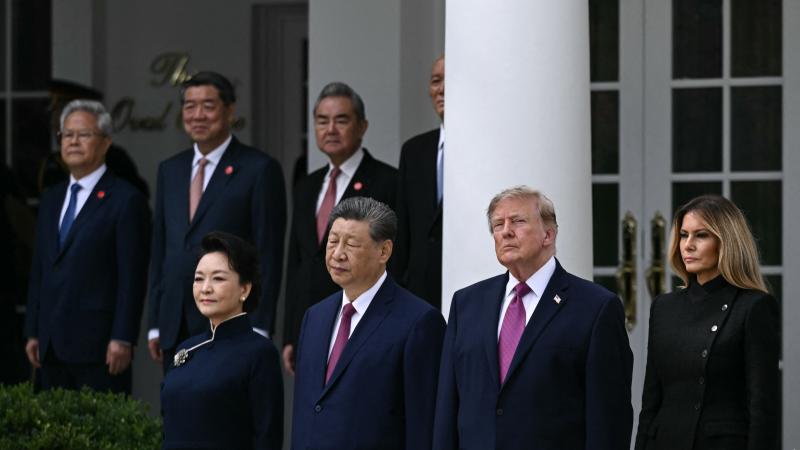
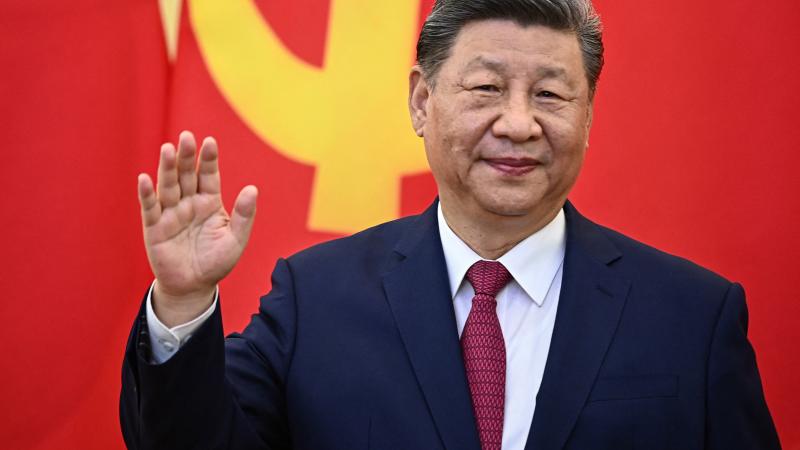
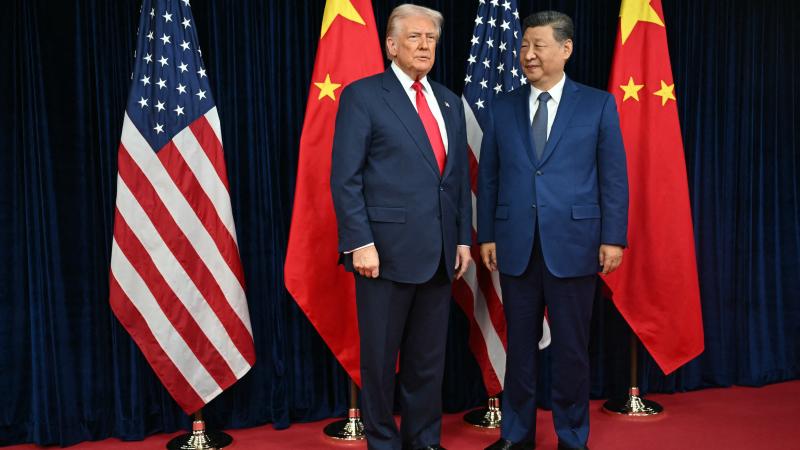
The report comes in the wake of Chinese President Xi Jinping’s visit to the United States during which he extended an invitation for 100,000 Americans to study in China as part of a cultural exchange program.
But Chinese involvement in the American education system has increasingly come under scrutiny in recent years, with hawks expressing concerns over the spread of outreach programs on college campuses and the prevalence of Chinese students in research programs.
Ben Whedon is the Chief Political Correspondent at Just the News. Follow him on X.
The Facts Inside Our Reporter's Notebook

Top Stories



Trending
Just the News Spotlight
Just News, No Noise