Orbán defeat pauses Europe's election of nationalist, far-right leaders but trend lines unclear
In Europe overall, the traditional right-left axis is fading from relevance, as a kind of politics organized around identity and cultural questions takes hold.
The defeat earlier this month of Hungarian Prime Minister Vicktor Orbán defies a long trend in Europe of electing nationalist or far-right leaders – with his stunning and decisive loss to center-right opponent Tisza party, led by Péter Magyar, ending 16 straight years of Orbán as Hungary's leader.
The loss stands in sharp contrast to conservative parties across Europe – many of them post-war success stories – that now find themselves outflanked on the right by surging nationalist movements and abandoned by centrists who increasingly abstain or change their votes based on specific issues.
Still, whether Orbán’s loss is a sign of a changing trend is unclear, considering political analysts largely considered the defeat the result of voter frustration with living standards and public services more than foreign policy, Romain Le Quiniou, managing director at Euro Creative, told TVP World Tonight.
He argued that Orbán’s Fidesz party, in fact, lost support because it could no longer meet domestic expectations amid high inflation, weaker purchasing power and poor economic performance.
For many conservative parties in Europe, their decline is the latest proof that the traditional right-left axis is fading from relevance, at least in Europe, as a kind of politics organized around identity and cultural questions takes hold.
Nowhere on the continent has the shift been more dramatic than in Italy. Forza Italia, once the dominant power on the moderate right under the leadership of now-deceased billionaire media tycoon Silvio Berlusconi, is now just the third-largest party in a government dominated by Giorgia Meloni, whose national conservative coalition has redrawn Italy’s political map.
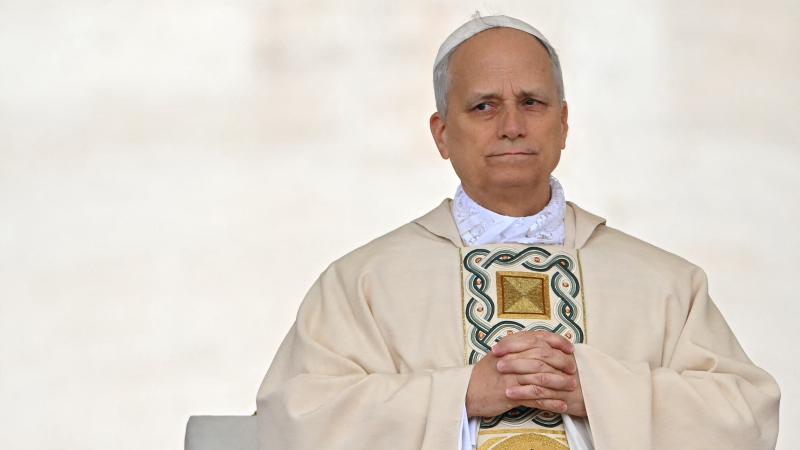
Meloni was the only European leader to attend Donald Trump’s inauguration last year, though she has recently criticized Trump’s public attacks on Pope Leo XIV.
The Italian leader “embodies the idea of a right-wing leader who is both reassuring and uncompromising,” Maurizio Molinari, a political analyst and editor-in-chief of the Rome-based daily La Repubblica told Just the News. “That is something the center-right had failed to offer for years.”
A similar story is being told elsewhere.
In Germany, Europe’s largest economy, the far-right Alternative für Deutschland (Alternative for Germany) party is now the second-largest group in the Bundestag legislature, and it dominates large swaths of the former East Germany. The traditional center-right Christian Democratic Union, once Europe’s prototypical broad conservative bloc, has been forced to the right on mass migration, security, and European integration as it distances itself from the legacy of long-time Chancellor Angela Merkel.
In France, Le Republicans — heirs to Charles de Gaulle — have been eclipsed by Marine Le Pen’s Rassemblement National (National Rally), which is topping opinion polls in the lead up to the 2027 presidential elections. The Republicans are increasingly squeezed between the centrist backers of technocrat President Emmanuel Macron and Le Pen’s movement, which has methodically shed its extremist image.
Meanwhile, in the U.K., the conservative Tories are facing their own existential reckoning. They were ousted from power in 2024 after 14 years, and opinion polls say they are losing support to both center-left Labour and the insurgent, nationalist Reform U.K. party, which has forced prickly issues like immigration rules, public order, and national identity into the political debate.
“We’re in a vicious cycle that starts with the nationalist right being more successful, gaining seats in the legislatures, and having more influence in more countries,” Tarik Abou-Chadi, a political scientist at Oxford University, told Just the News. “That forces centrist parties to move to the right to win back votes. That rarely works, but it normalizes what used to be far-right views, and it makes voting for what were once extreme parties much less of a tabú.”
Immigration remains the most powerful force shaping European political discourse, touching on hot-topic issues like national identity, cultural cohesion, and economic competitiveness.
That is clearly the case in Italy, where Meloni succeeded where her conservative predecessors failed by offering voters a clear message about Italian identity and unity that before her had been more muddled. Across Europe — not just in Rome, Berlin, Paris, and London — the political space occupied by right-of-center leaders and the parties they represent are being renegotiated.
The Facts Inside Our Reporter's Notebook
Links
- the traditional right-left axis is fading from relevance
- criticized Trumpâs public attacks on Pope Leo XIV
- the second-largest group in the Bundestag legislature
- topping opinion polls
- nationalist Reform U.K. party, which has forced prickly issues like immigration rules, public order, and national identity



Top Stories



Trending
Just the News Spotlight
Just News, No Noise