The Art of No Deal: Why Trump is hitting a wall with Iran
Hard-line regime figures seem to be calling the shots in Tehran, complicating U.S. efforts to negotiate an end to the conflict.
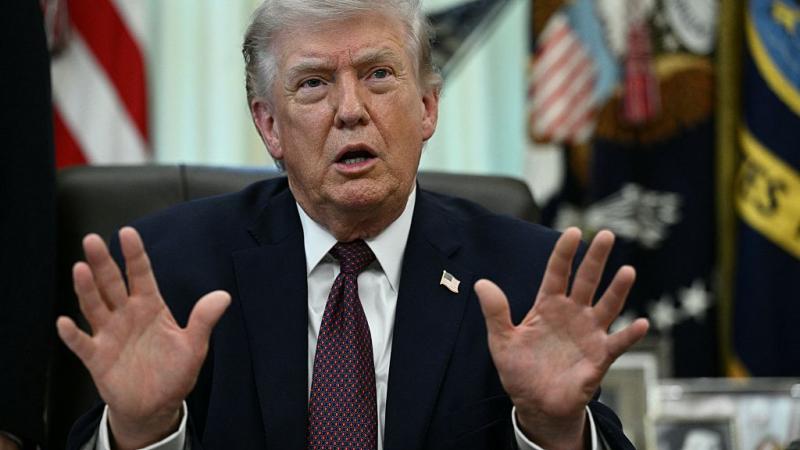
An internally divided Iranian regime now run principally by hardliners is making it difficult for U.S. President Donald Trump to negotiate an end to the war with Tehran.
Within days of the beginning of the war between Iran and the United States, the upper echelons of Iran’s leadership were killed in joint U.S.-Israeli airstrikes, including the country’s Supreme Leader Ayatollah Ali Hosseini Khamenei, who led as both a religious and government figure.
Those strikes also wiped out senior commanders of Iran’s Revolutionary Guard Corps (IRGC), a paramilitary dedicated to safeguarding the Iranian revolution and the longevity of the clerical regime.
President Trump on Thursday blamed the failed negotiations on “infighting” within the Iranian regime.
"Iran is having a very hard time figuring out who their leader is! They just don’t know! The infighting is between the 'Hardliners,' who have been losing BADLY on the battlefield, and the 'Moderates,' who are not very moderate at all (but gaining respect!), is CRAZY!" Trump posted on Truth Social.
Though it is not clear to which Iranian officials the president is referring, much of the regime’s senior leadership was replaced in the earliest days of the conflict by known hardliners allied with the IRGC.
Chief among them is the new Supreme Leader, Mojtaba Khamenei, son of the former leader. The younger Khamenei was considered the preferred choice of the IRGC to succeed his father. He reportedly grew close to IRGC generals during his volunteer service during the Iran-Iraq war when he was just a teenager.
But, Mojtaba Khamenei, who was injured in the compound strike that killed his father and is currently in hiding, has heavily relied on senior generals to govern the country in the midst of the conflict.
“Mojtaba is managing the country as though he is the director of the board,” Abdolreza Davari, an Iranian politician who served as a senior adviser to former Iranian president Mahmoud Ahmadinejad, told The New York Times. “He relies heavily on the advice and guidance of the board members, and they collectively make all the decisions. The generals are the board members.”
There is also evidence that IRGC leaders are increasingly sidelining Iran’s civilian leaders, including those who were leading the negotiations with the United States and President Masoud Pezeshkian.
When the U.S. and Iran agreed to a two-week ceasefire during negotiations in Pakistan last week, the Iranians vowed that they would reopen the Strait of Hormuz to commercial shipping traffic after holding it hostage since the earliest days of the conflict.
However, just one day after that announcement, Iran’s revolutionary guard fired on at least two commercial vessels trying to cross the strait, pointing to a division between factions of senior leadership.
Keith Kellogg, former National Security Advisor and Special Envoy for the Trump administration, told Just the News that the IRGC’s growing control of the country presents the biggest obstacle to a negotiated solution.
“The problem you're running into right now with Iran is you've got to look at the Revolutionary Guard Corps, and that is now led by a guy named Vahidi–who’s not really a pretty nice guy,” Kellogg told the John Solomon Reports podcast.
“[T]he role of the IRGC has always been to protect the revolution, the leaders, the supreme leader, and the rest of them. It's not the army, but they're like an army, because they've got most of the military coming in control, and the weaponry is as well, and Vahidi is a hardliner,” he continued. “And then you got your people negotiating. Primarily, you got people like … Araghchi, who's your foreign minister, who is a hardcore IRGC guy.”
Kellogg agreed that President Pezeshkian was a leading force advocating for negotiations but that the failure of the talks and his marginalization show that the IRGC is fully in charge, at least for now.
“And you look at somebody like their current president, who is compared to Vahidi and compared to Araghchi … or whomever out there, he's a little bit of a moderate,” Kellogg said. “He's trying to, I think, bring those negotiations back, but he really doesn't have any power.”
Kellogg said that a breakthrough may only come after the United States shows that it's willing to impose even greater costs on the Iranian regime and military. The oil blockade, says Kellogg, will likely be only the first step in this process.
President Trump said that the blockade of Iran’s oil will remain in effect until the Iranian regime negotiates an end to the war.
"We have total control over the Strait of Hormuz. No ship can enter or leave without the approval of the United States Navy. It is 'Sealed up Tight,' until such time as Iran is able to make a DEAL!!! Thank you for your attention to this matter," the president said in the same Truth Social post.
The Facts Inside Our Reporter's Notebook

Top Stories

Trending
Just the News Spotlight
Just News, No Noise