Trump pushes Iran decision into new year as administration bets blockade will break Tehran
With Iran's oil exports near zero, the White House says economic pressure is doing the work of airstrikes, but Tehran has yet to give ground on its nuclear program or the Strait of Hormuz. "We want to make a real deal, not a fake deal," President Trump said earlier this week.
President Donald Trump appears to be pushing his decision window on Iran until after the new year as the administration argues that its economic blockade is working.
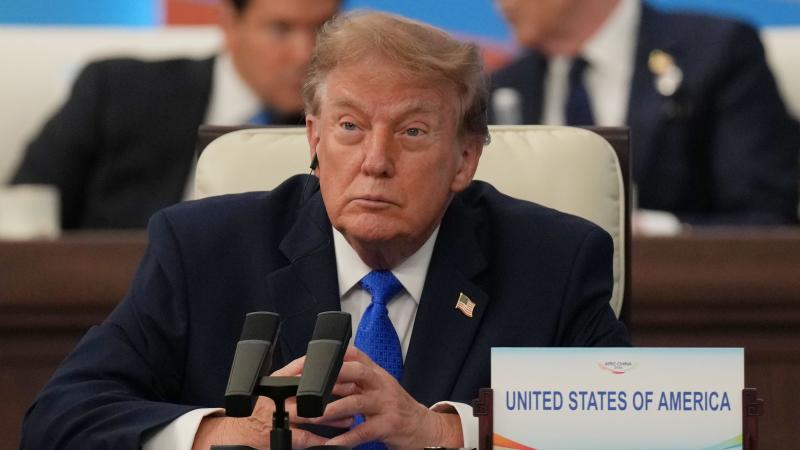
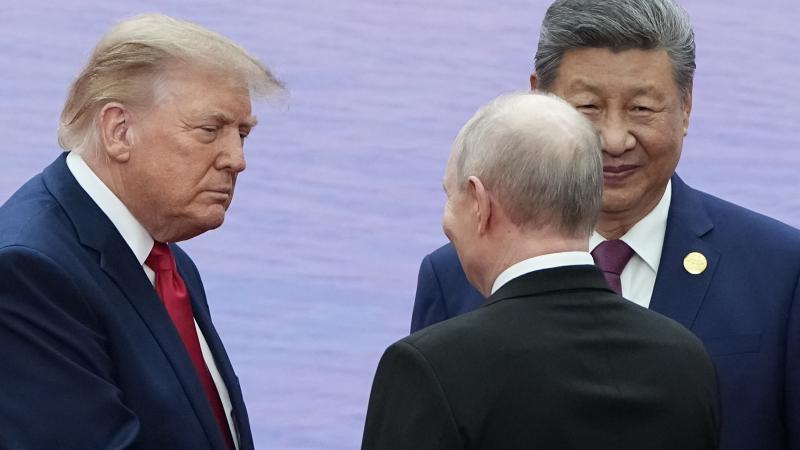
"I'm not rushing to make any decisions on Iran," Trump told reporters on Thursday as he flew home from a trilateral summit with Chinese President Xi Jinping and Russian President Vladimir Putin in Shenzhen, China. A day earlier, Trump told Fox News that “We are going to have a new year coming up, and we will see what happens after January 1.”
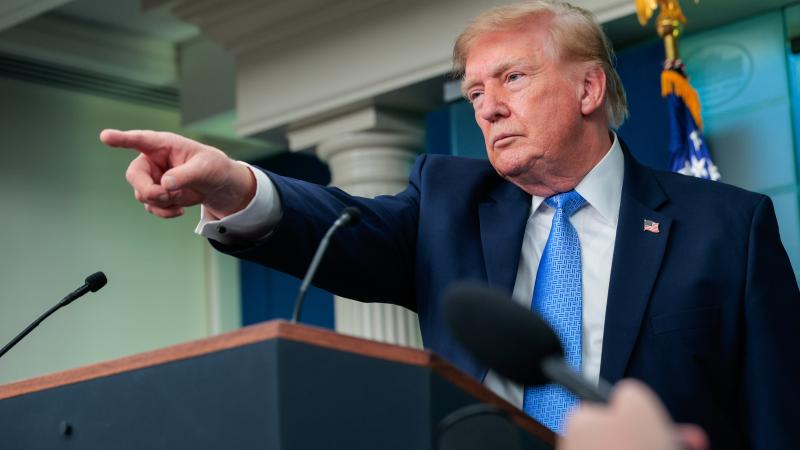
In a press conference Friday, the president reiterated that he wants to make a deal with Iran that eliminates the country's nuclear program, but that Iranian officials have not been willing to compromise. "They want to make a deal, but they don’t want to make a deal that’s acceptable to me. We want to make a real deal, not a fake deal that they’ve been doing for 51 years," he said.
Secretary of State Marco Rubio has maintained that the blockade — of Iran’s economy and oil exports — is working, making a renewed U.S. offensive unnecessary.
“[R]ight now, frankly, the economic pain that we are inflicting on that regime is so great that there’s no need for military action because we’ve weakened them so much,” Rubio said in a speech to the Federalist Society last week. “But I think victory is ensuring that they never have a nuclear weapon.”
"Hold the line," analyst says
Iran watchers agree. Several experts previously told Just the News that renewed strikes would likely do little to change the war's trajectory.
"A short, sharp strike would be leading with our chin because I don't think fundamentally it would change the Iranian negotiating position at this point in time," Behnam Ben Taleblu, senior director of the Foundation for Defense of Democracies Iran Program, told reporters earlier this month. "I would say, hold the line."
Taleblu called the naval blockade and sanctions "a one-two punch." FDD senior fellow Miad Maleki said new strikes would "delay the effect of [this] pressure campaign."
The political calculus shifted after Republicans' Nov. 3 midterm losses, which Trump acknowledged were driven in part by the war's effect on gas prices. Vice President JD Vance delivered a more pointed assessment. "The reason we lost is the war," he wrote on X.
Prior to those losses, the president had said he would delay making a decision about how to proceed in the Iran war following the midterms.
The data largely backs the administration's claim that the blockade is working to pressure Iran’s economy. The country’s oil exports have declined dramatically since the ceasefire failed earlier this year. Iran's oil exports have hovered near zero since the U.S. imposed a naval blockade of Iranian ports in July after the ceasefire broke down.
By September, the Middle East's oil exports reached pre-war levels and the U.S.-led blockade has successfully halted Iran's own exports while shepherding the exports from other regional producers, Just the News previously reported. This has undercut Tehran's central wartime bet: that choking off the world's most important energy corridor—the Strait of Hormuz—would inflict enough pain on global markets to force Washington and the Gulf states to deal on Iran's terms.
The political clock is ticking
Trump's suggestion to postpone any further Iran decisions until the new year also coincides with a significant power shift on Capitol Hill when Democrats take control of both chambers. House and Senate Democrats have already signaled that they plan to use their newfound power to rein in Trump's war against Iran.
Though attempts in the current Congress to pass a war powers resolution have failed due to Republican opposition, a Democratic majority in January could be more successful. Some Democrats have even floated stripping funding for offensive actions in Iran.
"Nine months in, defunding the war is the only way to force Trump to end it," Sen. Tammy Duckworth, D-Ill., said, according to Roll Call. The war has cost the U.S. military at least $48.3 billion through Nov. 13, a Pentagon budget official told the Senate Armed Services Committee on Thursday. Duckworth said that she would not vote for any interim funding measure that does not include such language. The Republican-dominated Congress will have to pass a government funding measure by December 11, before Democrats take control next year.
Democratic Senate Leader Chuck Schumer has already said that he would be willing to explore using funding bills to rein in the Trump administration on Iran. "[We] are going to end the war," Schumer said earlier this month, adding, "The Founding Fathers had the power of the purse as one of the ways of deterring a president who does war without the consent of the American people."
Yet, President Trump will still wield the veto pen because Democrats will not have a sufficient majority to override it. House Democratic Leader Hakeem Jeffries said that even getting a war powers bill to the president's desk would be a victory if it means forcing Trump to decide whether or not to veto it.
"There's nothing more powerful than putting that bill on the president's desk," Jeffries said during an interview earlier this week.
Tit-for-tat
Even as the White House holds off on a broader campaign, the two sides have traded fire around the Strait of Hormuz this week. On Tuesday, U.S. fighter jets struck an IRGC missile launch site on Iran's Qeshm Island, in the northern part of the strait. A U.S. military official called it a "self-defense" strike that "was in response to IRGC aggression targeting American personnel and assets," CNN reported.
The strike followed Iranian attempts to hit a U.S. radar site in Bahrain. U.S. officials said it was the third attempted Iranian strike on a U.S. installation in five days and that all were intercepted, according to CBS News.
The fighting has also spread to Gulf shipping and to Iran's proxies. A tanker owned by Abu Dhabi National Oil Co. was struck in the strait on Tuesday, injuring 11 crew members and leaving one missing, the company said. On Thursday, the Iran-backed Houthis damaged a Riyadh skyscraper housing Saudi Arabia's sovereign wealth fund.
The Facts Inside Our Reporter's Notebook
Links
- told reporters on Thursday
- Trump told Fox News
- he said
- Rubio said in a speech
- Foundation for Defense of Democracies Iran Program
- previously told Just the News
- wrote on X
- declined dramatically
- hovered near zero
- reached pre-war levels
- according to Roll Call
- Schumer said earlier this month
- Jeffries said
- CNN reported
- according to CBS News
- struck in the strait
- damaged a Riyadh skyscraper





Top Stories




Trending
Just News, No Noise