Israel breaks record for early turnout in Tuesday elections as Netanyahu faces tough reelection bid
The election marks the first contest since the start of the war in Gaza, which has escalated into a wider conflict that has seen fighting in Lebanon, Syria, Yemen, Iran, Iraq, and most of the Gulf States.
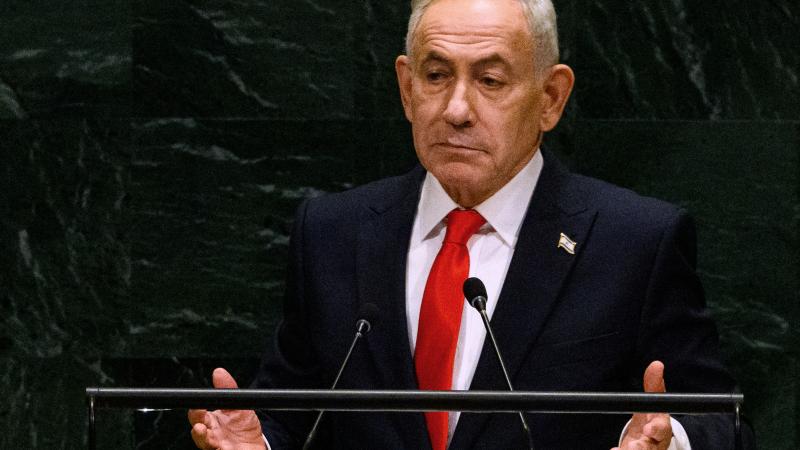
Voter turnout in Israel's national elections Tuesday is reportedly at its highest level in 45 years, with Prime Minister Benjamin Netanyahu facing a tough reelection bid.
Voters, in addition to deciding on whether to reelect Netanyahu, the country’s longest-serving prime minister, will also elect all 120 members of the country's Knesset, the country's national parliament.
No major party, including Netanyahu's coalition, is expected to win an outright majority on their own, according to CNN. Polls will close at about 3 p.m. EST.
The election is the first national one since the Oct. 7, 2023, terror attacks carried out by Hamas in which roughly 1,200 people, mostly Israelis, were killed.
Netanyahu faces voter criticism about security lapses ahead of the attacks and his handling of ensuing wars including those in Gaza, Lebanon and Iran.
The election outcome on Tuesday will depend not only on the parties’ vote totals but also on their ability to form a coalition. Israelis elect members of the Knesset through a system of proportional representation, and a government needs the support of at least 61 lawmakers.
On Saturday, thousands of Israelis gathered in Tel Aviv to protest Netanyahu’s government and demand an independent investigation into the Oct. 7-releted security failures. Netanyahu has to date declined to establish a state commission of inquiry.
Meanwhile, Netanyahu supporters have said the prime minister's experience makes him best prepared to protect the country.
Former Israeli military chief Gadi Eisenkot is the leading Netanyahu challenger. His centrist Yashar! party is campaigning on government accountability, military service reform and a state inquiry into the Oct. 7 failures.
Eisenkot, who served in Netanyahu’s war cabinet before resigning, has argued that the country needs a change in leadership. He has pledged to establish a state commission of inquiry to investigate Oct. 7 if elected prime minister.
Eisenkot's family has suffered losses in the Gaza war, including the deaths of his son and nephew in combat.
Former Prime Minister Naftali Bennett and opposition leader Yair Lapid are also running together on a joint ticket, which poses another challenge for Netanyahu.
Netanyahu is hoping to maintain support from the far-right and ultra-Orthodox voters to maintain his parliamentary majority.
Some religious Jewish parties want ultra-Orthodox men to continue their exemption from mandatory military service.
Some of Netanyahu's opponents, including Eisenkot, say these men should have to serve like everyone else. This disagreement appears to be causing division among the parties that support Netanyahu.
Ben Whedon is the Chief Political Correspondent at Just the News. Follow him on X.
The Facts Inside Our Reporter's Notebook


Top Stories


Trending
Just the News Spotlight
Just News, No Noise