Only in Hollywood: Can Trump unite with fiercest rivals to save American film industry?
Hollywood, both as an industry and location, is a mere specter of its former glory thanks to state and local policies and a string of strikes that pushed workers out of jobs.
In an industry that brings together the most unlikely of characters, hemorrhaging productions and talent may be a problem that, despite political differences, brings the Oval Office and Democrats together to save Tinsel Town.
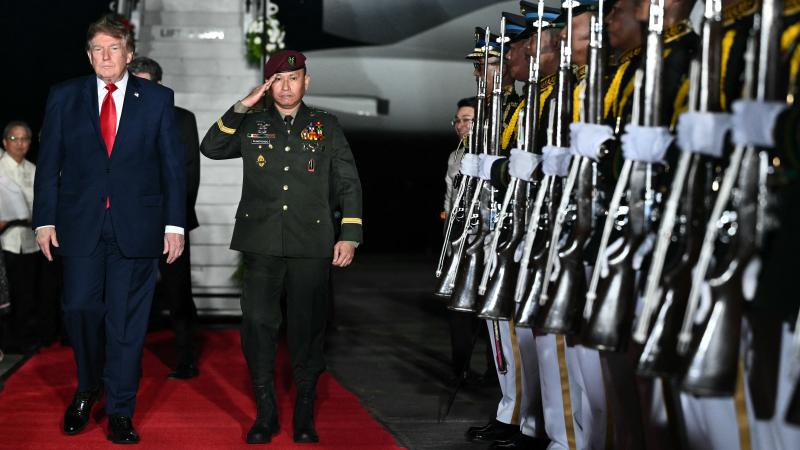
On Friday, President Donald Trump endorsed a bipartisan bill creating federal tax credits for film and television productions made primarily in the U.S. and said he was working on it with California Democratic Sen. Adam Schiff, who as a House member led Trump's first impeachment trial.
The bill would create a 20% federal credit for qualifying domestic production costs, rising to 30% with additional incentives, for productions spending at least $1 million and shooting at least 75% of principal photography in the U.S.
A bipartisan group of lawmakers introduced the measure in September, after Trump moved away from his initial preference for tariffs following another meeting over the summer with actor Jon Voight.
A Cato Institute analyst estimates the cost at $33 billion to $49 billion over a decade.
The bipartisan bill, the Motion Picture, Television, and Entertainment Revitalization Act, also includes as co-sponsors Democratic Sens. Alex Padilla, of California, and Raphael Warnock, of Georgia. Padilla has been an outspoken critic of the Trump administration's efforts to find and deport illegal migrants, while Warnock has called the Trump administration "the most corrupt" in U.S. history.
"I am working with ... believe it or not, Senator Adam Schiff, and, additionally, Senators John Cornyn [and] Raphael Warnock," Trump said in a Truth Social post on Saturday.
Tinsel Town lost its luster
Film and television production in Los Angeles has fallen from 36,792 shoot days in 2022 to just 19,694 in 2025, the lowest total since 2020. Television has been hit hardest, with shoot days dropping from a peak of 18,560 in 2021 to just 7,716 in 2024, a 58.4% decline in three years.
Much of that work has left the country. Of 87 scripted U.S. film and TV projects that began production in the first quarter of 2025, only 24 were slated to film even partly in Los Angeles, while 40, or 46%, were shot entirely abroad, according to entertainment data firm Luminate.
The workforce has shrunk in step. California has lost 52,016 film jobs since 2022, and 99.6% of those losses occurred in Los Angeles County. More than 80 production service businesses in Los Angeles have closed since 2022 because of a lack of work and industry strikes.
Hollywood and Trump used to get along
Before entering politics, Trump spent more than a decade as a fixture of prime-time television. He was twice nominated for an Emmy for hosting the reality competition shows "The Apprentice" and "The Celebrity Apprentice," for which he also was the executive producer.
He also was executive producer of the Miss Universe, Miss USA and Miss Teen USA pageants beginning in 1996, and in January 2007 he received a star on the Hollywood Walk of Fame for "The Apprentice." His screen credits stretch back decades, including a 1992 appearance on the soap opera "All My Children."
Trump has carried that interest into his second term. Shortly before taking office, he named actors Mel Gibson, Jon Voight and Sylvester Stallone "special ambassadors" to Hollywood. Voight later pitched the president a plan that included federal tax incentives, tax code changes, co-production treaties with foreign countries and infrastructure subsidies for production companies and theater owners. Voight has said Trump "loves the entertainment industry."
In the blame game, there are many culprits
For years, California's Democratic-led government kept a tight lid on film incentives while rivals spent freely. The state capped its film and TV tax credit budget at $330 million a year, and its program excluded actor pay, making it more stringent than some other states.
Georgia's program, by contrast, is uncapped, lets recipients easily sell unused credits and peaked at $1.3 billion in 2022.
Because of the cap, California's program was typically oversubscribed, with more productions applying than the state could legally fund. Industry workers also blamed local labor costs, and Los Angeles developed a reputation among some producers as a hostile place to film.
California Democrat Gov. Gavin Newsom finally expanded the credit to $750 million in 2025, and he acknowledged the state had taken the industry for granted.
A string of shocks compounded the damage. Production was hampered by the COVID-19 pandemic, the 2023 guild strikes and the Los Angeles wildfires.
The Writers Guild of America struck from May 2 to Sept. 27, 2023, and SAG-AFTRA walked out from July 14 to Nov. 9. More than 17% of Los Angeles entertainment workers lost their jobs during the strikes. Then the January 2025 wildfires took a toll on the already-distressed sector.
Amanda Head is White House Correspondent for Just the News. You can follow her here.
The Facts Inside Our Reporter's Notebook
Links
- endorsed a bipartisan bill
- 20% federal credit
- bipartisan group
- estimates the cost
- 36,792 shoot days
- lowest total since
- just 7,716
- shot entirely abroad
- 52,016 film jobs
- closed since 2022
- twice nominated for an Emmy
- received a star on the Hollywood Walk of Fame
- a 1992 appearance on the soap opera "All My Children."
- "special ambassadors" to Hollywood
- pitched the president a plan
- Trump "loves the entertainment industry."
- $330 million
- excluded actor pay
- peaked at $1.3 billion
- oversubscribed
- local labor costs
- hostile place
- expanded the credit
- hampered
- struck
- lost their jobs
- took a toll
- here


Top Stories


Trending
Just the News Spotlight
Just News, No Noise