US economic freedom reverses decline, has biggest annual increase in 25 years: Heritage Foundation
The U.S. economic freedom score increased by 2.6 points from last year to 72.8, ranking 22nd among the more than 176 countries that had completed scores in the index
The Heritage Foundation's Index of Economic Freedom showed the U.S. reversing a five-year decline and having its biggest annual increase in 25 years.
The score increased by 2.6 points from last year, to 72.8. And the U.S. ranked 22nd among the more than 176 countries that had completed scores in the index, FOX Business reported.
The increase was the largest since 2001, and is the second-largest jump the U.S. has had in the index's 32-year history.
The index assesses 12 economic freedoms that fall into four categories: rule of law, government size, regulatory efficiency, and open markets.
"The U.S.'s score improvements in monetary freedom, government spending, fiscal health, and investment freedom have outpaced the relatively lower score in trade freedom, reflecting the net positive impact of major regulatory and tax reforms on economic growth, investment, and business confidence," Heritage's Anthony Kim, the editor of the Index of Economic Freedom told FOX Business.
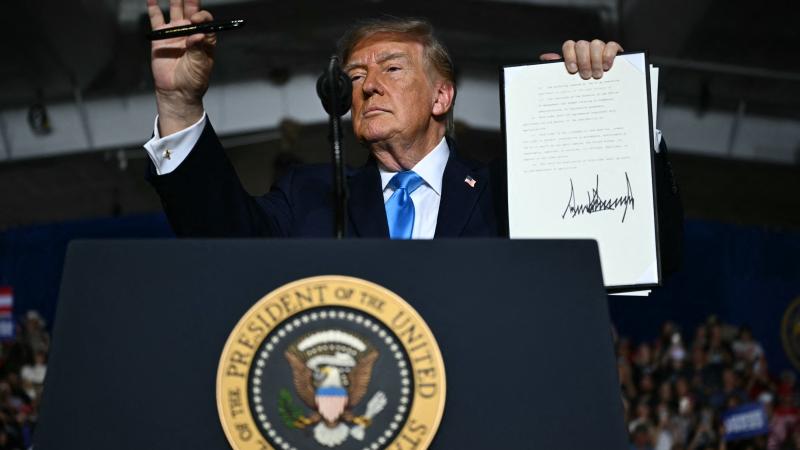
Kim said that the U.S.'s progress "is not accidental" and is reflective of the Trump administration's initiatives that have "cut government jobs, slowed spending, and prioritized private-sector growth through proactive, bold deregulatory and tax reforms."
The U.S. score of 72.8 is 22nd in the world rankings, and 3rd in the Americas, trailing behind Canada at 75.6 and Chile at 74.3.
The U.S. ranked highly in the rule of law category, with property rights, judicial effectiveness, and government integrity all scoring well above the global average.
Fiscal health in the U.S. scored 18.5, well below the world average of 65.9, due to high levels of public debt and large budget deficits.
The U.S. scored 67.6 in trade freedom, which was below the global average of 70.2. Meanwhile, investment freedom and financial freedom each scored 80 for the U.S., well above the respective global averages of 53.4 and 48.1.
Kim said that the "impact of restrictive tariffs on the global economy has been far more muted than feared, in light of increased investment in such critical sectors as energy and AI (among many others)," adding that the lack of tariff retaliation by countries other than China, Canada, and the European Union mitigated the potential impact of a trade war.
The countries with the highest overall scores in the index were Singapore at 84.4, Switzerland at 83.7%, Ireland at 83.3, Australia at 80.1, and Taiwan at 79.8.
The countries that scored the lowest as the most repressed in the world were North Korea at 3.1, Cuba at 25.2, Venezuela at 27.3, Sudan at 32.5, and Zimbabwe at 35.2.
The Facts Inside Our Reporter's Notebook
Links



Top Stories

Trending
Just the News Spotlight
Just News, No Noise