Related Articles

School district faults student's viewpoint, his recordings from an indigenous-focused assembly and related classroom discussions, and publicity of his suspension, to justify no-end punishment. NJ governor promotes Bovino hecklers.
Going back at least to the first election of President Trump, schools have threatened to punish conservative students for recording their teachers' alleged ideological indoctrination in the classroom, part of a broader educational push to ban recording that may expose staff misconduct or viewpoint discrimination in class.
Legal threats and denunciation in local media prompted California's Orange Coast College to rescind its suspension of a student for documenting his professor's diatribe against Trump's 2016 election as an "act of terrorism," birthing a larger student movement for accountability in the community college district and legislation to protect student whistleblowers.
Up the Pacific coast a decade later, under a different legal system, a high school student is going to court to overturn his suspension for publicly criticizing his school's lessons on the legacy of Canada's indigenous residential school system – comparable in sensitivity to the U.S. legacy of Jim Crow – and refusing to take down videos with classroom recordings.
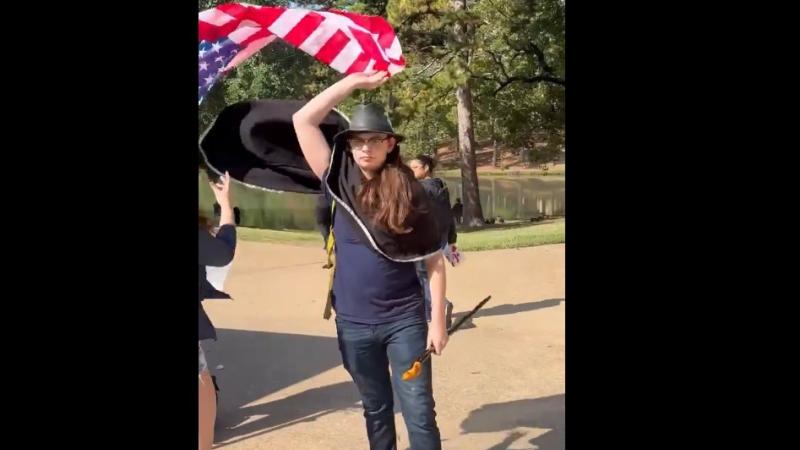
The Justice Centre for Constitutional Freedoms is funding legal representation for 16-year-old Isaac Simpson, whose Coquitlam, British Columbia, school allegedly escalated his five-day suspension to a permanent ban in response to his second video publicizing his suspension based on the first video, which included recordings from a school assembly and his classroom.
Simpson's high school initially said he could return "only if he removed the video or edited out all audio, footage and images of students, staff, visitors, and educational activities within the school," JCCF said, citing an Oct. 8 letter from the principal.
The letter accused him of non-consensual recording and breaking "rules governing personal devices" – JCCF claims the former is "not inherently unlawful in Canada" – but also harassing others through "commentary that mocked others," JCCF paraphrased, violating his Charter rights of freedom of expression in public school.
'Is it worse to indoctrinate generations of students' or film it?
The second video includes audio of Simpson's fruitless pursuit of "right-wing" books in a school library, his "one-on-one interrogation" by the principal – redubbed to sound like Mickey Mouse – and a parent-teacher conference about Simpson's video, plus the district's promotion of a student's video from an assembly without purportedly getting individual consent.
"Is it worse to indoctrinate generations of students or is it worse to film the indoctrinating of those students?" Simpson asks rhetorically in the parent-teacher conference.
The principal referred Simpson to the Student Suspension Review Committee of School District No. 43, about an hour east of Vancouver, when he refused to delete the videos, explicitly faulting Simpson's viewpoint as well as rule violations, JCCF said.
The committee took one day to determine that refusing to remove the videos violates district policies and "negatively affected the school environment," and will give Simpson "educational programming" at another school only if he removes both videos, JCCF said.
"This case raises serious questions about whether the school’s response went further than necessary and punished a student for challenging ideas promoted at school," said Simpson's lawyer, Elsa Michel. All citizens, especially students and their parents, "have a constitutional right to comment" on the content and form of public school curricula.
A spokesperson told Just the News that JCCF is not sharing the principal and committee letters because of Simpson's age, even though it links to his public YouTube videos. Michel, the hired lawyer, said they "want to keep information to a minimum for the moment" so as not to "jeopardize our client's case."
The district didn't answer a query sent Wednesday.
The Pacific Province isn't the only leftist government in North America recently bearing down on students who challenge official narratives about heated political topics.
Across the continent, New Jersey Democratic Gov. Mikie Sherrill tried to shame Rutgers University College Republicans into canceling their event with Greg Bovino, accusing the former Border Patrol commander-at-large of violating his oath of office and encouraging detractors to dogpile Bovino with hostile questions.
As predicted, rioters answered the governor's call hours later, commandeering the Nov. 16 event, heckling Bovino and driving him off stage under police escort. Rutgers threatened to arrest disrupters and Bovino returned to finish speaking, which surprised a free speech group that puts Rutgers near the bottom of its annual campus free speech rankings.
Sherrill faced no such heckler's veto when she spoke to a Rutgers political campaigning class Wednesday, prompting accusations of hypocrisy. Her office, which offers no way of contacting media relations, did not respond to a query Wednesday.
Escalating a sanction for protesting the initial sanction recalls the punishments leveled by Massachusetts' Middleborough Public Schools against middle-schooler Liam Morrison, for wearing shirts that assert there are "only two genders" – and then "censored genders" after his first punishment – in response to the district's LGBTQ messaging.
The Supreme Court refused to hear Morrison's appeal, prompting dissent by Justices Samuel Alito and Clarence Thomas, soon followed by a second appeals court blessing school districts that censor passive political expression by students under the guise of decorum.
Alito and Thomas dissented again this week when the high court rejected a challenge to California's compelled-speech mandates in medical licensing, by ophthalmologist Azadeh Khatibi. Justice Neil Gorsuch also said he would have heard the appeal.
Under the 9th U.S. Circuit Court of Appeals' broad view of government speech – its rationale for forcing "continuing medical education" providers to train doctors in the disputed concept of implicit bias – California could require instructors to communicate its "preferred message on the availability of abortion" or that "gender-transition surgery is ethically required" for some patients, at odds with the past decade of SCOTUS precedents, the dissent implies.
British Columbia's School District No. 43 provoked the ire of 16-year-old Simpson for "Truth and Reconciliation" programming he saw "as indoctrination that discouraged questions and debate," JCCF said, referring to the government commission that deemed the residential schools system for indigenous people "cultural genocide."
Simpson's Sept. 30 video, "LIES and Reconciliation," has received nearly 90,000 views and 2,000 comments.
"Indigenous bias is taking over the government and our educational system," it says, purporting to expose "school-level-propaganda that Canadian students see every day." (His second video, on Oct. 8, has drawn about 50% more views.)
No minor appears to be identifiable except when Simpson speaks to the camera while narrating from his own home.
The first video starts with several minutes of video footage of an indigenous-focused school assembly, opening with a land acknowledgment and a school official who celebrates "indigenous brilliance," prompting bewilderment from Simpson while narrating.
An indigenous speaker promotes the "land back" movement to restore tribal sovereignty and public policymaking, shows off a tricked-out car she bought with money implied to come from a government fund, then performs a DJ set that Simpson said lasted 35 minutes.
After the assembly, his classroom discusses an artwork that depicts Canadian Mounties and Catholic nuns and monks ripping indigenous children from their families.
Asked by Simpson whether this is an accurate representation, the teacher answers that it might be a "composite" of experiences but "I don't know," prompting exasperation by Simpson while narrating. He mocks the teacher's claim that Christopher Columbus thought he had landed in India, "a little mistake" that matters "when you're trying to teach truth and reconciliation."
In an audio conversation with a classmate allegedly wearing an indigenous "Every Child Matters" shirt, Simpson interrogates the girl on whether that message applies to the children of Lindsay Clancy, whom a Massachusetts jury nearly exonerated of criminal responsibility for admittedly killing her children. "She didn't kill them," the girl responds.
More audio plays over a still image in a classroom, with faces obscured. A teacher says indigenous gang members are impoverished and looking for family and community "wherever they can," which Simpson, narrating, interprets as blaming colonization for gangs.
After the same teacher explained the importance of culture to indigenous groups, Simpson asked her whether that means "one culture shouldn't go into another culture and try and force them to be something they're not," which to him sounds like immigrants invading Canada to change its culture. "Based!" another student responds incredulously.
The classroom recording ends with a purported student teacher from nearby Simon Fraser University, face blurred. He gives a lengthy bespoke land acknowledgment and a lecture about how "indigenous education" subordinates "winning" to understanding the perspectives of "people who have shown incredible resilience in the face of great loss."
"No one cares for your long philosophical rants that don't mean sh– in the end," Simpson concludes his narration. "Stop preaching."