Groups ask trade court to pause Trump's new tariffs amid legal fight
A coalition of advocacy groups called the tariffs both unprecedented and potentially unconstitutional.
(The Center Square) -
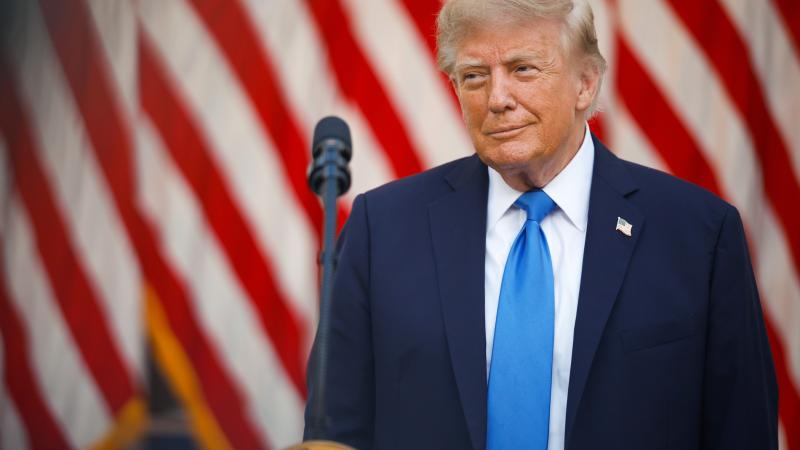
Several groups joined together to ask a Manhattan trade court to pause President Donald Trump's latest wave of tariffs as states and small businesses move ahead with legal challenges.
A coalition of advocacy groups is urging the U.S. Court of International Trade to halt President Donald Trump's newly imposed tariffs, calling the measures both unprecedented and potentially unconstitutional. Their legal challenge follows the president's imposition of a 10% tariff on all imports under a rarely used provision, Section 122 of the Trade Act of 1974, just hours after the Supreme Court struck down his previous tariffs. Critics warn that allowing the continued collection of these tariffs could cause significant financial hardship for importers and ignite new debates over the scope of executive power.
Trump invoked Section 122 of the Trade Act of 1974 to impose a 10% tariff on all imports, acting swiftly after the U.S. Supreme Court struck down his earlier tariffs under a different statute. Because Section 122 has never been applied in this context, its constitutionality and legal boundaries remain untested in court.
Groups, including former Vice President Mike Pence's Advancing American Freedom, have petitioned the United States Court of International Trade to block the administration from collecting the new global entry tariff. They point out that businesses still have not received refunds for tariffs paid under the International Emergency Economic Powers Act, which the Supreme Court recently invalidated.
"The tariffs being collected even now are, again, illegal, and the importers who are paying them are being set up for ongoing hardship when they are inevitably entitled to a refund in the coming months," J. Marc Wheat, the general counsel for Advancing American Freedom, wrote in a brief.
The coalition contends that Trump's new tariffs should be suspended while legal challenges are pending.
"By kicking the can down the road, the executive branch can trample over constitutional checks on its power," Wheat wrote. "The President may believe, as has so far been the case, that he can wield power on the basis of weak legal arguments because courts will take time to rule against him and will be deferential to him throughout the process."
The administration says that Section 122 empowers the president to levy tariffs of up to 15% for up to 150 days in response to international payment issues.
Democratic-led states and several small businesses have filed two separate lawsuits in the U.S. Court of International Trade, both challenging the Section 122 tariffs. Although the cases are distinct, they are progressing simultaneously, with both parties requesting the court to halt tariff collection during litigation.
During Trump's initial round of tariffs, courts permitted the administration to continue collecting import taxes as legal challenges played out. That practice ended with the Supreme Court’s February decision.
Trump has defended the tariffs, saying the revenue could help fund increased military spending and other priorities, such as providing tariff refund checks to some Americans. However, experts question whether the tariffs will generate enough revenue to support Trump’s spending proposals.
The Court of International Trade has ordered the federal government to respond to both lawsuits by April 3.
As the midterm elections approach, Trump's tariffs are increasingly unpopular with voters. Economic research has shown that U.S. consumers and businesses bear the bulk of the cost of import taxes.



Top Stories


Trending
Just the News Spotlight
Just News, No Noise