Botched ruling on pregnancy 'fairness' law opens floodgates to abortion, pro-life coalition warns
Democrats, atheists, Jewish and Christian groups back Catholic bishops' challenge to EEOC regulation, court ruling on Pregnant Workers Fairness Act, saying they obliterate First Amendment rights of religious and pro-life groups.
The Biden administration read abortion mandates into federal laws on emergency stabilization of hospital patients and accommodations for pregnant women in the workplace, seeking to override state abortion restrictions and religious employers' objections to facilitating abortions for employees, respectively.
With federal appellate courts reaching opposite conclusions on whether the Emergency Medical Treatment and Labor Act requires any specific procedure and the Supreme Court refusing to get involved in either case – leading Maryland to set its own rules last week — a wide coalition is now fighting to block sweeping abortion access under the Pregnant Workers Fairness Act.
Pro-life Democrats and atheists joined Jews, Seventh-day Adventists, evangelicals, 50 members of Congress, Texas and a conservative think tank to support the U.S. Conference of Catholic Bishops and Catholic University of America at the 5th U.S. Circuit Court of Appeals, which previously blocked the abortion-friendly reading of EMTALA.
Under the Equal Employment Opportunity Commission's regulation interpreting PWFA to require abortion accommodation, finalized two years ago, "qualifying medical conditions include many that are universal to pregnancy, such as minor hormonal changes," said the Catholic plaintiffs, represented by religious liberty law firm Becket.
A district court "recast" that mandate with "the same severe ramifications for religious objectors, the same lack of support in statutory text, and the same regulatory overreach," their opening brief says.
By ruling that PWFA itself requires accommodations for "abortions stemming from the underlying treatment of a medical condition related to pregnancy," the court set the threshold so low that it implicates Catholic employers in abortions deemed related to even "minor" cases of "anxiety" and other mild health conditions, the brief says.
The brief also refers to "unsuccessful negotiations" last summer with EEOC to "obtain protection during the pendency of the case." The plaintiffs told the 5th Circuit in a July 21 injunction motion that EEOC reiterated that very day "it would not agree to the full requested relief."
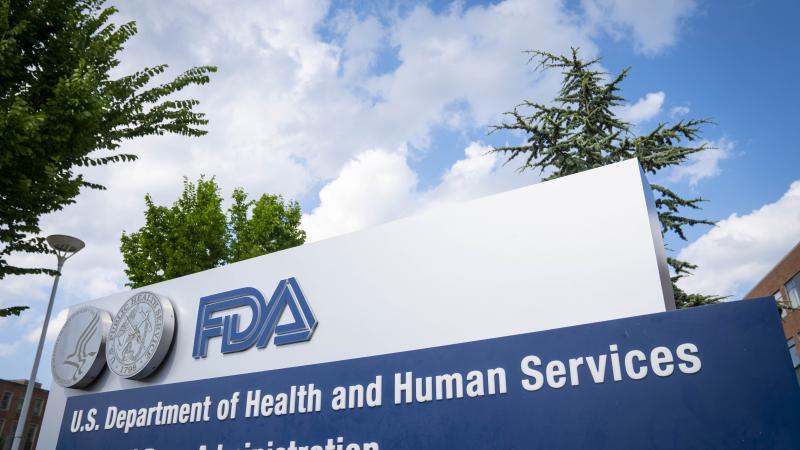
The same issue arose in the PWFA case as in Louisiana's challenge to the Food and Drug Administration's repeated relaxation of prescribing rules for the abortion pill mifepristone, which functionally neutered its abortion restrictions: The Trump administration wanted to revisit the regulation by its Democratic predecessors but not tie its hands in court.
The plaintiffs have shown "no harm, let alone the type of imminent, irreparable injury necessary to justify" the injunction pending appeal they were seeking, the EEOC responded July 31. The commission has "never even received any charges" against any employer for failure to accommodate an abortion under PWFA.
The bishops and university emphasized that the administration recently acknowledged, in the Justice Department's Task Force to Eradicate Anti-Christian Bias report, that the abortion-accommodation reading of PWFA "twisted this commonsense statute to reach radical ends infringing on religious liberty."
Law gives women options beyond abortion, not intended to 'muzzle' pro-life groups
Democrats for Life of America and Secular Pro-Life appeared on a friend-of-the-court brief with another nonreligious group, 55-year-old Americans United for Life, and several religious pro-life groups, including the National Association of Evangelicals and Christian Legal Society.
A recent Free Press article on pro-life disillusionment with President Trump quoted DFLA and AUL as calling for a bigger tent for the pro-life movement.
During notice and comment on the EEOC's proposed regulation, DFLA had warned that the abortion-expansive reading will harm its hiring and advocacy, "potentially" forcing it to "support actions by its employees that it actively campaigns against," the joint brief notes.
Secular Pro-Life said it supported PWFA out of hope it would "address unjust employment practices that lead mothers to feel that abortion is their only option," but the regulation ended up censoring its freedom of speech and association under the First Amendment.
The brief, written by the Christian Legal Society, elaborates on the regulation's chilling effects and the "wide muzzle" it imposes on pro-life organizations through an "anti-coercion" provision that could hold them liable if any staff "counsel their coworkers against an abortion accommodation or criticize the choice of an elective abortion."
"As with media organizations and parades, government cannot compel other expressive organizations to give access to views that contradict their message," the brief says, citing precedents for the Miami Herald and organizers of Boston's St. Patrick's Day parade.
Usurping 'major questions' reserved for Congress by citing different law
Led by Senate Health, Education, Labor and Pensions Committee Chairman Sens. Bill Cassidy, R-La., and Pro-Life Caucus Co-Chair Chris Smith, R-N.J., 50 federal lawmakers said in a brief that Congress "intentionally withheld" the power to mandate abortion accommodations, "especially upon religious employers," from EEOC in the law, which Cassidy cosponsored.
"The bipartisan PWFA was designed to accomplish a simple, uncontroversial goal: ensuring that pregnant and postpartum women receive the accommodations they need at work," the brief said. "It was not designed to take sides in controversial abortion policy debates."
EEOC relied on three court decisions interpreting the Civil Rights Act, before SCOTUS invalidated federal abortion rights in Dobbs, to conclude that PWFA, a separate law, required abortion accommodations, the brief also says.
The commission trampled the "major questions" SCOTUS doctrine by "interpreting the religious exemption [in the law] narrowly and medical justifications for abortion broadly," part of the Biden administration's campaign to resurrect federal abortion rights invalidated by SCOTUS "by wrongfully reinterpreting federal laws that have nothing to do with abortion."
Texas Attorney General Ken Paxton, whose Senate fortunes rose with Trump's endorsement as Cassidy lost his seat after Trump's rebuke, drills down on the application of the "religious-organization exemption" in the PWFA in the Lone Star State's brief.
"The exemption prohibits application of the entirety" of Title VII of the Civil Rights Act and PWFA when a religious organization "acts because of an individual’s religious observance, practice, or beliefs," said Paxton, who will try to keep Cassidy's seat for the GOP in the November elections.
Title VII "offers a mirror-image set of protections," for religious employees "against discrimination from a nonreligious employer" and for religious employers against "governmental interference" in their employment decisions "animated by religious belief," he also said.
When SCOTUS ruled that Title VII protects transgender employees from discrimination on the basis of sex, it emphasized that the statute preserves constitutional free exercise of religion, the brief says. This "strongly suggests" Title VII's religious-organization exemption "will protect from any claim brought under Title VII."
Narrowly defining church autonomy 'in terms of co-religionists by label alone'
A joint brief by the Jewish Coalition for Religious Liberty and General Conference of Seventh-day Adventists said the district court's ruling "undermines the critical protections of the church autonomy doctrine," threatening them both in different ways.
While "Judaism includes a long tradition of treating abortion as a profound moral issue implicating the sanctity of life," most American Jews today support the legality of abortion in "many cases," the brief says.
"A rule that defines the church autonomy doctrine in terms of co-religionists by label alone, without regard to actual beliefs and practices, fails to respect the diversity of sincerely-held religious convictions that exist within broader faith traditions," the groups said, noting U.S. Lutheran denominations also disagree with each other on abortion.
Seventh-day Adventists' requirements for employees are "not incidental personnel preferences" but "integral" to its identity, requiring baptism, tithing, "regular standing" with the denomination and "exemplary commitment" to its teachings, the brief says.
"Questions concerning the sanctity of life, the theological permissibility of abortion, and the obligations of religious witness are quintessentially theological questions beyond the competence and power of civil authorities," the Jews and Christians said.
The Manhattan Institute's brief focuses on the major-questions doctrine and church autonomy as well, saying the former applies to "rules that burden" the latter.
The Facts Inside Our Reporter's Notebook
Videos
Links
- opposite conclusions on whether
- any specific procedure
- Supreme Court refusing
- get involved in either case
- Maryland to set its own rules
- finalized two years ago
- opening brief says
- July 21 injunction motion
- revisit the regulation by its Democratic predecessors
- EEOC responded July 31
- Task Force to Eradicate Anti-Christian Bias report
- friend-of-the-court brief
- pro-life disillusionment with President Trump
- 50 federal lawmakers said in a brief
- "major questions" SCOTUS doctrine
- Lone Star State's brief
- threatening them both in different ways
- Manhattan Institute's brief

Top Stories


Trending
Just the News Spotlight
Just News, No Noise