Former Education official disputes Fauci diary claim Trump tried to reopen schools 'no matter what'
The argument centers on a July 8, 2020 White House Coronavirus Task Force press conference.
A former Education Department official is speaking out against arguments Dr. Anthony Fauci made in his recently released, private "diary" that the Trump administration pushed too soon for the re-opening of schools during the COVID-19 pandemic.
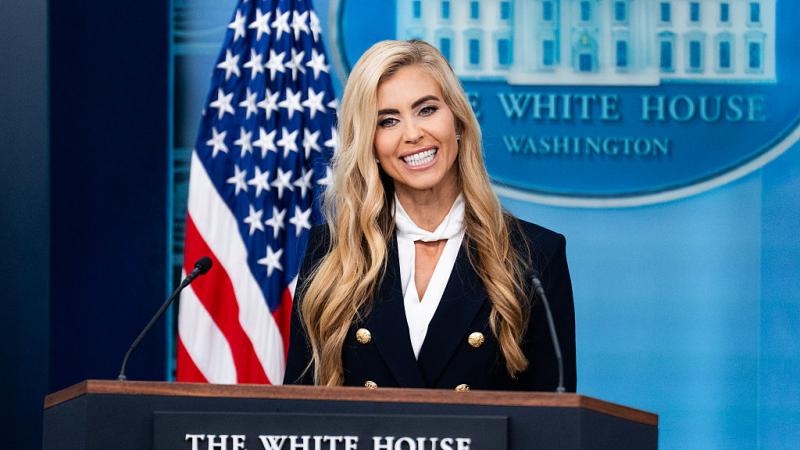
“That was not the message the administration was sharing,” former department press secretary Angela Morabito recently told Just the News exclusively.
Fauci and Morabito were referring, in particular, to a July 8, 2020, press conference, about four months into the roughly three-year-long pandemic.
The White House Coronavirus Task Force presser, that included Vice President Mike Pence, Education Secretary Betsy DeVos, and Centers for Disease Control and Prevention Director Robert Redfield, focused largely on fully reopening K-12 schools at the end of summer.
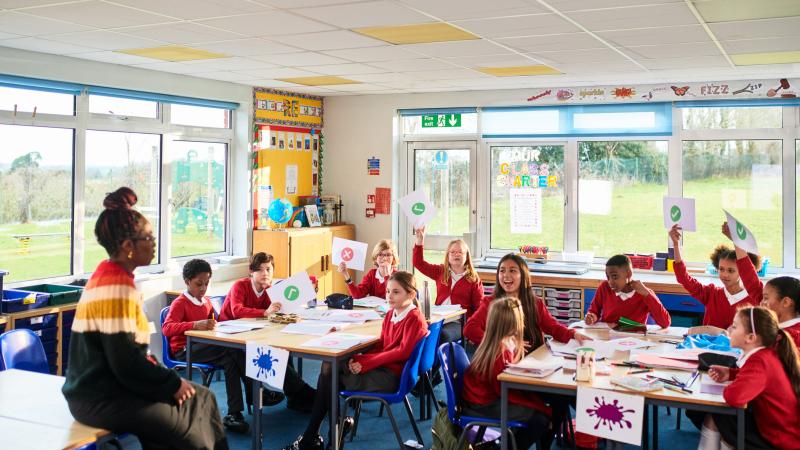
Morabito said the press conference “should have given people a lot of hope and excitement for reopening schools in the fall.”
And Pence, in fact, said hours after the presser – in which Trump criticized earlier opening recommendations as “very impractical” – that the CDC would issue new guidance on them.
Fauci, however, in his 1,141-page diary, or journal, written on federal government servers, argued Trump and Redfield were “pushing to open schools no matter what."
The tranche of journal entries was released by Kentucky GOP Sen. Rand Paul ahead of a July 29 Senate hearing in which Fauci, also a Task Force member and director of the National Institute of Allergy and Infectious Diseases, testified about the federal government's response to the pandemic and its origins.
“There is concern about the safety of the children and teachers,” the now-retired Fauci continued in the journal about the presser. “Yet, Trump together with Redfield (being pressured) is saying that the CDC guidelines should not stand in the way of opening schools.”
Morabito, who helped organize the press conference, refuted the now-retired Fauci's arguments, citing $13.2 billion of Elementary and Secondary School Emergency Relief (ESSER) Funds and pandemic-era health advisories.
“Hearing [the press conference] characterized as ‘open schools at any cost’ really took me by surprise because that was not the message I heard,” she told JTN.
“The administration was saying, ‘Schools should reopen whenever possible and reopen safely when they do, and we're providing you with tons and tons of resources to help make that a reality.’”
She also said: “The first Trump administration worked really hard to disperse billions of dollars in relief funds to state schools and districts, and that relief funding was allocated by Congress to help assist with the safe reopening of schools.
“There were countries that reopened sooner, reopened safely, and their outcomes tended to be much better, especially in the immediate aftermath of the pandemic.”
Denmark, Norway and Taiwan, for example, reopened schools early in the pandemic yet largely avoided outbreaks by pairing reopening with strong sanitary practices and containment measures.
All three countries also relied on robust testing, contact tracing and hygiene protocols – a combination credited with helping them avoid significant spread of COVID-19 in schools.
Such measures, Morabito argues, are exactly what Redfield and Trump were advocating.
“We suggested things like contact tracing, enhanced testing, enhanced cleaning was a big one, even renting more space for social distancing,” she said, while also arguing that health authorities at the time were confident that school-aged children were among the least likely to catch the virus.
“The constant refrain from the Left this entire time was to trust the science,” Morabito said, and “the science was telling us that when kids were isolated away from their peers, the mental health impacts were devastating. To say nothing of what it did to them to halt their education for an indefinite amount of time.”
Narrative disparities during the pandemic are frequently attributed not to a misunderstanding or misunderstanding of facts, but to the politicization of the global health crisis.
Debates over school closures, mask mandates, and reopening timelines increasingly split along party lines as the pandemic, and its lockdowns, stretched on – with disagreements over science often weaponized to serve political motives.
A Brookings Institute study found the strongest predictors of fall 2020 school reopening were connected to union contracts.
"Districts with lengthier collective bargaining agreements were less likely to start the fall 2020 semester with in-person instruction, were less likely to ever open for in-person instruction during the fall semester, and spent more weeks overall in distance learning," the report reads.
"We further find that the shorter-term union power flexes ... were associated with a higher likelihood of reopening for full, in-person instruction during the fall semester. ... it’s the long-standing, entrenched union power relationships captured by the length of the bargaining agreement that are associated with a slowed reopening timeline."
Teacher unions have come under scrutiny for resisting school reopening even as evidence showed that children faced low health risk, while simultaneously pushing for expanded federal funding with little accountability for how it was spent.
The United Teachers of Los Angeles (UTLA) union, for example, demanded Medicare for All, raising state taxes on the wealthy, defunding the police, and pausing all charter schools in exchange for reopening schools.
But Morabito says that the facts surrounding COVID-19 transcend political partisanship – and that safety was the goal of the July 2020 press conference.
“Regardless of how somebody thinks politically, we've all seen in the years following the COVID school closures that they were devastating for kids,” she said.
Data from the pandemic now shows that deaths in children and young adults under the age of 20 accounted for only 0.5% of all reported COVID-19 deaths worldwide.
Meanwhile, pandemic-related school shutdowns significantly worsened anxiety and depression among young people, a study out of Harvard recently confirmed. And despite relief funding, school-aged children are estimated to have lost three to seven months worth of instructional time as a result of school closures.
“We were not just saying ‘Reopen schools, we don't care what happens,’ Morabito said. “We were saying ‘No, reopen schools because we do care what happens, and this is what is best for students.’”
The Facts Inside Our Reporter's Notebook


Top Stories

Trending
Just the News Spotlight
Just News, No Noise