Cash is king: Washington Republicans bankroll midterms as National Democrat coffers are in the red
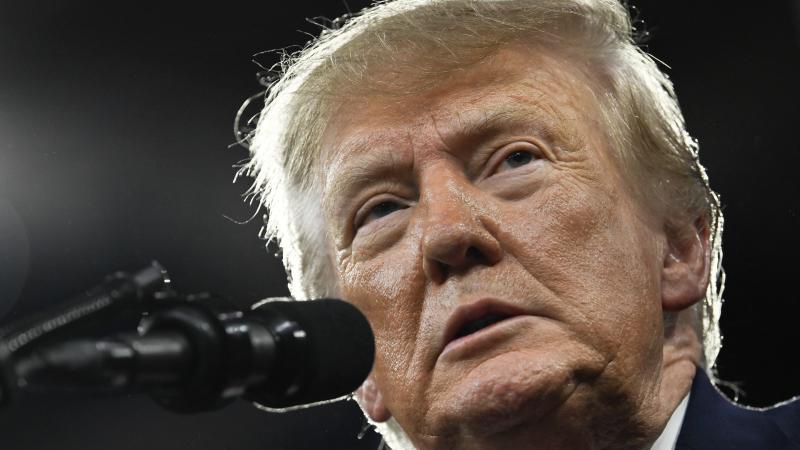
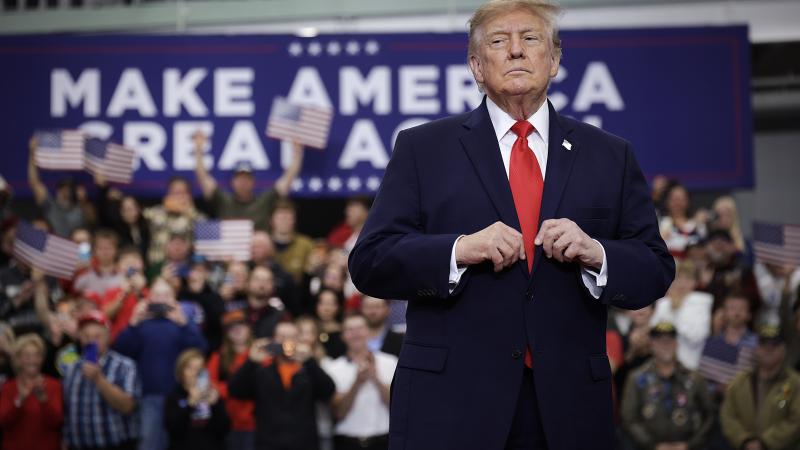
President Trump was doing his part this week to raise money for the RNC, headlining a fundraiser Tuesday at a dinner at his golf club in Rancho Palos Verdes, California. Tickets reportedly started at $15,000.
On the heels of President Donald Trump's Tuesday fundraiser in Los Angeles, and with the November midterms less than 100 days away, Washington Republicans hold a commanding financial edge over Washington Democrats that could prove decisive in key races for control of Congress.
The Republican National Committee reported more than $128 million in cash on hand at the end of June with no debt, while the Democratic National Committee had about $16 million in cash and roughly $18.5 million in debt, leaving it in the red.
The disparity extends to other national party committees and aligned super PACs, giving Republicans nearly double the cash of their Democratic counterparts overall, not counting additional resources from groups linked to Trump.
The fundraiser in California was part of a two-day western swing for Trump in which he headlined a closed-press RNC fundraiser at his golf club in Rancho Palos Verdes, California, before traveling to Las Vegas to discuss the economy, seeking to boost party coffers and highlight administration achievements ahead of the midterms.
Tickets for the dinner and reception reportedly started at $15,000 and those for entry into the high-level roundtable discussion as much as $150,000.
Despite the money disparity between the national parties, Democrats running for office in the November midterms or seeking reelection are successfully raising money.
The Democratic-aligned fundraising platform ActBlue recently reported that it had raised $586 million for candidates in the second quarter of 2026 alone, including $215 million raised in June. That figure included contributions from 573,000 first-time donors.
Historically, the party or candidate able to spend more on advertising and get-out-the-vote efforts tends to prevail. Analyses of congressional races show the higher-spending campaign wins about 91% of the time, driven in part by the advantages of incumbency and the ability to saturate airwaves and mobilize voters.
There are, of course, notable exceptions, especially in the Trump era.
In 2016, Hillary Clinton and allies raised over $1.2 billion, roughly twice Trump’s $600 million, yet he prevailed. More recently, Trump-endorsed Ken Paxton defeated John Cornyn in the 2026 Texas Senate primary runoff despite being outspent about 10-to-1 on ads (Cornyn allies spent at least $92 million of the roughly $128 million total).
While money does not guarantee victory in every contest — presidential races have occasionally gone to lower spenders — the correlation remains strong in House and Senate battles where television, digital ads and field operations shape outcomes.
Voters’ top concerns heading into the elections center on the economy and cost of living. A Pew Research Center survey in July found that 29% of registered voters most wanted congressional candidates to discuss economic issues, including affordability, far ahead of immigration at 7% and health care at 5%.
A Marquette Law School Poll similarly ranked inflation and the cost of living as the most important issue for 35% of respondents, followed by the broader economy. Recent polls show Democrats holding a modest edge on the generic congressional ballot, ranging from 4 to 8 points in surveys from Economist/YouGov, Reuters/Ipsos and CNN/SSRS, even as Republicans maintain advantages on crime and immigration.
Tuesday's primaries in five states
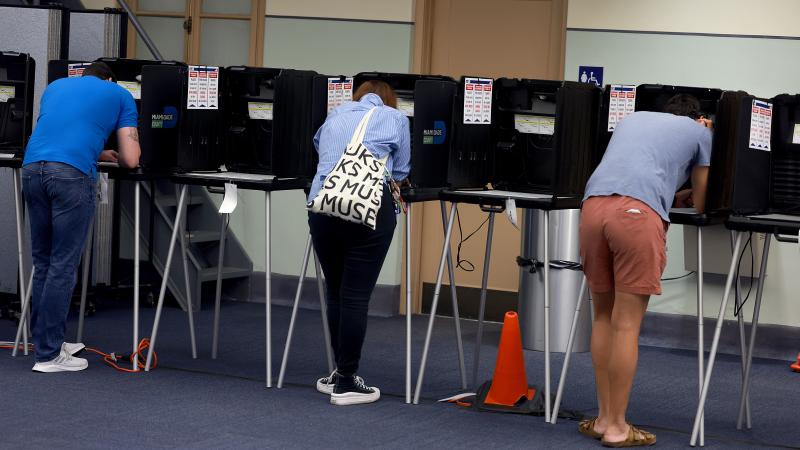
Tuesday’s primaries in Michigan, Kansas, Missouri, Virginia and Washington set several key general election matchups.
In Michigan’s closely watched Democratic Senate primary, progressive former public health official Abdul El-Sayed narrowly defeated moderate Rep. Haley Stevens, advancing to face former Republican Rep. Mike Rogers in November.
Kentucky's Republican Rep. John James won the GOP nomination for Michigan governor, while Democratic Secretary of State Jocelyn Benson secured her party’s nod.
In Kansas, Trump-endorsed state Senate President Ty Masterson captured the Republican gubernatorial nomination. Progressive candidates also notched House primary wins in Michigan battlegrounds.
The cash imbalance leaves Democrats facing steeper challenges in advertising and voter outreach as both parties prepare for a high-stakes fight over the House and Senate majorities. Republicans enter the final stretch with deeper reserves to defend their majorities, while Democrats lean on individual candidate fundraising and voter enthusiasm to close the gap.
The Facts Inside Our Reporter's Notebook


Top Stories


Trending
Just the News Spotlight
Just News, No Noise