Legal group exposes heavy use of Minnesota’s vouching' system to override voting ID rules
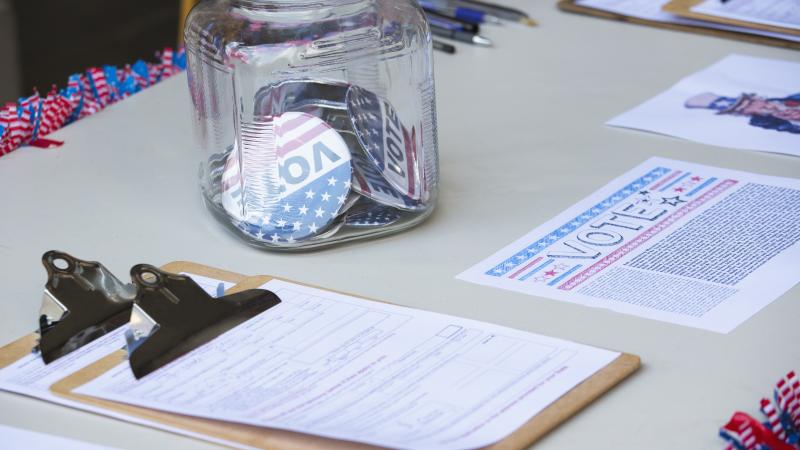
The records, which were obtained through a public records request, showed that Minnesota’s Election Day Registration process allows registered voters or certain residential facility employees to verify another voter’s residency in place of standard identification or proof-of-address documents.
America First Legal, a conservative legal group, has obtained records from the Minnesota Secretary of State showing thousands of Minnesotans used the state's “vouching” system to bypass voter ID while registering or updating their information during recent election cycles.
The records, which were obtained through a public records request, showed that Minnesota’s Election Day Registration process allows registered voters or certain residential facility employees to verify another voter’s residency in place of standard identification or proof-of-address documents.
Minnesota law reportedly allows a registered voter from the same precinct or an authorized employee of a residential facility to confirm another individual’s residency for voting purposes if that person lacks traditional documentation in-person at the polls.
According to the data released by AFL, almost 18,900 Election Day registrations in 2024 involved the use of vouching.
Of those, 13,441 were updates to existing voter registrations, while 5,457 involved new voter registrations.
The records also showed 10,278 voter registrations or updates using vouching during the 2022 election cycle, including 2,215 new registrations.
In 2020, the state recorded 17,616 vouched-for Election Day registrations or updates, including 5,069 new registrations, the data showed.
AFL said it tried to get more information from the secretary of state’s office, including data showing whether voters were vouched for by private citizens or residential facility employees, lists of authorized facility staff, and records involving alleged fraudulent or suspicious activity connected to the system.
According to AFL, the secretary of state’s office responded that it “does not record or maintain data on vouching method,” and in several categories replied that there was “no data responsive” to the request.
In a statement released with the records, AFL attorney Will Scolinos criticized the state’s election procedures, arguing the lack of detailed tracking undermines confidence in election security.
“The Minnesota Secretary of State disregards America’s fundamental need for secure, transparent elections,” Scolinos said. “Americans have the right to know that every vote cast is legal and every election is secure.”
The Facts Inside Our Reporter's Notebook
Links


Top Stories

Trending
Just the News Spotlight
Just News, No Noise