Critical mineral reserve may reduce supply shock, but may have unintended consequences, experts say
Project Vault, as it's called, would store critical minerals in the way the Strategic Petroleum Reserve stores crude oil. However, the economics of mineral commodities are different in some ways from those of crude oil.
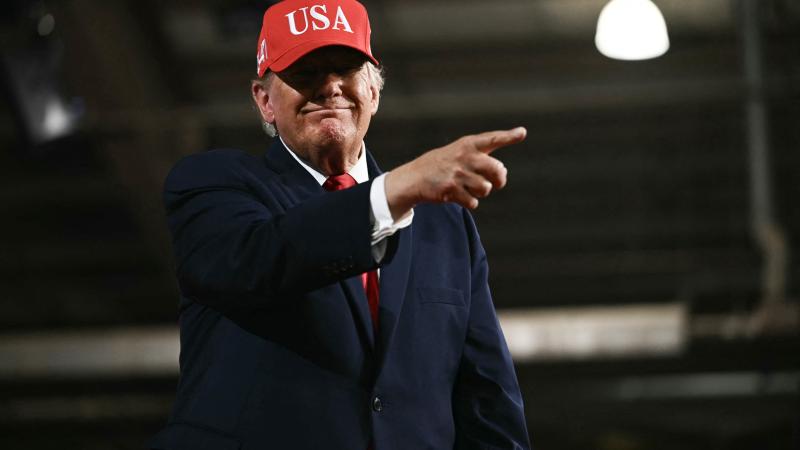
President Donald Trump announced Monday the creation of a critical mineral reserve that will function a lot like the Strategic Petroleum Reserve.
Project Vault, as it’s being called, will store minerals in the same way the SPR stores crude oil, with the goal of shielding domestic manufacturers from supply shocks.
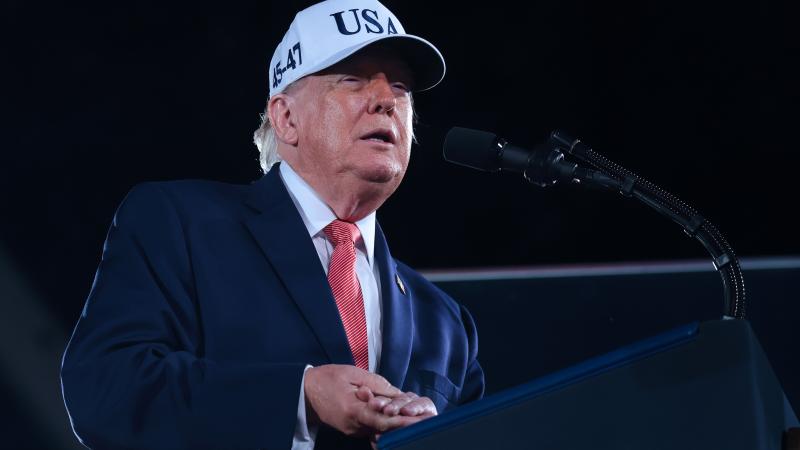
“For years, American businesses have risked running out of critical minerals during market disruptions. Today, we’re launching what will be known as Project Vault to ensure that American businesses and workers are never harmed by any shortage,” Trump said at a press conference.
China has wielded ability to move prices, affecting investments
China controls the supply for many of the critical minerals, a market position it’s been known to leverage against its adversaries. The country has sometimes flooded markets to drive down prices, which makes investments in new developments difficult to finance. And it’s cut off supplies in tit-for-tats with the U.S.
These minerals are used in a range of technologies, including military applications and consumer electronics. The project could help address this vulnerability the U.S. has, but as with any government program, it comes with some potential unintended consequences, experts say.
Benefiting manufacturing
Trump said that the initiative will be started with a $10 billion loan from the Export-Import Bank (EXIM), along with $2 billion in private sector financing. The Export-Import Bank said in a statement that there are “indications of participation” from green-energy manufacturer GE Vernova, hard-drive manufacturer Western Digital and aviation manufacturer Boeing, among others.
"Project Vault is designed to support domestic manufacturers from supply shocks, support U.S. production and processing of critical raw materials, and strengthen America’s critical minerals sector," John Jovanovic, EXIM chairman, said.
Experts have reservations about plan
David Hammond, a mineral economist with decades of experience as a mining consultant, told Just the News that it’s hard to know exactly what the impact of the reserve will be without knowing more details. But based on what information is currently available, he has some reservations.
At the press conference, Trump was joined by Secretary of Commerce Howard Lutnick, Interior Secretary Doug Burgum, and billionaire mining financier Robert Friedland. They spoke about the vault as benefiting the mining industry, but Hammond said he shares concerns about some crony capitalism appearing in the deal.
“It seems to me it’s going to be a bigger benefit to the consumers of these metals than it is to the miners and suppliers of these metals,” Hammond said.
A reserve isn’t a supply
On his “Irrational Fear” Substack, Dr. Matt Wielicki, a former Earth Sciences professor who has a background in geology, called the vault the acknowledgement of a problem, but it’s not the solution. It doesn’t actually produce minerals.
Citing U.S. Geological Survey data from a study released last year, Wielicki pointed out that of the 50 minerals the federal government designates as critical, the U.S. is 100% dependent on imports for 12 of them. The U.S. relies on imports for more than 50% of the supply for 28 of the minerals.
While the critical mineral reserve could protect against shortages and price shocks, it’s not a supply of these needed minerals, merely a place to store them for future use. Without addressing that issue, the vulnerability remains, Wielicki wrote.
Hammond said that sourcing the mineral to fill the vault is going to be a challenge. China controls most of what they want to put into it, and they’re unlikely to be eager to help America shore up its supplies, which would make it harder for China to use as leverage against the U.S.
“It'll take years and years, if not decades, to get the vault full of enough minerals to do what they want it to do,” Hammond said.
There are many forms of the minerals, and it’s not clear which the vault will hold. Raw ore is processed into rare earth concentrates, which are then processed into rare earth oxides.
Then, those are processed into separate metals. The last step processes them into usable materials like magnets. In some cases, the mineral forms degrade over time and become unusable.
Global pricing impacts
Unlike the SPR, the vault could have much greater disruptions on the global market for critical minerals. The scale they’re talking about storing would rival the London Mineral Exchange (LME). Releases of crude from the SPR are a fraction of the total global trade volume of crude, but in the case of some rare earth minerals, the total U.S. annual demand can fit inside a single shipping container.
“If executed the way it appears it is, this is going to cause some major disruptions in the flow kind of the market characteristics and the flow of mineral commodities across the world,” Hammond added.
The benchmark price that the vault will use in determining its releases of minerals will likely follow the LME, but since they’ll be disrupting the global supply, it will impact the benchmark price it is based upon.
Uncertainty and feasibility of future mining
It could also make mine development more difficult. Mineral economists like Hammond use many analytical tools to calculate the financial feasibility of a mining project. It’s a calculation that’s often missed in media coverage of potential mines. The existence of large mineral deposits in the ground doesn’t mean the mineral can be extracted economically.
The expected price each mineral will fetch over the lengthy period of time when the mine comes into operation goes a long way toward determining if the mine is financially viable. The reserve would add another factor impacting those calculations, and determining its impact could prove difficult.
That economic analysis is important for investors to decide if it’s worth dropping a billion dollars or more to develop a mine. This is why Hammon said the project will likely benefit the manufacturers more than the mines.
“I see potential for big disruption in pricing mechanisms for all these mineral commodities that they're talking about,” Hammond said.
The Facts Inside Our Reporter's Notebook


Top Stories





Trending
Just the News Spotlight
Just News, No Noise