Data centers in crosshairs as energy costs rise, experts say net zero policies real culprit
Opposition to data centers is growing for many reasons, but concerns about electricity costs drives a lot of the concern. Some experts argue that the high energy demands of AI wouldn't be a problem if previous administrations hadn't pursued climate policies that restrict the supply.
Armed with a growing distrust of Big Tech, Sen. Elizabeth Warren, D-Mass., joined other northeast Democrats to launch an investigation into several technology companies, including Microsoft, Google and Meta that long have been a source of political cash for their own party.
“We write in light of alarming reports that tech companies are passing on the costs of building and operating their data centers to ordinary Americans as AI data centers’ energy usage has caused residential electricity bills to skyrocket in nearby communities,” the lawmakers wrote in their letters to the companies.
Warren and her colleagues are demanding the companies building these data centers pay their “fair share” of the costs of upgrading the grid to accommodate the loads they place on it.
Sen. Bernie Sanders, I-Vt., is taking the anti-data center rhetoric a step higher. Last week, he told CNN he wanted a moratorium on new data facilities. His concern, he explained, is that somehow the industry will leave people without jobs.
The lawmakers' rhetoric is but one example of a growing backlash against data centers, most of which is driven by concerns about their impact on electricity rates. The opposition comes from environmentalist groups concerned about how the energy demands of data centers will increase emissions, as well as local residents and grid watchdogs concerned about how those power demands drive up electricity rates.
Democrats' tone was considerably different a few years ago when Big Tech embraced censorship during the pandemic and provided handsomely to Democrats' campaigns.
In 2020, the tech industry spent approximately $160.2 million, which was double the spending in 2018 and three times that of 2016, according to election-watchdog site Open Secrets.
The industry's 2020 donations went 90% to Democrats and only 9% to Republicans. During his White House bid, President Joe Biden was the top recipient of tech companies' largesse, which dropped $13.5 million on his presidential election campaign. While industry donations in 2024 were still heavily leaning to liberal candidates, the total was down by a third, Open Secrets data shows.
While the opposition is viewing data centers as the problem, some experts argue that the problem is the inevitable result of years of net-zero policies and renewable energy mandates, which have made it difficult to increase the supply of electricity and keep prices from rising when new loads are placed on the grid.
Threat to reliability
Monitoring Analytics, an independent watchdog of PJM Interconnection, filed a complaint with FERC in late November concerning PJM adding data centers to the grid it manages. PJM is a regional trade organization that manages the wholesale electricity market and high-voltage transmission grid for all or part of 13 states and the District of Columbia.
“PJM is currently proposing to allow the interconnection of large new data center loads that it cannot serve reliably and that will require load curtailments (black outs) of the data centers or of other customers at times. That result is not consistent with the basic responsibility of PJM to maintain a reliable grid and is therefore not just and reasonable,” the complaint argues.
Monitoring Analytics argues that large data centers are driving up energy costs and capacity prices, and PJM has an obligation to provide reliable service before adding new loads it can’t serve reliably.
Local opposition to Big Tech
Residents in communities across the country are also joining in the opposition. Energy expert Robert Bryce this month began documenting data center projects that were rejected or where localities issued restrictions. He’s found 26 such cases since mid-2023 to include in his “Data Center Rejection Database.”
Bryce explains on his Substack that the fight against “Big Tech” involves the same kind of land-use conflicts that drive opposition to wind and solar projects. They include “concerns about the quality of their neighborhoods, property values, water usage, electricity costs, and deep distrust of big business in general,” Bryce wrote.
Environmental groups are also hopping on the anti-data center bandwagon to advance their causes. Earlier this month 230 such organizations sent a letter to Congress asking for a moratorium on the facilities. In addition to concerns about energy costs, the letter argues that data centers demand too much electricity, contribute to climate change, and use too much water. They also claim AI will replace jobs, so the technology should be restricted.
“The rapid, largely unregulated rise of data centers to fuel the AI and crypto frenzy is disrupting communities across the country and threatening Americans’ economic, environmental, climate and water security,” their letter states.
The coalition calling for the moratorium are led by the anti-fossil fuel nonprofit Food & Water Watch, and it includes many other anti-fossil fuel groups, such as Frack Action, Greenpeace USA and Oil Change International.
Tidy narrative
Data centers do have high energy demands. Electricity demand in the U.S. remained relatively flat from about 2005 onward. A recent estimate by the U.S. Energy Information Administration projects that power demand in the U.S. will reach 4.179 billion kilowatt hours in 2025 and 4,239 billion kilowatt hours next year. For context, the average American home uses 899 kilowatt hours per month.
Goldman Sachs Research forecasts that global power demand for data centers will increase 50% by 2027 and by as much as 165% by 2030, over the industry’s energy needs in 2023.
The law of supply and demand dictates that increased demand will increase costs, but Marc Oestreich, editor of the daily energy newsletter GridBrief, argues in Reason that this is providing a simple narrative that Big Tech is gobbling up electricity, which American households will pay for.
“It's a tidy narrative with a villain, a victim, and a moral. It also happens to be wrong,” he writes.
Constrained supply
Oestreich explains that very little of the costs consumers bear has to do with the power itself. Electricity is a capital-heavy industry, and most of the costs are associated with the infrastructure to deliver electricity, which includes generation, transmission, substations and distribution, which are the smaller transmission lines to homes and businesses.
Once the infrastructure is in place, the costs of serving additional loads is relatively low, Oestrich wrote. He cites studies showing states that experienced higher demand saw smaller increases in retail electricity prices, and in some cases, they declined. Prices only rise, he explains, when supply can’t respond to increased demand.
“For decades, policymakers have systematically constrained the supply side of American energy. New power plants take years, sometimes decades, to permit. Transmission lines spend longer in court than they do under construction. Baseload generation, nuclear most of all, has been treated as a moral failure rather than an engineering necessity. Capacity is retired faster than it can be replaced,” Oestreich wrote.
Trump administration proposal
The Trump administration’s Department of Energy is making similar arguments about data center opposition.
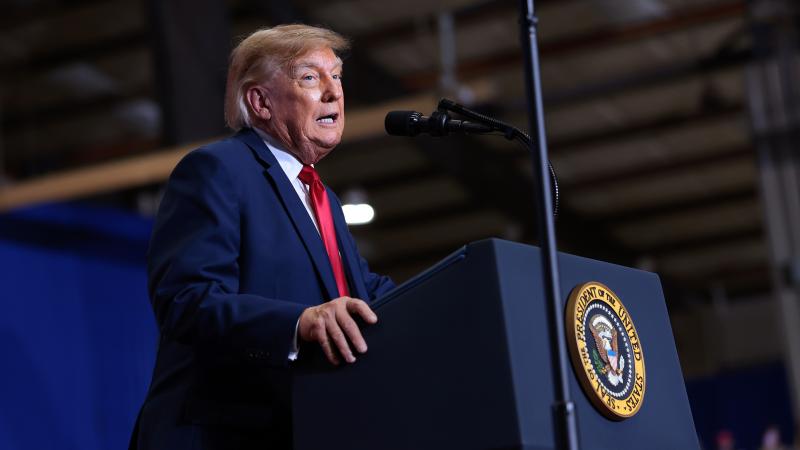
President Donald Trump has expressed strong support for the growth of AI as a matter of economic and national security. He signed an executive order earlier in December that blocks states from restricting the development of the industry. Energy Secretary Chris Wright last week asked FERC to draft new rules that would give the DOE oversight over how data centers connect to the grid, the Wall Street Journal reported.
In a post on LinkedIn, Mark Christie, former FERC chair, called the proposal a “massive power grab” that will “produce litigation.”
“It will preempt states from protecting residential and small business consumers from cost shifting, as well as ensuring reliable power generation supply, both of which are ultimately state responsibilities,” Christie wrote.
A DOE spokesperson told the Daily Caller that the Biden administration had constrained power production, which would have guaranteed the U.S. would lose the AI race. The Trump administration, on the other hand, is keeping coal and natural gas plants running, while making it easier to add new reliable generation to the grid. This will provide the reliability to facilitate AI growth, the spokesman said.
Should the Trump administration make it easier to build new baseload power plants, it may go a long way to keeping the development of data centers from increasing energy costs. That will at least address one major concern people have about the industry.
It remains to be seen if that will be enough to get the public to warm to this rapidly growing industry.
Earlier this month, Florida Gov. Ron DeSantis announced a "citizen bill of rights for artificial intelligence." Among other things, it protects local communities' right to block new data centers.
The Facts Inside Our Reporter's Notebook
Documents
Links
- launch an investigation
- told CNN
- wrote in their letters to the companies
- Monitoring Analytics
- all or part of 13 states
- capacity prices
- Data Center Rejection Database
- Bryce explains on his Substack
- sent a letter to Congress
- remained relatively flat
- recent estimate
- Goldman Sachs Research forecasts
- Marc Oestreich
- GridBrief
- Reason
- systematically constrained the supply side
- permit
- signed an executive order
- Wall Street Journal reported
- post on LinkedIn
- DOE spokesperson told the Daily Caller
- Ron Desantis announced



Top Stories



Trending
Just the News Spotlight
Just News, No Noise